Kot ste najbrž že zasledili, prejšnji teden je glavni ekonomist Svetovne banke Paul M. Romer za Wall Street Journal priznal, da so avtorji indeksa enostavnosti poslovanja (Ease of Doing business ranking, kratko: DB), ki ga po načeloma dokaj solidni metodologiji vsako leto sestavlja Svetovna banka, goljufali pri sami metodologiji. Metodologijo so namreč sproti spreminjali, s čimer so postale primerjave med leti neprimerljive. (*)
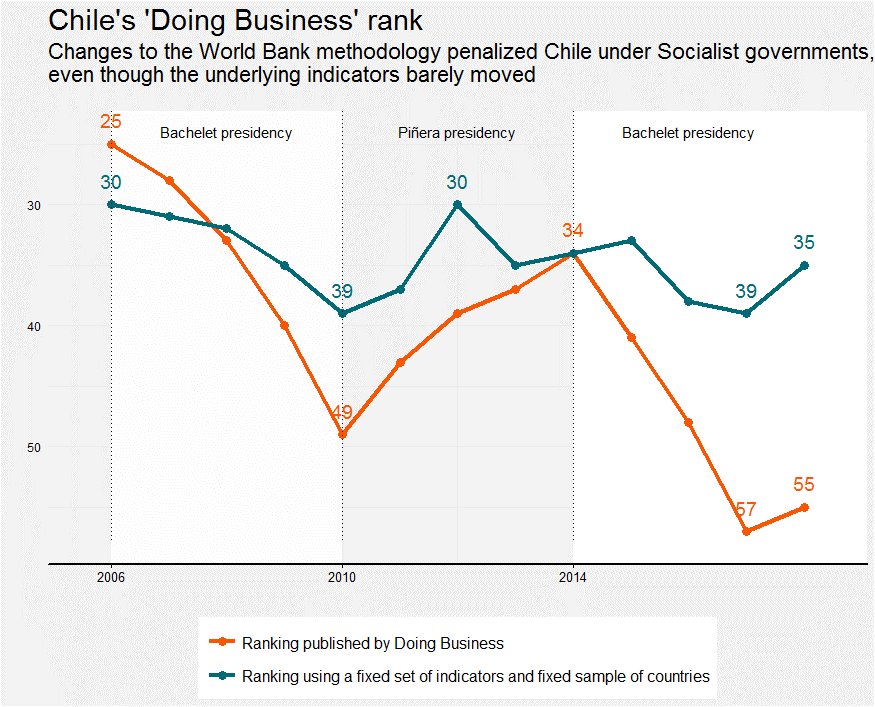
No, pomembno je tudi, zakaj so to počeli. Izkazalo se je, da je imel prste vmes eden izmed (zdaj že umaknjenih) čilskih ekonomistov Augusto Lopez-Claros, ki je bil med glavnimi avtorji metodologije DB, za katerega se špekulira, da je imel politično motivacijo, da prikaže, kako se v času socialističnih vlad v Čilu poslabšujejo pogoji poslovanja za podjetja. Ustrezno je pač spremenil metodologijo agregacije indeksa. In v spodnji sliki lahko vidite, kako je “kaznoval” socialistične vlade in “nagradil” konzervativno vlado vmes (primerjajte zeleno krivuljo ob nespremenjeni metodologiji in oranžno krivuljo, ki je “okužena” z intervencijo dotičnega ekonomista).
Nadaljujte z branjem→


You must be logged in to post a comment.