Obvezno branje: Kako je IMF zavajal in zavestno ubijal Grčijo

Ashoka Mody, nekdanji prvi človek ekonomskega oddelka IMF za Evropo, v ubijalski kritiki secira negativno vlogo IMF v Grčiji. Na kratko povzemam.

IMF je že leta 2010 vedel, da grški dolg ni vzdržen in ji predpisal strogo varčevanje in strukturne reforme. Jasno, ni delovalo, zgolj BDP je kolapsiral, dolg pa se je povečal. Nato je leta 2012 ponovil vajo in skupaj z ECB in državami evrskega območja še zaostril dozo varčevanja in dozo strukturnih reform. Maja 2013 je IMF v poročilu o Grčiji napisal, da je naredila velik napredek pri varčevanju in pokojninskem sistemu, toda da zdravilo spet ni delovalo, ampak da se je BDP še dodatno zmanjšal, dolg pa povečal. Administrativne reforme so izboljšale poslovno okolje, grški trg dela pa je postal bolj fleksibilen od nemškega. Toda bolj kot je Grčija sledila receptu IMF, bolj kot je varčevala in več strukturnih reform je naredila, nižji je bil BDP in večji je bil dolg. Še pred tem je oktobra 2012 IMF ugotovil, da ima varčevanje v splošnem negativne učinke na rast BDP in zaradi fiskalnega multiplikatorja še večje. Javno je priznal napako. Nato je aprila 2015 ocenil (glejte box 3.5), da strukturne reforme na trgu dela nimajo učinka na rast, kvečjemu negativnega na kratek rok. No, in zdaj junija 2015 v poročilu o vzdržnosti grškega dolga IMF pravi, da se je iz preteklih napak naučil.

Toda, in zdaj zajamite sapo: ne glede na vse negativne izkušnje in priznane lastne napake pri ocenah grške situacije ter glede splošnih učinkov posameznih “zdravil” IMF Grčiji junija 2015 ponovno predpiše povsem enako zdravilo, za katerega VE, da je imelo do sedaj izključno negativne učinke na pacienta. Znova od Grčije zahteva novo veliko dozo varčevanja in strukturne reforme, čeprav vnaprej VE, da ne moreta zdravilno delovati.

Čemu vse to? Zakaj IMF zavaja?
Nadaljujte z branjem

Ozadje grškega “nesporazuma” ali kako so Grčijo prisilili v izstop

Tole je še eno nujno branje glede tega, kaj se je dejansko dogajalo prejšnji teden v Bruslju in zakaj je Tsipras sklical referendum, ko je bil dogovor vendarle le še “centimetre narazen”. Tudi jaz nisem imel pravih informacij in sem napačno, kritično ocenil grško ravnanje v pogajanjih. Mea culpa. Thomas Landon v New York Timesu zapolnjuje informacijsko luknjo in opisuje ozadje pogajanj v Bruslju in kako so Grčijo, bolj kot je popuščala, bolj silili v slab sporazum, ki bi še poglobil depresijo in zmanjšal vzdržnost dolga.

In ko je v zadnjem obupnem poskusu Varoufakis prosil Christine Lagarde, predsedujočo IMF, da potrdi, da je sedanji sporazum takšen, ki bo vzdržen, in ko Lagardova tega ni mogla potrditi, ji je Dijsselblom, predsedujoči evroskupine, vzel besedo, rekoč:

It’s a take it or leave it offer, Yanis

Spodaj je nekaj izsekov iz Landonovega opisa ozadja. Hvalabogu za New York Times.

Nadaljujte z branjem

Za grško katastrofo ni kriva Syriza, pač pa 5 let napačnega zdravila

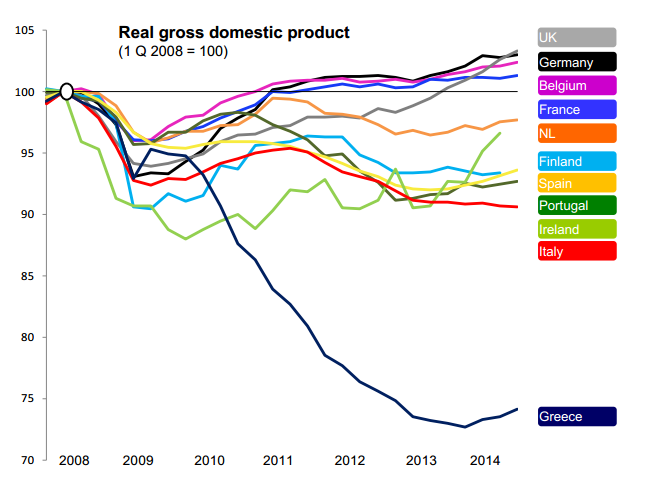
Poglejte spodaj rezultate šok terapije z varčevanjem (oz. puščanjem krvi) v perifernih državah. Se vam zdi, da je zdravilo delovalo? Je zaustavitev negativnega trenda po petih letih upadanja znak ozdravitve? Nato pa poglejte še sliko spodaj za Grčijo. In vse napake glede napovedi zdravilnih učinkov “puščanja krvi na BDP.

Zakaj EU, ECB  in IMF ne prenehajo z zdravljenjem z metodo “puščanja krvi”? Ker skrivajo lastne napake in polirajo svoj imidž pred lastnimi volilci.

But we have had five years to observe creditors’ tender ministrations, under governments that complied with creditors’ every demand. This has been the result:

Greekovery
[Graph via David Ruccio, via Frances Coppola, originally due to Robin Wigglesworth I think]

Nadaljujte z branjem

Vikend branje

“Motni posli” glede objave IMF-ovega poročila o nevzdržnosti grškega dolga

Evropski člani boarda IMF naj bi, po poročanju Ekathimerini, menda poskušali preprečiti objavo IMF-ovega poročila (pdf) o vzdržnosti grškega dolga ta četrtek, ker bi to utegnilo vplivati na izid referenduma. Toda ZDA kot najmočnejša članica IMF ter osebje IMF se niso pustili motiti “osebnim imperativom EU. Kot veste, poročilo IMF pravi, da je grški dolg nevzdržen in da bo potreben nov dogovor, ki naj bi zmanjšal obseg dolga (haircut), podaljšal dobo odplačevanja ter prinesel dodatno finančno pomoč Grčiji. V sedanji situaciji bi to znašalo najmanj 52 milijard evrov dodatne finančne pomoči do konca leta. Toda, ker se situacija slabša, bo potrebno še več.

At a meeting on the International Monetary Fund’s board on Wednesday, European members questioned the timing of the report which IMF management proposed at short notice releasing three days before Sunday’s crucial referendum that may determine the country’s future in the eurozone, the sources said.

There was no vote but the Europeans were heavily outnumbered and the United States, the strongest voice in the IMF, was in favor of publication, the sources said.

The Europeans were also concerned that the report could distract attention from a view they share with the IMF that the Tsipras government, in the five months since it was elected, has wrecked a fragile economy that was just starting to recover.

“It wasn’t an easy decision,” an IMF source involved in the debate over publication said. “We are not living in an ivory tower here. But the EU has to understand that not everything can be decided based on their own imperatives.”

The board had considered all arguments, including the risk that the document would be politicized, but the prevailing view was that all the evidence and figures should be laid out transparently before the referendum.

“Facts are stubborn. You can’t hide the facts because they may be exploited,” the IMF source said.

Nadaljujte z branjem

Krugman: Nedeljski “Ja” v Grčiji bi prinesel dizaster za Evropo

Paul Krugman je zadel bistvo: če bodo grški volilci v nedeljo glasovali “proti” programu “pomoči” inštitucij Grčiji, se za Grčijo začne še bolj turbulentno obdobje prehoda na lastno valuto. Toda če bodo glasovali  “za”, bo to pomenilo zmago falirane ideologije “varčevanja in discipline”, ki Evropi ne dovoli, da bi iz izšla iz luknje, v katero je padla zaradi evra. Ali drugače rečeno, zavrnitev zahtev inštitucij pomeni sicer kratkoročno hude čase za Grčijo, vendar ji bo omogočilo samostojne politike in ponovno rast, medtem ko sprejem zahtev inštitucij pomeni za Evropo še večji dizaster, še večjo krizo.

But there are many European officials and politicians who are opposed to anything and everything that might make the euro workable, who still believe that all would be well if everyone exhibited sufficient discipline. And that’s why there is even more at stake in Sunday’s Greek referendum than most observers realize.

One of the great risks if the Greek public votes yes — that is, votes to accept the demands of the creditors, and hence repudiates the Greek government’s position and probably brings the government down — is that it will empower and encourage the architects of European failure. The creditors will have demonstrated their strength, their ability to humiliate anyone who challenges demands for austerity without end. And they will continue to claim that imposing mass unemployment is the only responsible course of action.

Nadaljujte z branjem

Sachs: Izhod za Grčijo: Glasujte “proti”

I propose a four-step path out of the Greek crisis. First, I recommend that the Greek people give a resounding “No” to the creditors in the referendum on their demands this weekend.

Second, Greece should continue to withhold service on its external debts to official creditors in advance of a consensual debt restructuring later this year. Given its great depression, Greece should use its savings to pay pensioners, provide food relief, make crucial infrastructure repairs, and direct liquidity toward the banking system.

Nadaljujte z branjem

Kaj imajo skupnega evropske krize? Evro

Why are there so many economic disasters in Europe? Actually, what’s striking at this point is how much the origin stories of European crises differ. Yes, the Greek government borrowed too much. But the Spanish government didn’t — Spain’s story is all about private lending and a housing bubble. And Finland’s story doesn’t involve debt at all. It is, instead, about weak demand for forest products, still a major national export, and the stumbles of Finnish manufacturing, in particular of its erstwhile national champion Nokia.

What all of these economies have in common, however, is that by joining the eurozone they put themselves into an economic straitjacket. Finland had a very severe economic crisis at the end of the 1980s — much worse, at the beginning, than what it’s going through now. But it was able to engineer a fairly quick recovery in large part by sharply devaluing its currency, making its exports more competitive. This time, unfortunately, it had no currency to devalue. And the same goes for Europe’s other trouble spots.

Does this mean that creating the euro was a mistake? Well, yes. But …

Nadaljujte z branjem

Kako je Syriza poskušala obrniti trende … in zamočila

Dobra zgodba Neila Irwina:

Alexis Tsipras, the Greek prime minister, has spent the last six months, since his left-wing Syriza party came to power, trying to shift the entire political framework of his country’s bailout negotiations. That effort has failed. By indicating that his government could accept much of what Greece’s creditors demanded as conditions for a bailout extension late last week, Mr. Tsipras seems to have finally acknowledged this inability to reset the terms of debate over austerity and democracy in Europe.

For five years, the simple trade-off offered by the richer European countries and the European Central Bank has been this: If Greece accepts massive austerity — like pension cuts and layoffs of government employees — it can remain in the eurozone with the help of bailouts, with central bank credit extended to Greek banks, and so on. Austerity was the price to be paid for keeping the monetary stability created by the euro currency.

Nadaljujte z branjem