Glede znanosti sem to že večkrat pisal, zato imam zgoraj v kolofonu tudi citat izjave nemškega fizika Maxa Plancka (iz konca 19. stoletja). In enako velja za politiko. Šele ko se bo umaknila sedanja izjemno škodljiva generacija politikov, bo lahko prišlo do normalizacije zunanjepolitičnih, varnostnih in ekonomskih politik v zahodnih državah oziroma do njihove uskladitve z realnostjo in dejanskimi strateškimi interesi zahodnih držav.
Author Archives: jpd
Protikitajska histerija je naletela na “if you can’t beat them, join them” moment
Bilo je le vprašanje časa, kdaj se bo to zgodilo. Vprašanje pa je, ali bo po koncu evropske medijske protikitajske histerije temu preobratu smela slediti tudi evroposka politika, ki je pod popolnim ameriškim nadzorom. Upal bi si staviti, da še kar nekaj časa ne bo smela. Dokler EU ne bo gospodarsko, tehnološko in politično suverena, bo samo ekspozitura ameriških interesov v Evropi in svetu.
This is extraordinarily rare.
In fact, according to a key figure in the German business community (who is a dear friend of mine), it’s unprecedented.
An op-ed, two pages, centerpiece, in Germany’s most important economic newspaper (the Handelsblatt) that begs the German establishment to stop looking at China via the prism of propaganda. And it’s by their Shanghai bureau chief – not some outside contributor.
The title is “The China debate cannot continue like this!” and the article makes the case that it’s suicidal, from a German and European standpoint, to keep reducing China to false caricatures rather than facts.
In effect it’s rubbish in, rubbish out: if you tell people lies about China – whichever direction they go (anti or pro) – then obviously the policies that come out will be rubbish, designed for a mirage of a country that exists only in people’s imagination.
Needless to say, this is absolutely music to my ears because it’s literally the main point I’ve been making in my advocacy around China for now almost 10 years. Some are finally seeing the light…
I also believe, as I argued in my article “Are Western media turning China-friendly?” last year (https://arnaudbertrand.substack.com/p/are-western-media-turning-china-friendly) that this type of coverage was bound to happen, and there will be more and more of it.
Why? For a very simple structural reason: China is now too powerful to coerce. The West, and Europe in particular, just don’t have the leverage anymore. Which means that if you tell China to do something and they don’t want to, they just won’t do it. Period.
Thomas Piketty in problem zelenih marksistov
Kot veste, imam Thomasa Pikettyja zelo rad. Bil sem najbrž prvi, ki je v Sloveniji propagiral ideje iz njegove knjige Capital in 21st Century in objavljal polemične strokovne izzive nanjo. Piketty je odličen analitik, najboljši na področju neenakosti porazdelitve dohodkov in premoženja in skrajni čas je, da dobi Nobelovo nagrado (čeprav mi nekaj pravi, da strokovnemu odboru švedske centralne banke, ki vsako leto naredi selekcijo področja znotraj ekonomije in najbolj citiranih ekonomistov znotraj področja, njegove ideje niso tako zelo všeč, da bi temi neenakosti in njemu podelil nagrado; mimogrede, preberite knjigo The Noble Factor, ki zelo dobro ilustrira, komu in zakaj švedska centralna banka podeljuje najvišja odličja v ekonomiji).
Torej Piketty je odličen analitik, najboljši na področju neenakosti, vendar je njegov problem v mesijanskosti in utopičnosti. Piketty bi rad rešil problem neenakosti ne na ravni držav, pač pa univerzalno – na globalni ravni. Propagira uvedbo globalnega davka na bogataše in prenos premoženja iz razvitih v nerazvite države. Kar se seveda ne bo nikoli zgodilo (več spodaj).
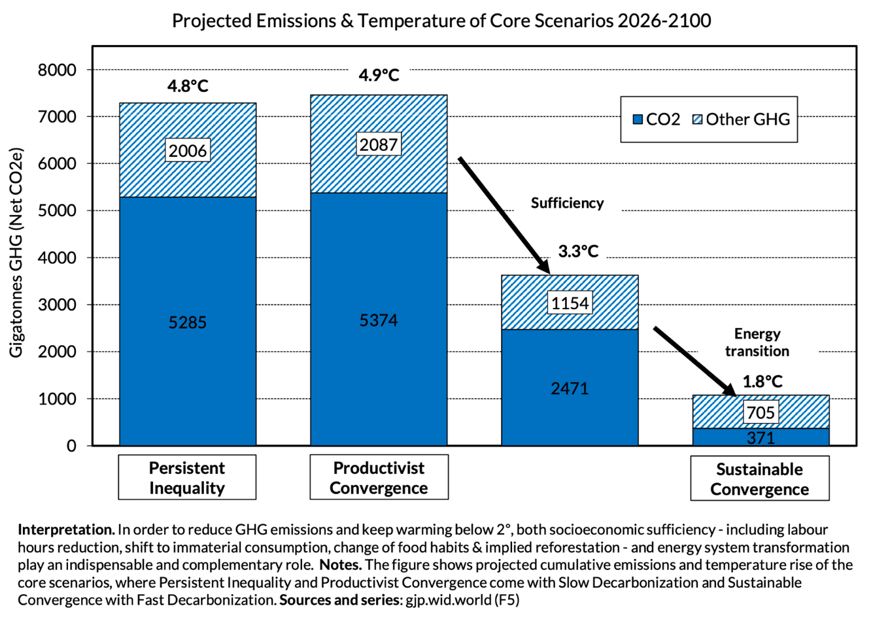
No, problem Pikettyja je, da se je zdaj – enako utopično – spustil na področje urejanja globalnih podnebnih sprememb. Kot sem predstavil tukaj, je Piketty pripravil zelo radikalni predlog za »rešitev« tega »problema«. Piketty opozarja, da podnebne krize ne bo mogoče rešiti zgolj s tehnološkim prehodom na čiste vire energije, temveč bo treba v razvitih državah omejiti materialno potrošnjo, upočasniti gospodarsko rast in spremeniti prehranske navade. Zelo podobno stališču Meščeve Levice in nekdanjega premierja Roberta Goloba.
Thomas Piketty o nujnosti globalne omejitve porabe in rasti BDP, da bi zaustavili podnebne spremembe
V vednost radikalni Pikettyjev zapis na X o nujnosti odrasti, da bi rešili planet. Moj komentar sledi.
The world today is characterized by large-scale inequalities. And a climate crisis is looming over us.
We urgently need a new vision for global progress in the 21st Century. One that grounds human development and equality in planetary habitability.
What would it take to achieve high prosperity and equality while remaining within planetary boundaries?
The World Inequality Lab is very excited to launch the #GlobalJusticeReport.
The key finding of the report is that energy transition alone will not suffice.
We need to combine it with “sufficiency” to stay within 2 degrees.
This includes labour hour reductions, growth caps in rich countries, less material consumption, and changes in food habits.
Roger Waters o genocidu v Gazi
Umetna inteligenca kot pot v propad človeškega znanja?
Razprava o umetni inteligenci je v zadnjih dveh letih dobila nov ton. Če smo še nedavno poslušali predvsem navdušence, ki so napovedovali prihod tehnološke revolucije, danes vse več uglednih ekonomistov, raziskovalcev in intelektualcev opozarja na temnejšo plat razvoja umetne inteligence. Ne gre več zgolj za vprašanje delovnih mest ali zasebnosti, temveč za nekaj bistveno bolj temeljnega: ali lahko umetna inteligenca oslabi človekovo sposobnost razmišljanja, učenja in ustvarjanja novega znanja? In še huje, ali lahko umetna inteligenca uniči človeštvo samo?
Najodmevnejši prispevek k tej razpravi je prispeval Nobelov nagrajenec Daron Acemoglu s sodelavcema. V letošnji razpravi so razvili teoretični model, po katerem lahko napredni agenti umetne inteligence postopoma zmanjšujejo človekovo motivacijo za pridobivanje znanja. Če ljudje vedno pogosteje prepuščamo razumevanje, analizo in odločanje algoritmom, se lahko začne zmanjševati skupna zaloga človeškega znanja. Avtorji celo opozarjajo na možnost »kolapsa znanja« – stanja, v katerem družba izgubi sposobnost samostojnega ustvarjanja in obnavljanja znanja.
Misterij krize, ki se ni zgodila
Pred dvema mesecema in pol, po začetku vojne proti Iranu in zaprtju Hormuške ožine, je velika večina najbolj uglednih mednarodnih institucij – od IMF do Morgan Stanley – napovedovala, da lahko pride do hude energetske krize in posledično pritiska na rast cen (inflacijo) ter posledično stagnacijo zaradi dviga obrestnih mer. Če namreč nenadoma zmanjka na globalnem trgu 20 % ponudbe nafte in LNG, tretjine umetnih gnojil itd. (kar se ni zgodilo še nikoli), je logična posledica energetska kriza in kriza v prehrambeni industriji. Tudi jaz sem govoril o tej možnosti – v okviru različnih scenarijev. Edini dve osebi, ki se jih spomnim, ki nista sledili temu splošnemu mnenju v stroki, sta Javier Blas (glavni komentator za blagovne borze na Bloombergu) in Bojan Ivanc (glavni analitik na GZS). Njun argument je bil, da bo najbrž prišlo do “demand destruction” (strmoglavljenja povpraševanja) glede goriv, kar bo omejilo cenovne pritiske.
Od začetka vojne proti Iranu in zaprtja Hormuške ožine sta minila dva meseca in pol in do pričakovane krize ni prišlo. Cene nafte so sicer podvojene, vendar ne ekscesno visoke – na ravni med 90 in 100 $/sodček. Cene pogonskih goriv so sicer močno poskočile, vendar ne ekscesno visoko – v EU so na ravni med 1.7 in 2.5 evra/liter. Torej cene nafte in derivatov so močno povišane, vendar ker nafte in goriv ni zmanjkalo, cene niso šle ekstremno visoko.
Ključno vprašanje je, zakaj kljub izgubi okrog 12 do 14 % globalne ponudbe nafte , ni prišlo do pomanjkanja nafte.
Irska davčna oaza in volatilnost njenega BDP
Kateri tehnološki velikan ni prijavil (dovolj velikega) dobička na Irskem, da je v prvem četrtletju letos irski BDP upadel za 12 %?
Irsko je treba izvzeti iz Eurostatovih podatkov glede rasti BDP (itd.) na ravni unije, ker običajno – zaradi svoje narave kot davčne oaze – vedno skazi dejansko sliko. Brez Irske se je BDP v evrskem območju v prvem četrtletju povečal, z njo pa – navidezno – upadel.
Padajoča rodnost v Indiji in pametni telefoni kot kontracepcijsko sredstvo
Vpelješ pametne telefone in socialna omrežja, pa želja za druženje in parjenje umre tudi v Indiji.
Pametni telefoni in družbena omrežja so najbolj učinkovito kontracepcijsko sredstvo.
Pax Silica in EU – ne tehnološka suverenost EU, ne zid proti Kitajski, pač pa ameriška kletka
Včeraj mi je kolega poslal povezavo na nov strateški program Evropske komisije, imenovan “European technological sovereignty package“. Zbodla me je votla pompoznost besed, s katerimi so evropski neizvoljeni avtokrati pospremili ta strateški paket in začrtali njegove cilje. Takole gre:
The European Commission has put forward the European technological sovereignty package, a set of measures to strengthen the EU’s capacity in semiconductors, artificial intelligence (AI), cloud and open source.
…
These measures will enable Europe to become an AI continent – that is to say, a global leader in the research, development and adoption of artificial intelligence. This new package fasts-tracks this ambition, protecting Europe’s digital independence. The tech sovereignty package builds on and complements existing initiatives such as the Competitiveness Compass and the Economic Security Strategy.
Ob takšni votli pompoznosti naših evropskih avtokratov normalen človek niha med vprašanjem, ali so se ti avtokrati nenadoma prebudili iz stoletnega spanca Trnujčice, in vprašanjem, kaj so pokadili, preden so se lotili sestavljanja tega programa in opisovanja njegovih učinkov.
Oprostite, EU je tehnološko revolucijo zamudila pred dobrimi 30 leti, ko se je z oblikovanjem Enotnega evropskega trga s skupnimi evropskimi politikami glede omejevanja konkurence, zatiranja državne pomoči in nato s z množico regulacij (od GDPR, blockchaina do umetne inteligence in avtonomne vožnje) odločila, da bo z ekscesivno regulacijo zatrla tehnološki napredek in njegovo uporabo v gospodarstvu, administraciji, zdravstvu,…, in vsakdanjem življenju. Podatkovnim centrom in umetni inteligenci se je EU odpovedala po letu 2010, ko je s fanfarami šla na pot zelene transformacije prek energije sonca in vetra in s križarsko vojno proti jedrski energiji in plinu. Noben podatkovni center ne mor edfelovati brez stalne, zanesljive oskrbe s poceni električno energijo, ki jo umetna inteligenca potrebuje tako kot mi ljudje kisik in hrano. Noben podatkovni center ne deluje na sonce (tistih nekaj ur, ko sije sonce). Še naš slovenski superračunalnik je priklopljen na dravske hidro elektrarne.
Oprostite, EU je tehnološko revolucijo prespala in izpustila (tako kot Kitajska industrijsko revolucijo pred 200 leti). Prepozno je, EU nima nobenega tehnološkega velikana, nima niti lastnega softverja za vsakdanjo uporabo, nima lastnega razvoja čipov, nima lastnega razvoja umetne inteligence. EU nima zanesljive oskrbe z elektriko, nima poceni elektrike (razen Francije in Švedske). EU nima ničesar, s čimer bi lahko tekmovala z ZDA in Kitajsko, ki sta se tehnološke revolucije lotili pred tremi desetletji. EU ne more več biti “voditelj v raziskovanju in razvoju umetne inteligence“, ker v ta namen ni pred desetletji usmerila desetin milijard evrov in ker je vsakogar, ki je imel potencial za razvoj uničila z regulacijo, uporabo podatkovnih centrov pa onemogočila z visokimi cenami elektrike.
Bahati zapis ob pospremitvi “evropske tehnoške strategije” se bere kot samoparodija najvišjih uradnikov EU.
Zdaj pa pride najbolj perverzni del zgodbe. Ime novega EU programa se glasi “European technological sovereignty package“, predzadnji stavek v zapisu na spletni strani programa s to objavo pa se glasi: “This new package fasts-tracks this ambition, protecting Europe’s digital independence.” Torej paket, ki naj bi zagotovil evropsko suverenost in neodvisnost na področju razvoja čipov, umetne inteligence in podatkov v oblakih. Toda istočasno z lansiranjem tega programa je EU podpisala z ZDA t.i. Pax Silica, s katerim se je zavezala, da bo apriori izločila vse kitajske komponentne in softverske rešitve in se navezala na ameriške. Ta usmeritev seveda ne pomeni tehnološke suverenosti in neodvisnosti EU, pač pa pomeni, da se je s tem EU zavezala, da se bo sama zaprla v ameriško tehnološko kletko.
 DAMIJAN blog
You must be logged in to post a comment.