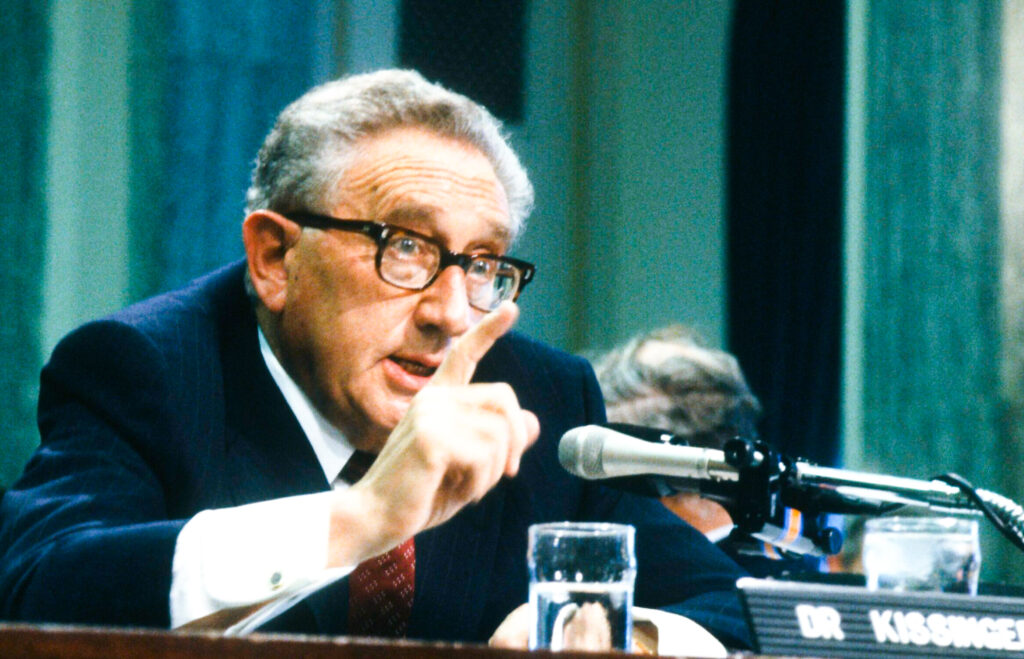
Kissinger in Enlai o pogojih sklenitve mirovnega sporazuma med ZDA in Vietnamom

Zanimiva konverzacija med ameriškim državnim sekretarjem Henryjem Kisingerjem in kitajskim predsednikom vlade Zhou Enlaijem leta 1971 o pogojih za sklenitev mirovnega sporazuma med ZDA in Vietnamom. Pazite na pasuse glede tega, da se morajo ZDA “zaradi ohranitve časti” kontrolirano umakniti iz Vietnama in da iz enakega razloga ne morejo pristati na plačilo vojnih reparacij, lahko pa kasneje odobrijo “prostovoljno pomoč”. Bomo videli, če bodo ZDA zagovarjale enake standarde, ko se bosta o miru pogovarjali Rusija in Ukrajina.

Excerpt from conversation between Chinese Premier Zhou Enlai and Dr. Henry A. Kissinger, Beijing, 9 July 1971.

Source: Office of the Historian, Foreign Service Institute, United States Department of State.

Kitajska je vodilna pri 37 izmed 44 ključnih tehnoloških področjih

Australian Strategic Policy Institute je naredil hvalevredno nalogo, na podlagi spremljanja znanstvenih objav je oblikoval poseben sledilnik prvenstva v kritičnih tehnologijah (ASPI’s Critical Technology Tracker). Ta sledilnik kaže, kako je Kitajska v zadnjem desetlrtju postala vodilna na 37 izmed 44 kritičnih tehnoloških področjih. V bistvu je vodilna povsod, razen (še) pri dizajnu polprevodnikov, superračunalnikih in kvantnih računalnikih, umetni inteligenci in cepivih.

Da se ne mučim z opisovanjem, spodaj je executive summary zadnjega poročila. Kot boste lahko videli, EU držav ni nikjer (vmes je ponekod na 2. ali 3. mestu V. Britanija zaradi svojih univerz). Nauki? Ha, ha. Zahteva velika vlaganja v znanost, raziskave in razvoj, privabljanje top tujih talentov, financiranje tehnoloških start-upov in scale-upov itd. Pa seveda ciljna javna naročila (javna uprava, vojska, varnost, ki ustvarijo povpraševanje po invencijah in inovacijah.

Aja, pa zanemarite propagandna sporočila spodaj, kot so, da je problem, ker s tem avtoritarna oblast prevzema globalno moč v tehnologijah, ki niso podvržene civilnemu nadzoru (global power and influence to an authoritarian state where the development, testing and application of emerging, critical and military technologies isn’t open and transparent and where it can’t be scrutinised by independent civil society and media) ali da ima Komunistična partija Kitajske željo po uporabi sovražnih metod kaznovanja držav ali podjetij ter omejevanja dostopa do tehnologije drugim državam (to use coercive techniques outside of the global rules-based order to punish governments and businesses, including withholding the supply of critical technologies). Ne vem, kaj išče takšna propaganda v takšnih primerjalnih analizah. Našteto namreč velja za ZDA, ki imajo prakso uvajanja tovrstnih tehnoloških sankcij.

__________

Western democracies are losing the global technological competition, including the race for scientific and research breakthroughs, and the ability to retain global talent—crucial ingredients that underpin the development and control of the world’s most important technologies, including those that don’t yet exist.

Our research reveals that China has built the foundations to position itself as the world’s leading science and technology superpower, by establishing a sometimes stunning lead in high-impact research across the majority of critical and emerging technology domains.

China’s global lead extends to 37 out of 44 technologies that ASPI is now tracking, covering a range of crucial technology fields spanning defence, space, robotics, energy, the environment, biotechnology, artificial intelligence (AI), advanced materials and key quantum technology areas.1 The Critical Technology Tracker shows that, for some technologies, all of the world’s top 10 leading research institutions are based in China and are collectively generating nine times more high-impact research papers than the second-ranked country (most often the US). Notably, the Chinese Academy of Sciences ranks highly (and often first or second) across many of the 44 technologies included in the Critical Technology Tracker. We also see China’s efforts being bolstered through talent and knowledge import: one-fifth of its high-impact papers are being authored by researchers with postgraduate training in a Five-Eyes country.2 China’s lead is the product of deliberate design and long-term policy planning, as repeatedly outlined by Xi Jinping and his predecessors.3

A key area in which China excels is defence and space-related technologies. China’s strides in nuclear-capable hypersonic missiles reportedly took US intelligence by surprise in August 2021.4

Had a tool such as ASPI’s Critical Technology Tracker been collecting and analysing this data two years ago, Beijing’s strong interest and leading research performance in this area would have been more easily identified…

Had a tool such as ASPI’s Critical Technology Tracker been collecting and analysing this data two years ago, Beijing’s strong interest and leading research performance in this area would have been more easily identified, and such technological advances would have been less surprising. That’s because, according to our data analysis, over the past five years, China generated 48.49% of the world’s high-impact research papers into advanced aircraft engines, including hypersonics, and it hosts seven of the world’s top 10 research institutions in this topic area.

The US comes second in the majority of the 44 technologies examined in the Critical Technology Tracker. The US currently leads in areas such as high performance computing, quantum computing and vaccines. Our dataset reveals that there’s a large gap between China and the US, as the leading two countries, and everyone else. The data then indicates a small, second-tier group of countries led by India and the UK: other countries that regularly appear in this group—in many technological fields— include South Korea, Germany, Australia, Italy, and less often, Japan.

This project—including some of its more surprising findings—further highlights the gap in our understanding of the critical technology ecosystem, including its current trajectory. It’s important that we seek to fill this gap so we don’t face a future in which one or two countries dominate new and emerging industries (something that recently occurred in 5G technologies) and so countries have ongoing access to trusted and secure critical technology supply chains.

China’s overall research lead, and its dominant concentration of expertise across a range of strategic sectors, has short and long term implications for democratic nations. In the long term, China’s leading research position means that it has set itself up to excel not just in current technological development in almost all sectors, but in future technologies that don’t yet exist. Unchecked, this could shift not just technological development and control but global power and influence to an authoritarian state where the development, testing and application of emerging, critical and military technologies isn’t open and transparent and where it can’t be scrutinised by independent civil society and media.

In the more immediate term, that lead—coupled with successful strategies for translating research breakthroughs to commercial systems and products that are fed into an efficient manufacturing base—could allow China to gain a stranglehold on the global supply of certain critical technologies.

Such risks are exacerbated because of the willingness of the Chinese Communist Party (CCP) to use coercive techniques5 outside of the global rules-based order to punish governments and businesses, including withholding the supply of critical technologies.6

Nadaljujte z branjem

Nemčija se z varčevanjem odpoveduje spodbujanju tehnološkega napredka

Speccifično, finančni minister Lindner bo z namenom varčevanja porezal izdatke za raziskave na področju kvantnih računalnikov. Kaj bodo Nemcem kvantni računalniki in tehnološka tekma z ZDA in Kitajsko?!

The trouble with austerity is that it always, without exception, hits public investment and ultimately economic growth. Investment is the part of national or federal spending that can be cut the easiest. It is happening again, in Germany, where the consequences of the 2024 austerity budget are slowly emerging. 

Euractiv reports that one of the many savings Christian Lindner identified to meet his 0.35% deficit goal for next year was the budget for quantum computing research. Having missed out on the digital revolution in the late 20th century, on digital business models and digital industry in the 21st century, Germany has now identified the next big industrial trend to sacrifice at the altar of austerity. Previously, during the pandemic, the government scoped out quantum computing as an area worthy of support to compete with the US, China and Japan. But that was then.

Nadaljujte z branjem

Ukrajinska vojna kot izredni dobiček za ZDA in Nato?

Kako interpretirati tekst novinarja Davida Ignatiusa (sicer zaupnika Anthonyja Blinkena) v Washington Postu, da je 18 mesecev vojne v Ukrajini za ZDA in zaveznice Nata prineslo izredni strateški dobiček (windfall) za relativno nizke stroške (če zanemarimo Ukrajince)? Kot arogantni, nemoralni cinizem hegemona ali kot hladno realpolitično oceno? 

WP

Jaz bi rekel, da je Ignatius v svoji, kot ji pravi, “midsummer accounting” imel v mislih slednjo interpretacijo. Ignatius v svojem članku nehote potrjuje pravi namen te ameriško sprovocirane proxy vojne v Ukrajini. Pač cilj ZDA je bil vedno, od 1990 naprej ter nato eksplicitno izražen leta 2008 na zasedanju Nata v Bukarešti, da ZDA svoj vojaški vpliv prek Nata prenesejo na meje Rusije. Ukrajina je pač služila kot sredstvo za dosego tega cilja. In čeprav ZDA ni uspelo Nata neposredno spraviti v Ukrajino, pa jim je uspelo Nato razširiti še v Finsko in Švedsko (glede slednje zadeva še ni in morda tudi ne bo kmalu končana). Hkrati je ZDA uspelo spraviti Nemčijo k pameti (k pravim “vrednotam”) in iz ruskega plina (na 5-krat dražjega ameriškega). Torej je bilo letošnje poletje triumfalno za ZDA in Nato zavezništvo?

Nadaljujte z branjem

Zakaj omenjanje potrebnosti pogajanj o miru med Ukrajino in Rusijo dela antimirovne liberalce tako nervozne?

Odziv na tale spodnji zelo korekten članek na spletni strani RTV Slovenija je danes precej vznemiril nekatere slovenske kao liberalce. Pogovori ali pogajanja o sklenitvi miru še ne pomenijo, da katerakoli stran popusti ali izgubi oziroma da sploh pride do dogovora, pomeni pa željo po sklenitvi miru kot boljše opcije od nadaljevanja slabe vojne. Toda zakaj je že omenjanje nujnosti / potrebnosti začetka pogajanj o miru za liberalce tako nesprejemljivo?

Zlaganost zahodnega liberalizma, primer kasetnih bomb, izraelskega genocida nad Palestinci…

Liberalci so liberalci zgolj v besedah, pa še to ex ante. Njihov moralizem so zgolj verbalne floskule. Polni so jih, ko gre za druge. Ko gre zanje, pozabijo na visoke ideale, ki so jih prej tako vehementno pridigali drugim. Koliko liberalcev, denimo iz Sveta Evrope, ste slišali protestirati, ko je Bidenova administracija (ki je še lani obsojala uporabo kasetnih bomb kot vojni zločin) pred dvema tednoma odobrila pošiljke kasetnih bom ukrajinski vojski? Znate našteti nekaj svetovno znanih filozofov, ki je javno izrazilo protest proti temu? Znate našteti imena nekaj svetovno znanih filozofov in siceršnjih dežurnih liberalcev, ki so javno izrazili protest nad konstantnim genocidom, ki ga izraelske oblasti izvajajo nad Palestinci? Koliko izmed njih javno izraža protest, ker Izrael skoraj vsako noč z raketami obstreljuje Damask?

Ni jih, mar ne? Univerzalna moralna pravila veljajo za druge, nam se jih ni treba univerzalno držati. Stephen M. Walt, profesor s Harvarda ima zelo dober komentar na to temo v Foreign Policy. Zaključuje s tem, s čimer se sicer kot realist glede mednarodnih odnosov povsem strinjam – če razumemo in priznamo interese tudi drugih držav, vodi to k bistveno bolj mirnemu in stabilnemu svetu, kot če poskušamo naše, zahodne vrednote vsiliti drugim (seveda, kadar nam to ustreza):

“a broadly realist approach to world politics would produce a saner and more peaceful world, precisely because it rejects universal crusading and recognizes that other societies have values that they will want to preserve as much as we might want to spread our own. For this reason, realism emphasizes the need to take the interests of other states into account and to make prudent diplomatic adjustments as balances of power shift.”

Nadaljujte z branjem

Bo nepodaljšanje sporazuma o izvozu ukrajinskega žita izstradalo Afriko ali Evropo?

V zvezi z ruskim nepodaljšanjem sporazuma o izvozu ukrajinskega žita ter svarili najvišjih politikov, na čelu z Ursulo von der Leyen, da bo to povzročilo lakoto v Afriki, nekaj ne štima. Prvič, če je verjeti spodnji grafiki, narejeni na podlagi podatkov Svetovne banke, so bile v letu 2022 afriške države deležne le 12.2% izvoza ukrajinskega žita. Evropske države so dobile kar 40% tega žita, preostanek (46%) je šel v Azijo, od tega večina na Kitajsko. In drugič, da je z izvozom ukrajinskega žita  nekaj narobe, je pokazal upor madžarskih, poljskih, slovaških, bolgarskih in romunskih kmetov izpred nekaj mesecev, ki so demonstrirali proti nadaljevanju uvoza ukrajinskega žita in posledičnemu neznosnemu znižanju cen žita v Evropi. Torej ukrajinsko žito je v dovolj velikih količinah pritekalo v Evropo, da je lahko imelo vpliv na cene v Evropi.

Torej, kaj je zdaj z argumentom, da nepodaljšanje žitnega sporazuma pomeni lakoto v Afriki? Glede Afrike je, kolikor je videti novice v medijih, Putin itak obljubil, da jim bo zastonj ali po ugodnih cenah prodajal dobavljal rusko žito. Ali pa nepodaljšanje žitnega sporazuma zgolj pomeni, da ukrajinsko žito več ne bo prihajalo v Evropo?

UKR exports of grain

Vir: twitter

Nadaljujte z branjem

Kako se je Ukrajina ujela v ameriško past: Sme se boriti za pravico Nata do širitve, ne more pa postati del njega

Gordon Hahn dobro ugotavlja, da če bi v ukrajinski vojni zahodnim državam res šlo za vojno za demokracijo in zaščito zahodnih vrednot itd. itd., bi se z vsemi silami vključile v to vojno. Dejansko pa gre zgolj za kaprico ZDA, ki jim kot slepe ovce sledijo ostale evropske države, da imajo pravico do neomejenega širjenja Nata z namenom vzdrževanja ameriške globalne hegemonije. Ukrajina pa je bila izbrana za to, da se bori – do zadnjega Ukrajinca, do zadnjega kvadratnega metra ukrajinske zemlje – za to ameriško kaprico. Ukrajina nikoli ne bo mogla izpolniti nemogočega pogoja za članstvo v Natu, da premaga Rusijo (in tudi če bi ga izpolnila, bi ji naložili nove težko izpolnjive pogoje), sme pa pasti v boju za to ameriško kaprico.

U.S. President Joseph Biden and not surprisingly NATO made it evidently clear that there will be no Ukrainian membership in NATO until after the war. This stipulation and the requirement – objective and subjective – of Ukraine’s victory over Russia in the war constitutes a form of de facto blackmail of Kiev on the part of the West. This dooms Ukraine to fight ‘as long as it takes’ – in the sloganeering vernacular of the White House – to the cliched but very real last Ukrainian in order to gain NATO membership.

The Blackmail Trap

On the eve of NATO’s Vilnius summit Joseph Biden stated clearly that he had consolidated the alliance’s members around the position that it will not offer Kiev membership in NATO until after the war. Never mind that this carrot was dangled over Ukraine for additional months as war raged and Ukrainians died by the tens of thousands at the West’s behest. More importantly, this ‘decision’ (actually a long ongoing policy) means that Ukraine cannot gain NATO membership without attaining victory in the war with Russia. Why? Because a defeated Ukraine cannot become a NATO member not just from Washington’s and Brussels’ point of view but also from that of Moscow.

Anything that can be called a Russian victory objectively speaking and in Moscow’s view cannot coexist with the survival of the principle of NATO’s ‘open door policy’ and its application to Ukraine.* As long as the West and Ukraine insist on the right of Ukraine to be a member of the alliance, Russia will continue its special military operation and is likely to escalate to full-scale war. Ukraine is faced with the Hobson’s choice of continuing war – one which is eviscerating Ukraine’s landscape in every possible sense—from the economy to society to the polity (now distinctly undemocratic) to the ecology. It is being held hostage. Kiev is told that it must risk survival – though naturally the West will do everything it can ‘for as long as it takes’ – in order to achieve NATO expansion.

Nadaljujte z branjem