Mir namesto vojne: Belt & Road Iniciativa kot nova globalna razvojna paradigma

China has its own worldview which is based on different aspirations from those embraced by the US. A Sputnik India columnist describes the path China is following.

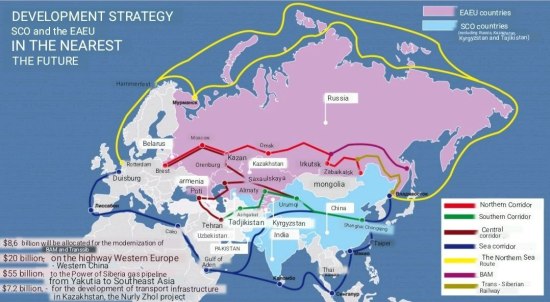
While the ‘United States of Chaos’ is sending warships to the Middle East and condoning mass murder of civilians in Gaza, there is a hopeful event of peace, cooperation and development happening in Beijing, where 140 countries have gathered for the tenth anniversary of the Belt and Road Initiative, the largest infrastructure project in human history.

The difference couldn’t be starker – on the same day, Xi Jinping announced $100 billion for building infrastructure around the world, while Biden’s regime released a plan for $100 billion for aggravating the wars in Ukraine and Israel.

The world has two diametrically opposed paradigms to choose from: savagery of the military industrial complex of the USA or civilization of the construction industrial complex of China, Russia, and the Global South. More appallingly, the US is spending millions of dollars every year on disinformation to attack the visionary and transformative BRI. It’s time to understand the truth and what is at stake for billions of people.

Belt and Road SCO map 2023

Nadaljujte z branjem

Odstranitev začasnih tehničnih ovir na meji s Hrvaško po obrnjenem homeopatskem načelu

Stanko Štrajn

Pospravljanje začasnih tehničnih ovir na meji s Hrvaško je nazoren primer, kako Vlada transparentno ravna negospodarno, prav zapravljivo in namesto za javni interes skrbi za enormne dobičke izvajalca odstranjevanja ograj MINIS d.o.o. Ministrstvo za notranje zadeve vodi ta enostavni projekt izjemno počasi in negospodarno, tako da vse kaže, da je ta projekt namenjen predvsem preplačevanju opravljenega dela in bogatenju MINISA.

Na Urad Vlade RS za komuniciranje sem 11. 10. 2023 poslal naslednji vljuden dopis s prošnjo, da mi urad posreduje odgovore na postavljena vprašanja:

Javni mediji objavljajo o enostavnem projektu odstranitve začasnih tehničnih ovir, to je 143 km panelnih ograj in 50 km ograj iz rezilne žice informacije, iz katerih sledi, da ograje ne bodo pospravljene in odstranjene v obljubljenem in napovedanem roku. Kot občan, ki sem že od leta 2016 dalje prisiljen gledati tik ob moji hiši na bregu Kolpe ta dokaz nerazsodnosti slovenske oblasti vljudno prosim, da mi odgovorite na naslednja vprašanja o ključnih dejstvih po katerih bo mogoče ugotoviti kdaj bo Ministrstvo za notranje zadeve izpolnilo predvolilne obljube oziroma programske zaveze Vlade RS v zvezi z odstranitvijo ograj na meji s Hrvaško:

Nadaljujte z branjem

Priložnosti francoske jedrske zmage za Nemčijo

Kot piše Financial Times, se je Nemčija uklonila francoskemu pritisku, da sme uporabiti mehanizem in sredstva državne pomoči za obnovo svojih jedrskih elektrarn. To je velika zmaga za jedrsko energijo kot najbolj zanesljivega in najcenejšega vira brezogljične energije in za njeno renesanso v Evropi. Nemčija se je do zdaj temu upirala, ker bi francoska industrija zaradi nižje cene elektrike iz francoskih jedrskih elektrarn lahko pridobila konkurenčno prednost pred nemškimi podjetji.

The agreement reached on Tuesday among energy ministers in Luxembourg will mean that France could use government support to finance its largely state-owned nuclear plants, which generate about 70 per cent of its electricity.

Such a move had been heavily contested by Germany, Austria and Luxembourg, which have been historically opposed to nuclear power but also feared that allowing Paris to subsidise its nuclear plants would provide French industry with structurally lower energy prices, giving it a competitive advantage.

As part of the new EU rules for the bloc’s electricity market, France will be allowed to use funding structures known as contracts for difference. These set a minimum price guarantee for power providers, as well as a ceiling above which the state can recover any revenue.

Vendar pa lahko to francosko zmago izkoristi tudi Nemčija in ponovno zažene zadnjih 8 zaprtih reaktorjev. Nemške jedrske elektrarne so bile v bistveno boljšem stanju od francoskih in so elektriko proizvajale po polovični ceni (20-25 €/MWh) glede na francoske. Ob tem se človek pri zdravi pameti ponovno vpraša, zakaj je pri tako nizki proizvodni ceni elektrike Nemčija sploh zaprla svoje jedrske elektrarne in namesto njih zdaj proizvaja elektriko po ceni med 150 in 200 €/MWh, od tega pol leta večinoma iz premoga in plina. Zakaj Nemčija s svojo energetsko politiko kaznuje tako svoje prebivalce kot podjetja in zakaj z njo (prek 5 do 8-krat višjih emisij na MWh kot jedrska energija) kaznuje in uničuje tudi planet? Ima kdo racionalno razlago?

Nadaljujte z branjem

Zaton ameriške hegemonije: Rekviem za diktat ameriških pravil igre in nov začetek za kulturni pluralizem

Tudi zahodni intelektualci postopoma dojemajo, da smo prišli do točke preloma z ameriško globalno hegemonijo. Kitajsko-ruska-arabska vrednostno-nevtralna alternativa se je v državah “globalnega juga” izkazala kot bolj privlačna alternativa od ameriške kulturne hegemonije. Toda zavedanje nove realnosti med zahodnimi intelektualci gre še dlje, utrjuje se priznavanje, da na ameriškihvrednotah temelječa pravila” svetovnega reda niso univerzalni civilizacijski princip, pač pa da je možen tudi nov normativni sistem, ki temelji na “funkcionalni, vrednostno nevtralni, situacijski in diplomatski etiki” kot principa urejanja vzajemnih odnosov med svetovnimi silami. Drugače rečeno, kot pravi Arta Moeini iz Carnegie Council’s U.S. Global Engagement Initiative (USGE):

“Namesto da poskušamo vsiljevati svoje vrednote drugim (ne glede na to, kako dobre ali prave mislimo, da so), bi morali na Zahodu dati prednost sodelovanju z drugimi velikimi silami na podlagi skupnih interesov in ciljev.

______________

Regardless of how it eventually concludes, the Russo-Ukrainian War represents a seismic event signaling profound changes in the global landscape. The unipolar era is at its end, major countries are more concerned with their cultural sovereignty and strategic autonomy than they have been in decades, and it seems inevitable that the once-dominant Western hegemony must gradually yield to a more diverse and multipolar system.

The period following World War II witnessed the ascendancy of the United States and its allies as architects of a new international order premised on the institutionalization of Western values such as democracy and human rights. This Western-centric approach to global governance—known as the “rules-based order”—has encountered mounting challenges. China’s rise, Russia’s geopolitical subversiveness, and the growing assertiveness of emerging powers from the Global South have eroded Western dominance. The outcome is a more diverse world, characterized by multiple centers of power coexisting, challenging any single ideology or set of substantive values.

We live in a period we should perhaps call the Great Transition. We are witnessing the emergence of a polycentric, regionalist, and interest-based order centered around middle powers and civilizational states: These states hold historic disagreements and rivalries but are nevertheless united in rejecting a U.S.-led system, which they consider the latest instantiation of a Western exceptionalism and colonial hubris that abhors genuine difference and opposing worldviews.

Nadaljujte z branjem

Kako je zaradi dvoličnosti Zahoda v Ukrajini in Gazi razpadel svetovni red in kako je Zahod proti sebi obrnil “Globalni Jug”

Odličen članek na to temo v Financial Timesu:

Western support for Israel’s assault on Gaza has poisoned efforts to build consensus with significant developing countries on condemning Russia’s war against Ukraine, officials and diplomats have warned.

The reaction to the October 7 attack on Israel by Islamist militant group Hamas and to Israel’s vow to hit back against Gaza has undone months of work to paint Moscow as a global pariah for breaching international law, they said, exposing the US, EU and their allies to charges of hypocrisy.

In the flurry of emergency diplomatic visits, video conferences and calls, western officials have been accused of failing to defend the interests of 2.3mn Palestinians in their rush to condemn the Hamas attack and support Israel.

In the first days after Hamas’s assault, some western diplomats worried that the US was giving carte blanche to Israel to attack Gaza with full force.

That had eroded efforts since Russia’s 2022 invasion of Ukraine to build consensus with leading states in the so-called Global South — such as India, Brazil and South Africa — on the need to uphold a global rules-based order, said more than a dozen western officials.

The backlash had solidified entrenched positions in the developing world on the Israeli-Palestinian conflict, officials said. They warned that this could derail future diplomatic efforts on Ukraine.

“We have definitely lost the battle in the Global South,” said one senior G7 diplomat. “All the work we have done with the Global South [over Ukraine] has been lost . . . Forget about rules, forget about world order. They won’t ever listen to us again.”

Nadaljujte z branjem

Misterij rekordnega porasta temperature: Hunga Tonga, El Nino, bolj čist zrak, večja sončna aktivnost… ?

Kot sem že pisal, rekorden porast globalnih temperatur v letošnjem letu bega podnebne fizike in klimatologe. Porast temperature je previsok, da bi ga bilo mogoče pripisati trendnemu globalnemu segrevanju. Prav tako ga ni mogoče pripisati nobenemu posamičnemu dejavniku. Čeprav se, moj gut feeling, še najboljša razlaga zdi, da gre za vpliv Hunga Tonge – podvodni izbruh indonezijskega vulkana, ki je v atmosfero spustil ogromne količine vodne pare, kar deluje kot ekspandiran toplogredni učinek.

Zanimivo je še, da zmanjšane emisije žvepla in drugih delcev v zadnjih desetletjih dodatno pospešujejo porast globalne temperature – ker je manj delcev v atmosferi, več sonca prodre skozi atmosfero in jo dodatno segreva. Čistejši bo zrak, večji bo ta paradoksalni učinek.

Record warmth is to be expected as greenhouse gases heat up the planet. But a spike in global temperatures observed in September was so much more dramatic than past extremes that some climate scientists said it defies a simple explanation.

A National Oceanic and Atmospheric Administration analysis released Friday further cemented what several other data sets had already affirmed: September was not just the globe’s warmest on record, but its most atypically warm month in nearly two centuries of observations. It was 0.83 degrees above the old record for the month, a staggering departure from what was already extreme.

No single factor — not human-caused global warming, not a burgeoning El Niño weather pattern — can immediately assume credit for such a drastic diversion from anything humans have ever seen before, scientists said. It is so far outside the realm of what has occurred, it creates a new conundrum that will take time for research to unpack.

Nadaljujte z branjem