Monthly Archives: oktober 2023
The War On Drugs – I Don’t Live Here Anymore
Misterij rekordnega porasta temperature: Hunga Tonga, El Nino, bolj čist zrak, večja sončna aktivnost… ?
Kot sem že pisal, rekorden porast globalnih temperatur v letošnjem letu bega podnebne fizike in klimatologe. Porast temperature je previsok, da bi ga bilo mogoče pripisati trendnemu globalnemu segrevanju. Prav tako ga ni mogoče pripisati nobenemu posamičnemu dejavniku. Čeprav se, moj gut feeling, še najboljša razlaga zdi, da gre za vpliv Hunga Tonge – podvodni izbruh indonezijskega vulkana, ki je v atmosfero spustil ogromne količine vodne pare, kar deluje kot ekspandiran toplogredni učinek.
Zanimivo je še, da zmanjšane emisije žvepla in drugih delcev v zadnjih desetletjih dodatno pospešujejo porast globalne temperature – ker je manj delcev v atmosferi, več sonca prodre skozi atmosfero in jo dodatno segreva. Čistejši bo zrak, večji bo ta paradoksalni učinek.
Record warmth is to be expected as greenhouse gases heat up the planet. But a spike in global temperatures observed in September was so much more dramatic than past extremes that some climate scientists said it defies a simple explanation.
No single factor — not human-caused global warming, not a burgeoning El Niño weather pattern — can immediately assume credit for such a drastic diversion from anything humans have ever seen before, scientists said. It is so far outside the realm of what has occurred, it creates a new conundrum that will take time for research to unpack.
Katastrofalna energetska politika na OVE fokusiranih držav
Kako je Izrael stopil v past
One of the more interesting arguments I’ve been seeing a lot on the Israeli-Palestinian conflict is: “Hamas undoubtedly predicted Israel’s massive retaliation, that makes them all the more guilty for sacrificing Palestinian lives”.
What people don’t realize is that the fact this reaction – the massive collective punishment – was indeed immensely predictable says just as much about Israel than it does about Hamas.
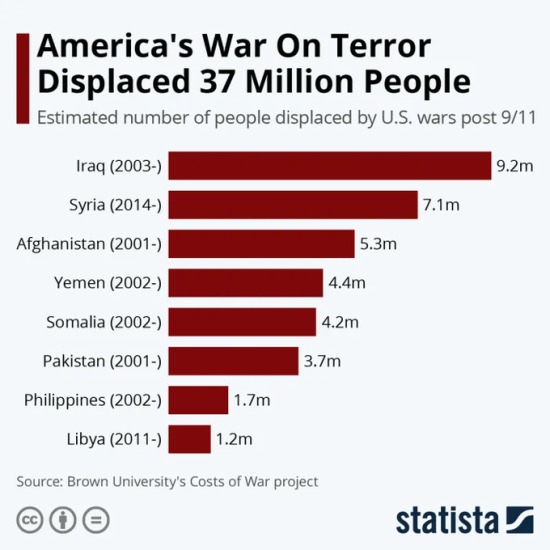
It says a lot about Israel for 3 reasons. 1) It says a lot about Israel’s image that it was expected to react with massive collective punishment, violating international law. 2) It also says a lot about Israel’s inability to think strategically that it would react in exactly the way its adversary predicted it to. Revenge is not a strategy, in fact it is the opposite of strategic. And, lastly 3) it says a lot that Israel doesn’t seem to have learned a thing from the US’s immense mistakes in its post 9-11 response.
Yes, of course, it also says a lot about Hamas, because they knew their actions would undoubtedly cause untold suffering on their own people (on top of the suffering they caused with the attacks). No question there.
Najbolj osovražena ženska med ekonomisti
Pred dnevi je Nobelovo nagrado za ekonomijo prejela Claudia Goldin za svoje dolgoletno raziskovanje neenakosti med moškimi in ženskami na delovnem mestu. Indikativno je, da je Goldinova šele tretja ženska med 93 nobelovimi nagrajenci za ekonomijo, kar sicer dopolnjuje ostale podatke o ekonomiji kot najbolj mačistični veji znanosti.
Tudi zaradi velikega prispevka Goldinove k raziskovanju razlogov za neenak tretma žensk na delovnem mestu in neenakost plačil med spoloma za isto delo so te razlike danes splošno prepoznane in so tudi vodile k določenim afirmativnim in korektivnim ukrepom. Denimo enakost plačil ali ženske kvote pri zaposlovanju. Nobelova nagrada Goldinovi je tako več kot zaslužena. Vendar pa bi jaz to kolumno izkoristil za osvetlitev prispevka k znanosti ene druge ekonomistke, ki si je lani v New Yorkerju prislužila naslov najbolj osovražene ženske v ekonomiji.
Prljavo kazalište – Sretno dijete
Za otroke v Gazi, ki nimajo te sreče, da bi samo gledali vojne filme v barvah. Molimo, da bi jim bila ta vojna prizanešena.
Sankcije proti Rusiji odlično delujejo. V korist Kitajske
G7 države so se na mesečni ravni odpovedale ca. 4 milijardam dolarjev izvoza v Rusijo (x 18 mesecev = 72 milijard $, kar je malce več od letnega BDP Slovenije), kar je izredni prihodek Kitajske (windfall gain). Oblasti v Pekingu so lahko nadvse hvaležne zahodnim državam za to darilo.
Net Zero aroganca Zahoda: Obsodba Afrike na revščino
For the past two centuries, human prosperity has correlated with one factor: energy, released through the burning of fossil fuels. This is a self-evident global truth. Europe and North America, the wealthiest regions on the planet, are also those with the highest per capita CO2 emissions (along with the oil-producing Gulf states); Africa, on the other hand, has the world’s lowest levels of per capita energy use — the average African consumes less electricity than a refrigerator and around 600 million people live without access to to electricity. In this sense, it’s the “greenest” continent on the planet. It’s also the poorest, with almost half a billion Africans living in extreme poverty.
More than any other resource, Africa is starved of the energy it needs for economic development. This isn’t for lack of natural endowment. Africa possesses vast reserves of coal, oil and natural gas. But extracting those resources and using them for domestic development requires money, infrastructure, expertise and institutional capacity — which Africa’s poorest nations, especially in the sub-Sahara, sadly lack. One solution is partnering with foreign energy companies — until recently, mostly European and American firms — but that means that much of the domestically produced gas and oil is then exported rather than used for local development.
Yet beyond practical difficulties, in recent years an ideological force has also come to stymie potential development: the global political creed of Net Zero.
While the phrase is already associated with straitened living standards in the West, in the developing world Net Zero threatens to lock countries into perpetual underdevelopment. So far, it has mainly taken the form of Western countries limiting overseas fossil fuel investments. As early as 2014, one study found that the Overseas Private Investment Corporation, the main US development finance institution, had started “to invest principally in solar, wind, and other low-emissions energy projects as part of the [Obama] administration’s effort to promote clean energy technology”.
 DAMIJAN blog
You must be logged in to post a comment.