Evropski Green Deal je mrtev

Revija Nature je objavila članek, kjer poskuša revidirati evropski Green Deal, gelde na yo, da so se okoliščine po njegovem sprejemu bistveno spremenile. Specifično, avtorji pravijo, (1) predpostavka, da bodo vse države sodelovale pri uvedbi ogljičnega davka se ni uresničila, izvaja ga samo EU; (2) po začetku energetske krize in izbruha inflacije so se obrestne mere zelo povečale, javni dolgovi držav pa se po pandemiji in energetski krizi močno povečali, in (3) geopolitična situacija se je zaradi geostrateške tehnološke vojne drastčno spremenila – Kitajska in ZDA subvencionirata razvoj novh “čistih” tehnologij, ki pa so v osnovi zelo umazane (proizvodnja baterij in panelov ter proizvodnja energije za njihovo proizvodnjo), medtem ko se EU foikusira brezogljične cilje in v procesu z visokimi ofljičnimi davki in cenami energije ubija konkurenčnost svoje industrije. Nature:

The Green Deal was predicated on three presumptions, each of which has not been borne out.

First, it was widely expected that a global carbon tax would emerge, and it has not. Most economists view carbon taxation as the optimal policy for pushing carbon-intensive industries to lower their emissions2. Carbon taxes also bring in revenue to help finance the green transition. Yet Europe now stands alone in implementing carbon pricing on a large scale.

However, most countries worldwide do not levy carbon taxes. And those that do put a relative value of at most a few dollars on each tonne of emitted carbon dioxide equivalent, once they have corrected for the many firms that are exempted. That low value doesn’t reflect the real damage done, now and in the future — the ‘social cost of carbon’3.

Why has carbon taxation not taken off? International coordination of climate policies has fallen victim to geopolitical fragmentation and technological rivalry. The United States and China are competing fiercely over green technologies — each has issued massive subsidies for research and development (R&D) and manufacturing in areas such as batteries, solar panels and wind power.

Second, the Green Deal was designed and adopted at a time when long-term interest rates were historically low or even negative in real terms, and when levels of public debt were moderate. These economic conditions were conducive to financing the massive investments necessary to accomplish the transition to net zero, especially electrification. The aim was also to extend financial support to help European populations to bear the early costs of the green transition4.

However, the post-pandemic environment is very different. Public debt as a percentage of gross domestic product (GDP) has soared in most advanced and European economies to more than 80%, on average. Greece, Italy, France, Spain and Belgium have public-debt-to-GDP ratios of more than 100%. This will limit the possibilities for helping households to absorb the costs of the transition, and will force careful selection of public and green investments.

Third, geopolitical trends challenge the Green Deal. As currently designed, the deal impedes European competitiveness by increasing the cost of energy substantially, mainly to cover the cost of building infrastructure around renewables and decommissioning those around fossil fuels. Europe also depends heavily on external suppliers for ‘critical minerals’ — sources of elements such as lithium and cobalt — for renewable energy and other green technologies.

Like the United States, Europe is facing challenges from China — which has control of 60–80% of the world’s production and processing of critical minerals. China is also the biggest emitter of CO2, the largest producer of coal-based electricity and the world leader in batteries and electric vehicles. China’s strategy is to act as a monopolist with low pricing, undercutting others.
Nadaljujte z branjem

Vojna v Siriji: Kaj prihaja

Zanimivo branje:

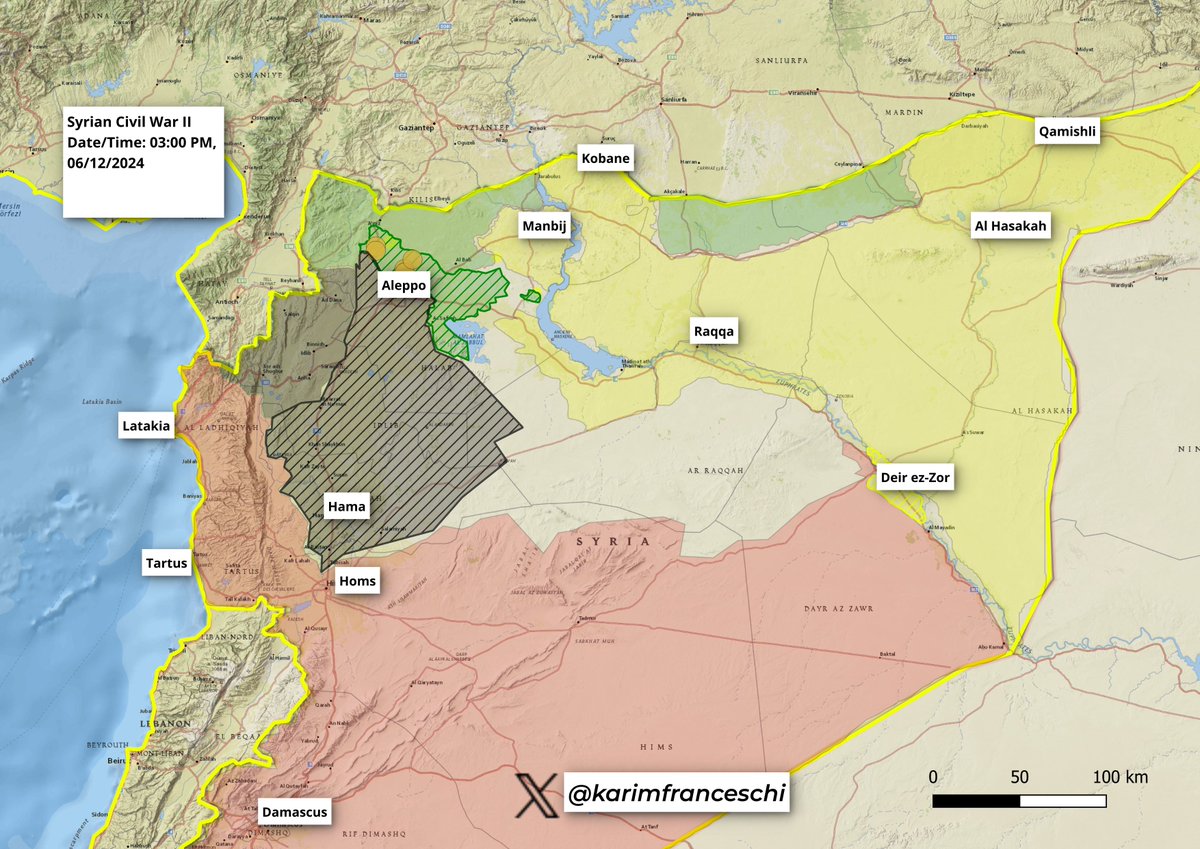
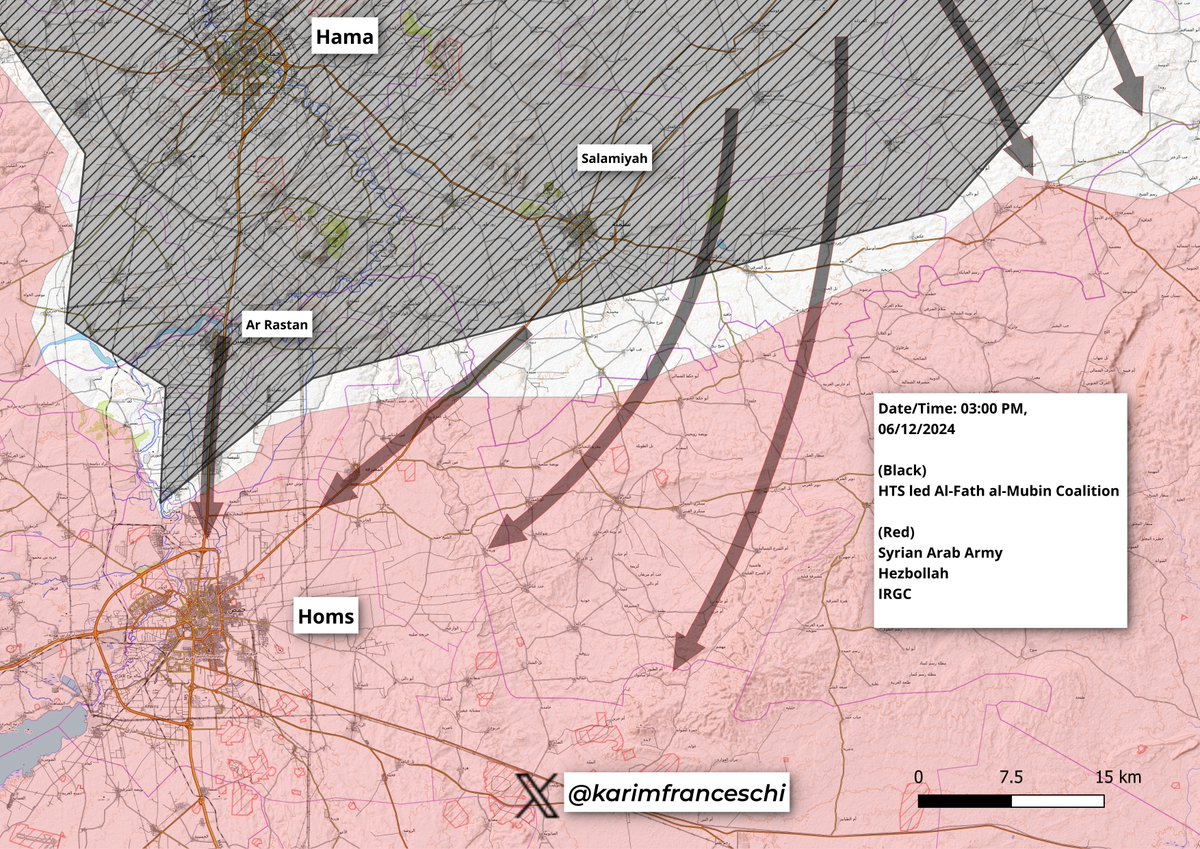
I’ve fought in #Syria for half a decade—as an SDF soldier. In that time, I studied war, drew battle plans, and learned to know my enemy. When HTS seized their first village, I saw what few others could. Take a peek at what’s coming next—a 🧵 Image

1/ Assad’s forces are done. Homs is indefensible—his best troops were in Hama, and when the time came for close quarters urban combat, they folded. SAA must retreat now, taking forces and materiel to the Nusayriyah Mountains to their last defensible line.Image

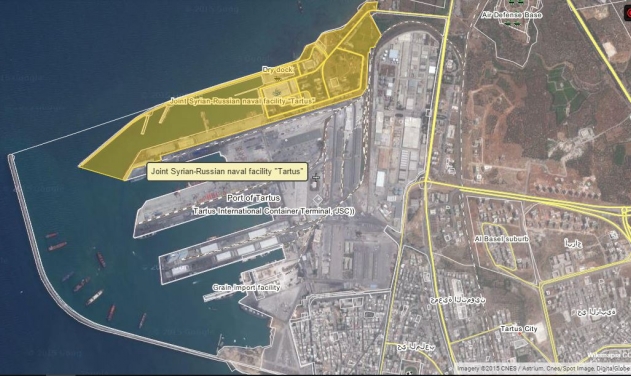
2/ If they don’t move soon, they risk losing both troops and resources they can’t afford to replace. Tartus is non-negotiable for the regime—it’s home to Russia’s naval base, the only reason Assad is still in power. Image

Nadaljujte z branjem

Kako je Kitajska brez izstreljenega strela prevzela svet

Spodaj je zgodba v 11 slikah o kitajskem sistematičnem prevzemanju sveta v zadnjih treh desetletjih. In to, za razliko od ZDA, brez da bi ji bilo treba postavljati vojaške baze po svetu, brez da bi se vmešavala v politične procese znotraj držav, brez da bi poskušala vplivati na izide volitev, brez da bi orkestrirala politične prevrate in brez da bi napadla katero državo. Strategija Kitajske je bila  zelo preprosta, vendar sistematična:

  1. vlaganja v raziskave in razvoj v ključne tehnologije namesto v vojaške izdatke,
  2. investicije, investicije, investicije v lastno gospodarstvo (infrastrukturo, industrijo, energetiko, stanovanjski sklad),
  3. strateško najemanje / prevzemanje ključnih nahajališč strateških materialov širom sveta,
  4. zagotovitev ključnih energentov s strateškimi navezavami (Rusija, Iran, Savdska Arabija itd.),
  5. oblikovanje vertikalnih predelovalnih verig teh materialov pod kitajskim nadzorom,
  6. sistematično povezovanje vseh ključnih trgov prek lastnega financiranja naložb širom sveta v infrastrukturo (železnice, pristanišča, ceste, letališča),
  7. nevtralnost ob vseh konfliktih in zagovarjanje mirnih rešitev ter intenzivnosti trgovinskega sodelovanja (glavni trgovinski partner).

Slika 1: Kitajska vlaganja v raziskave in razvoj  (Kitajska v. ZDA)

Nadaljujte z branjem

Nemška morala je na psu

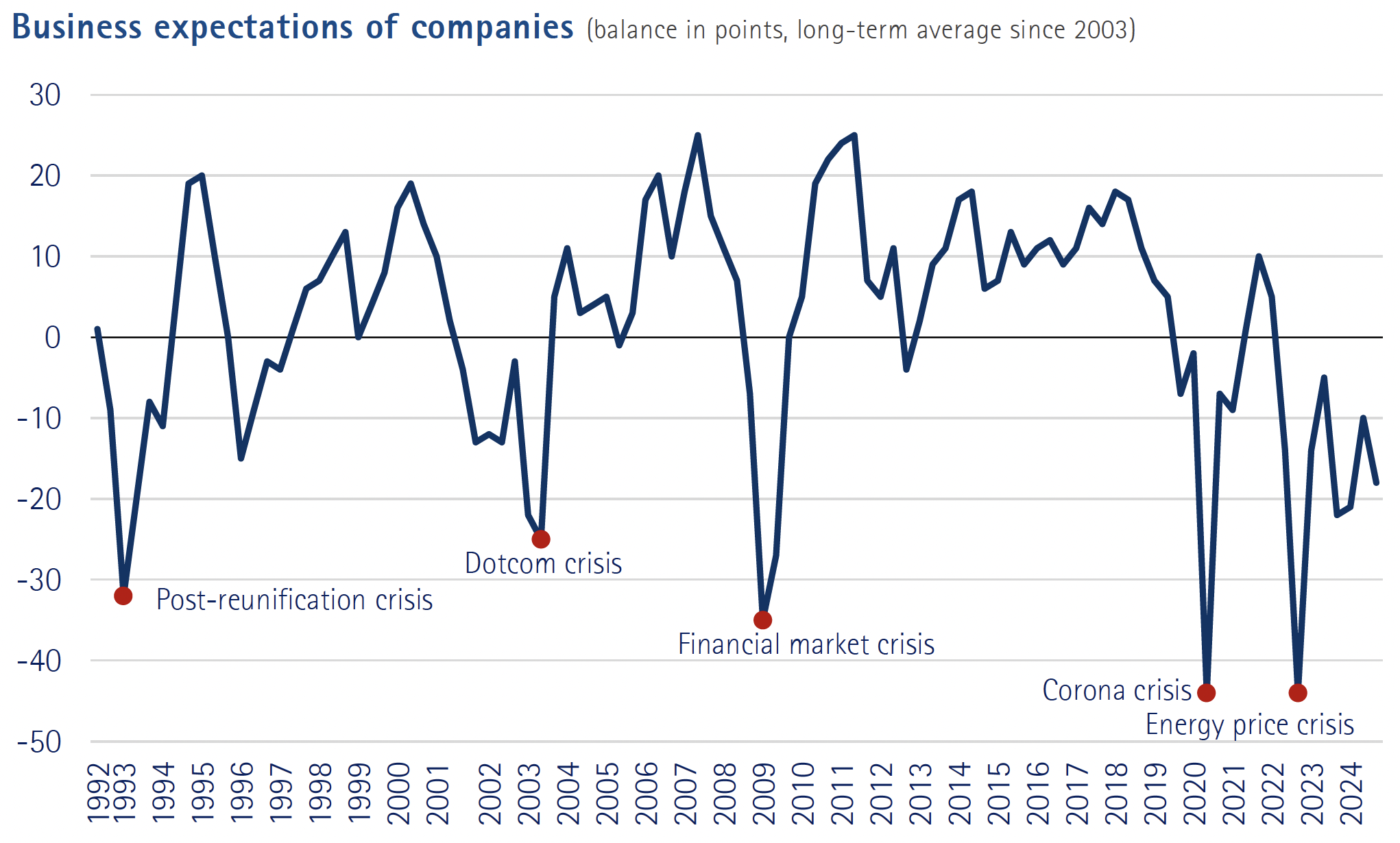
Nemška poslovna morala (sentimenti) je na psu. Kot ugotavlja anketa nemške zbornice za trgovino in industrijo, tako slabo v nemčiji ni bilo še nikoli. in kriza še kar traja in ji ni videti konca niti naslednje leto. Glavna faktorja sta visoke cene energije zaradi vojne v Ukrajini in nekonkurenčnost na kitajskem trgu zaradi tehnološkega zaostanka. Vendar naročila zaradi stagnacije padajo tudi na domačem trgu. Cela situacija izgkeda kot spirala smrti navzdol.

Only 19 percent of companies rate their current situation as “good,” while 35 percent describe it as “bad.” The balance has dropped by 11 points to minus 16 points, well below the long-term average of plus 21 points.

“We last saw such a situation 20 years ago, during the severe crisis in 2002 and 2003. This is a clear alarm signal,” warned Wansleben. “At that time, the government sought to address the crisis with the Agenda 2010 reforms. We need deep reforms now as well.”

Južna Koreja nima sreče s predsedniki: vsi končajo v zaporu

Moram priznati, da tega nisem vedel, ker se nisem s tem ukvarjal. Toda spodnji spisek usod južnokorejskih predsednikov je impresiven: razen enega so vsi pristali v zaporu. Menda obstaja šala v Južni Koreji glede njihovih predsednikov: “Vsi so v zaporu ali na poti tja”.

  1. Syngman Rhee (1948–1960) – Overthrown.
  2. Yun Bo-seon (1960–1962) – Overthrown.
  3. Park Chung-hee (1962–1979) – Assassinated.
  4. Choi Kyu-hah (1979–1980) – Removed by a military coup.
  5. Chun Doo-hwan (1981–1988) – Sentenced to death after his presidency.
  6. Roh Tae-woo (1988–1993) – Sentenced to 22 years in prison after his presidency.
  7. Kim Young-sam (1993–1998) – Imprisoned during the term of President No. 3. As president, secured convictions against two of his predecessors.
  8. Kim Dae-jung (1998–2003) – Imprisoned under President No. 3 and sentenced to death under President No. 5 (later pardoned). Nobel Peace Prize laureate.
  9. Roh Moo-hyun (2003–2008) – Impeached (later overturned by the Constitutional Court). Investigated for corruption after his term and committed suicide.
  10. Lee Myung-bak (2008–2013) – Arrested for corruption after his presidency; sentenced to 15 years in prison.
  11. Park Geun-hye (2013–2016) – Impeached and arrested for corruption; sentenced to 24 years in prison.
  12. Moon Jae-in – Recent president; no imprisonment.
  13. Yoon Suk Yeol – Impeachment likely.

Vir: Nexta via X

Poskus prevrata v Južni Koreji, ki se je ponesrečil. Kam vodijo sledi?

Običajni osumljenec za prevrate različnih vrst, ki je trenutno na delu v Gruziji, je imel svoje prste vmes očitno tudi v Južni Koreji…

______________

The attempted coup by the president of South Korea against the majority in the National Assembly has failed.

The quick reaction of the leadership of the Democratic Party, which holds the majority, has saved the day.

There was a struggle over the budget which the president’s minority government had lost.

In a furious reaction President Yoon Suk Yeol and his defense minister and school buddy Kim Yong-hyun decided to declare martial law. Remarkably the prime minister of the president’s government was not informed about the step:

Nadaljujte z branjem

Kako lahko Kitajska zaustavi zahodno high tech industrijo? Prepoved izvoza galija in germanija

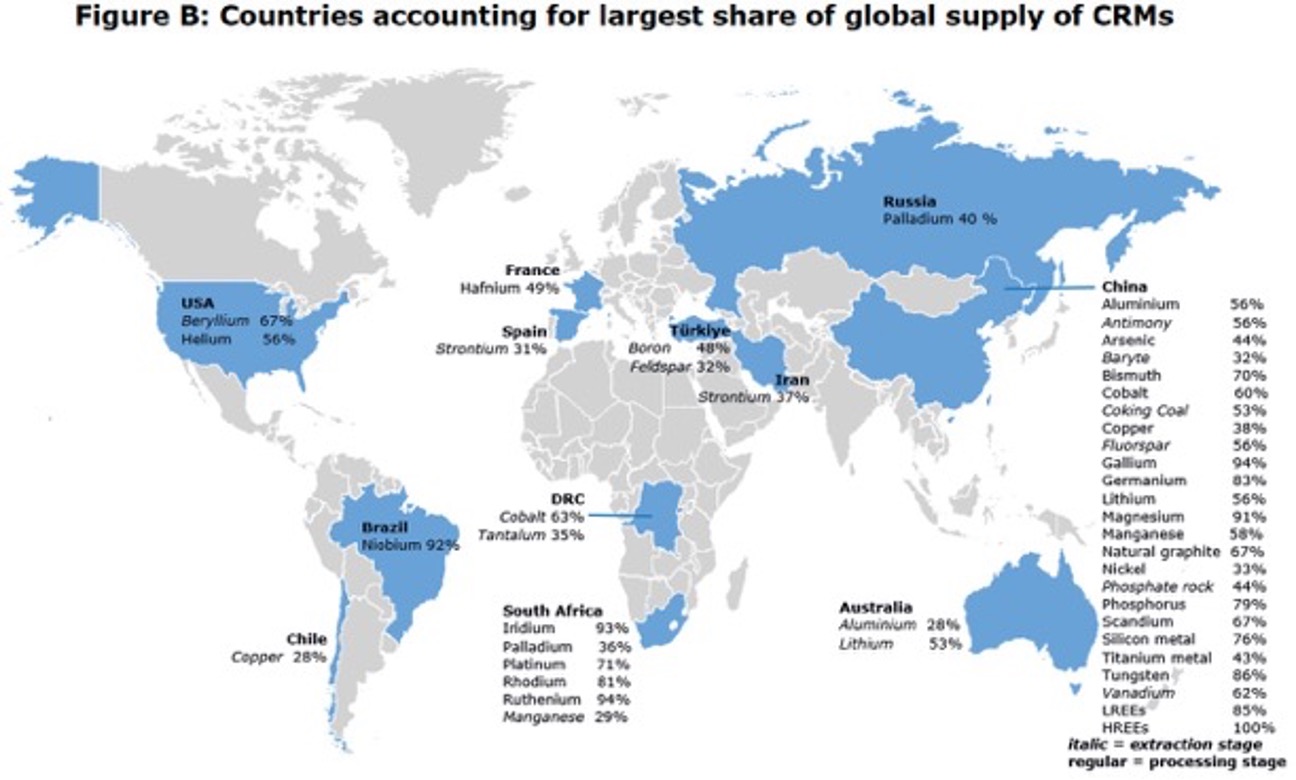
ZDA in Evropa sicer načeloma lahko z visokimi carinami, tehnološkimi sankcijami in prepovedjo uvoza (vsaj delno) zaustavijo neposredni uvoz kitajskih high tech izdelkov. Toda kitajski odgovor je precej bolj subtilen in učinkovit. Kitajska ne samo, da kontrolira proizvodnjo med 67 in 80 % vseh komponent in končnih izdelkov t.i. čistih tehnologij (sončni paneli, baterije, vetrnice, elektrolizerji in komponente zanje), ki jih v zahodnem svetu potrebujemo za razogljičenje, pač pa kontrolira tudi dobavne verige v obsegu 60 do 100 % vseh ključnih materialov za sodobno high tech industrijo. Spodnja slika kaže globalni delež Kitajske pri ponudbi kritičnih materialov (critical raw materials, CRM). Slike so iz šestega poročila Evropske komisije o CRM.

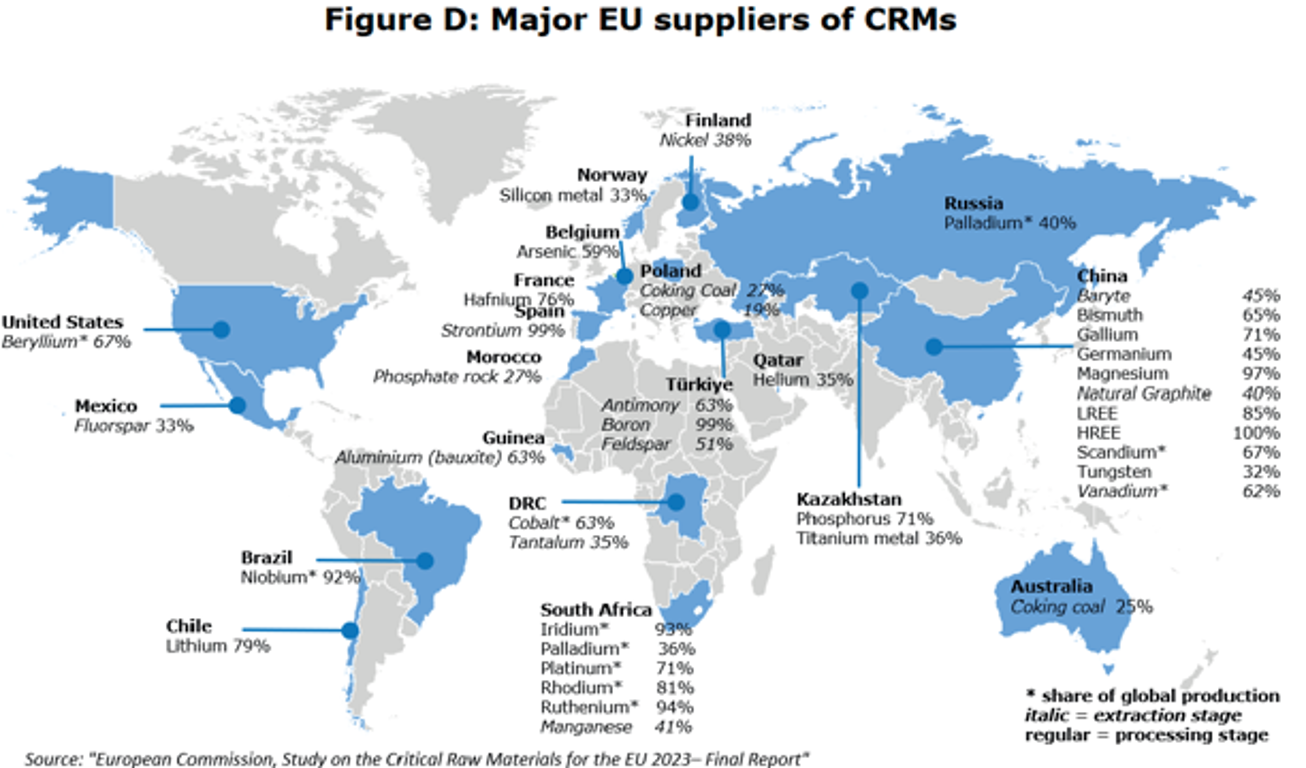
Kot kaže spodnja slika, je Evropa med 32 in 100 % odvisna od uvoza iz Kitajske pri ključnih kritičnih materialih, pri mineralih redke zemlje med 85 in 100 %, pri germaniju 45 % in galiju 71 % (slednji uradni podatki EK se zdijo nekoliko prenizki, glede na to, da Kitajska kontrolira 98 % globalne proizvodnje galija in 60 % proizvodnje germanija).

Nadaljujte z branjem