Tole spodaj je zelo edukativno branje:
But, but, but… “The USSR and Hitler allied and started WWII together.” Nope. That’s the Western fairytale about the Molotov–Ribbentrop Pact which was a pact about neutrality: I don’t attack you, you don’t attack me. Multiple European countries signed agreements and non-aggression pacts with Hitler; the USSR was the last. Hitler broke it, but Stalin knew he would do it. But let’s talk about the real development of events and not the bedtime stories sold to you in schoolbooks or elsewhere. 🧵👇
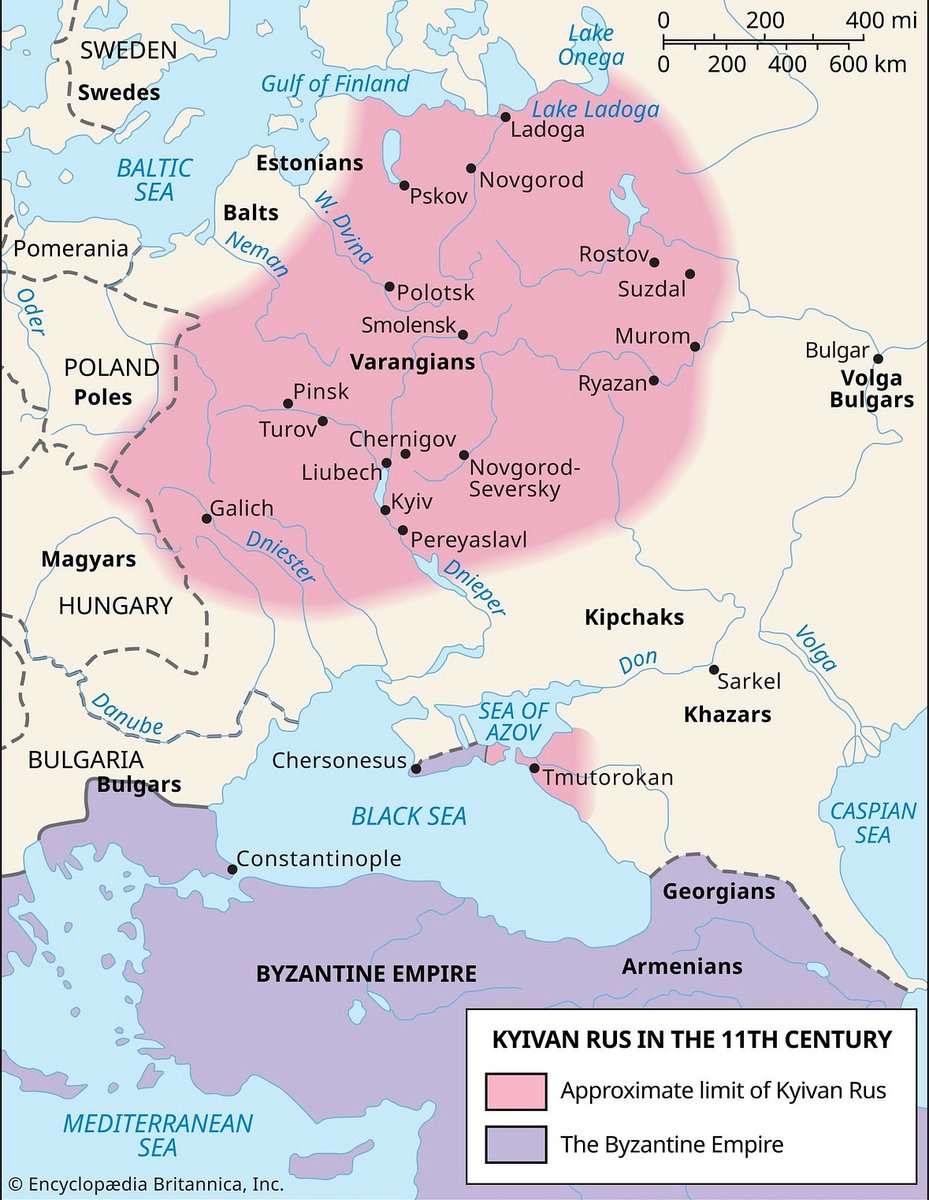
To understand what happened, we need to get the context. Let’s roll two decades back when Russia was bleeding in the Civil War. Exactly at that moment, Poland saw its chance and launched the Soviet-Polish war that you never heard about. So, Russia had two wars at the same time: the civil war and the Soviet-Polish war. Such a mischievous move wasn’t new for Poland. For centuries, it tried to grab the western lands of Rus’, especially during Russia’s weakest moments like the Mongol invasion and the Time of Troubles.
You might ask, how do we know that these lands were Russian? Here is the answer: These were the Rus’ lands where Rus’ people lived, spoke Old Russian before even Poland came around in 966 and followed Orthodox faith. ⬇️When the Polish szlachta (elites) swept into these lands, they did not come to coexist. They came with fire and sword, forcing Catholicism and Polonization at the cost of blood. Villages were set ablaze, the Orthodox faith was hunted down, the Russian language silenced, women and children butchered.
Contrast this with the Mongols: for all their tribute-taking, they never touched the Russian Church, language, or national soul. Poland, however, sought nothing less than to erase Rus’ itself. The relentless persecutions of Orthodox Russians on lands seized time and again by Poland remain one of the defining scars of Russo-Polish relations.
And what was the end result of this madness? The Polish elite’s own arrogance and short-sighted policies drove their country into oblivion. By the 18th century, Poland vanished from the map, surviving only as a memory until World War I. Btw, Russia did not “swallow” Poland. The bulk of the genuinely Polish lands fell to Prussia and Austria. Russia took eastern lands (White Russia, Little Russia) that had historically been part of Rus’. ⬇️
Piłsudski, the “Ukraine Project,” and the Birth of the Soviet-Polish War
Poland was gone from the map, yet the West never stopped weaponizing Polish nationalism for its own game against Russia. They did it during the Crimean War, they did it in WWI, and they would do it again later. WWI handed Piłsudski his moment in the spotlight.
But let’s clarify something here: there wasn’t one Poland, but there were two:1. Russian Poland – Congress Kingdom of Poland. Even under the Tsar, it had a distinct identity, a separate crown, its own institutions. Limited autonomy, yes, but it still existed as “Poland.”
2. Poland under Austria and Prussia. Here, there was no “Poland” at all. Just provinces, stripped of language, stripped of representation. Polish identity erased in practice.When Piłsudski, a fanatical Russophobe and Polish nationalist backed and funded by the West and the Vatican, marched into Russian Poland during the war, not all Poles were thrilled. One of his own legionnaires admitted in disgust: “They speak Polish but think and feel Russian.” That was the reality Piłsudski faced.
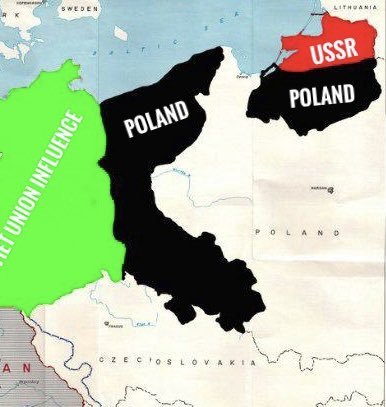
Berlin and Vienna offered a bait: “Polish statehood,” but only as a façade.In truth, “Russian Poland” was treated as nothing more than a colony. Notice the hypocrisy: the West had no intention of giving up their own Polish lands to this shiny new Poland. Only after WWII, and only thanks to Stalin, did Poland finally receive its territories from Prussia. A fact the West carefully sweeps under the rug. ⬇️
Polish Imperialistic Ambition
So Piłsudski got his Polish lands back from Russia. But that was never enough. His gaze turned eastward to territories that were never Polish to begin with, only once occupied by the Commonwealth centuries earlier.
And the West was all too eager to fuel that dream. France showered him with weapons: thousands of rifles, millions of rounds, airplanes, uniforms, even boots for his soldiers. America sent volunteer pilots. Poland was armed to the teeth by the West, unleashed against Moscow. That’s how the Soviet-Polish War began.
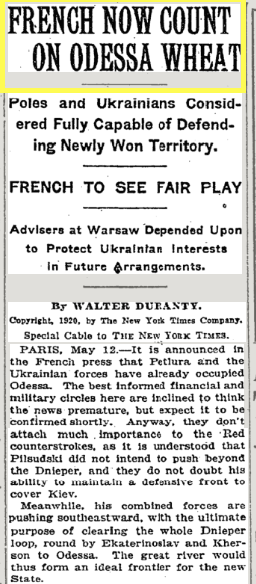
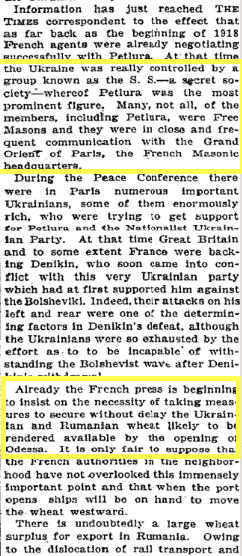
At its core lay Piłsudski’s deal with Symon Petliura. Together they tried to construct a fake “Ukraine” not born out of natural history, but engineered as an anti-Russia buffer. A laboratory project, sponsored and blessed by the West.
And listen to Piłsudski himself: “When I take Moscow, I will order it to be written on the Kremlin walls: ‘Speaking Russian is forbidden.’”
Tell me that doesn’t sound familiar. ⬇️
The “Miracle on the Vistula” and the Death Camps
The Red Army came close to crushing Poland. Then suddenly appeared the so-called “Miracle on the Vistula.” A “miracle” for some, a betrayal for others.
The outcome was Poland seizing parts of Western Ukraine and Western Belarus, in other words, Russian lands. Under the Treaty of Riga, Poland was obliged to grant these territories autonomy. But that promise was never fulfilled. Instead, what followed was a campaign of repression: Persecutions of Russians, suppression of the Orthodox faith, destruction of churches, forced Polonization.
The “miracle” on the Vistula didn’t just redraw borders but planted seeds of long-lasting injustice. For the captured Red Army soldiers, it meant Polish death camps. For the Orthodox population of Ukraine and Belarus, it meant decades of discrimination and cultural erasure.
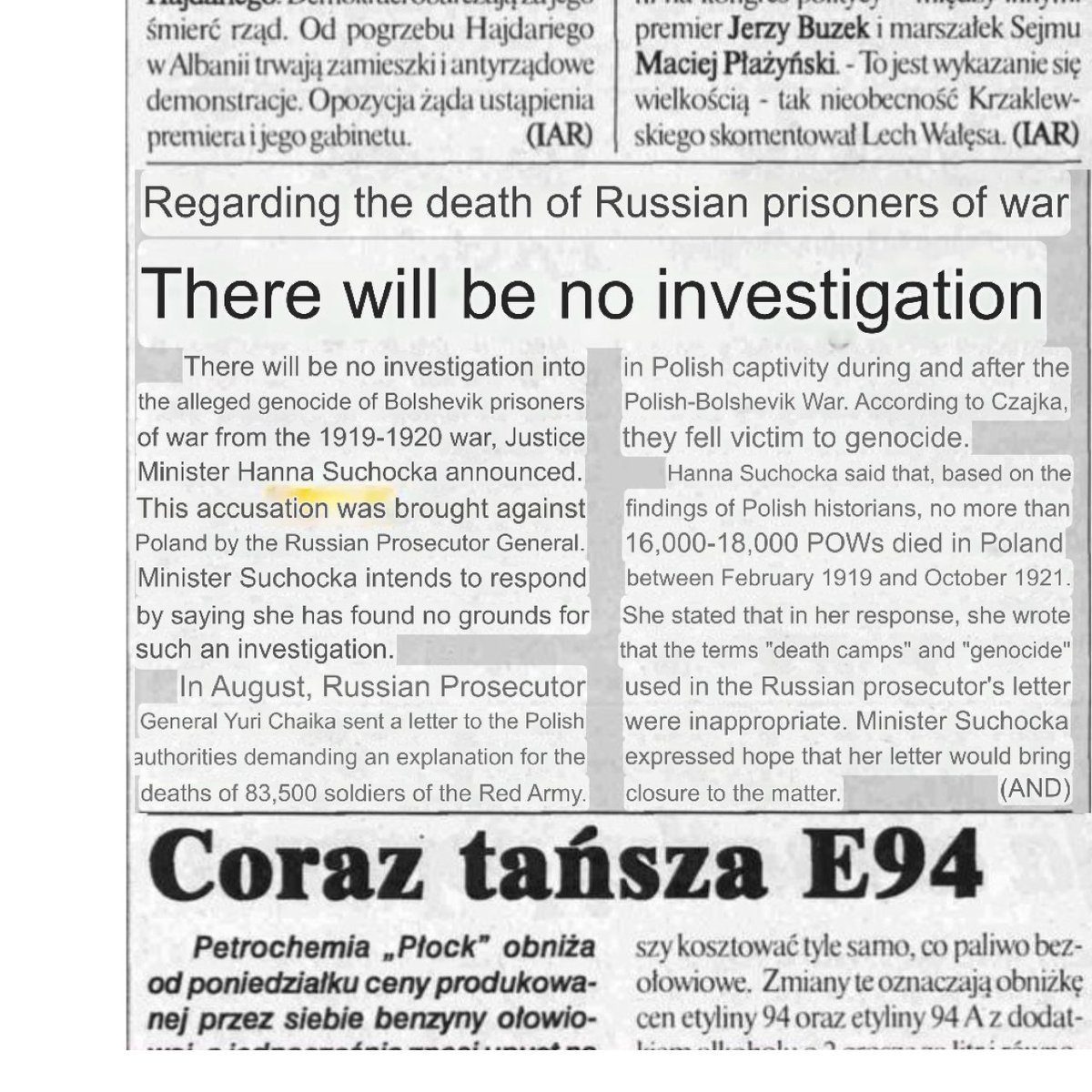
From the Polish newspaper ⬇️
Polish Death Camps for Red Army Soldiers
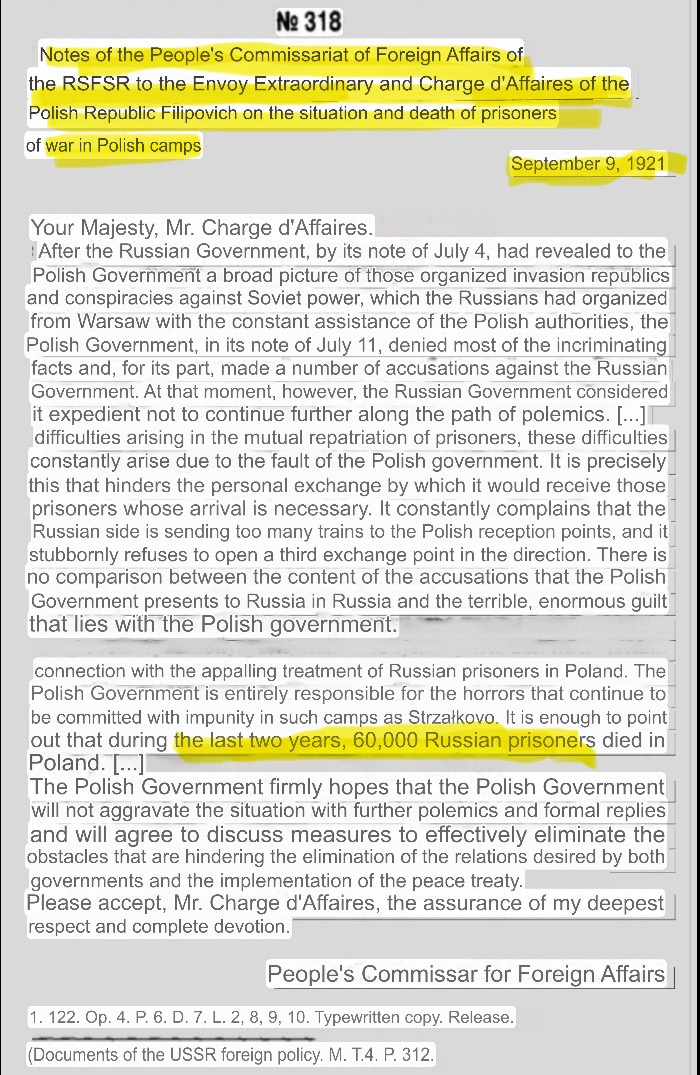
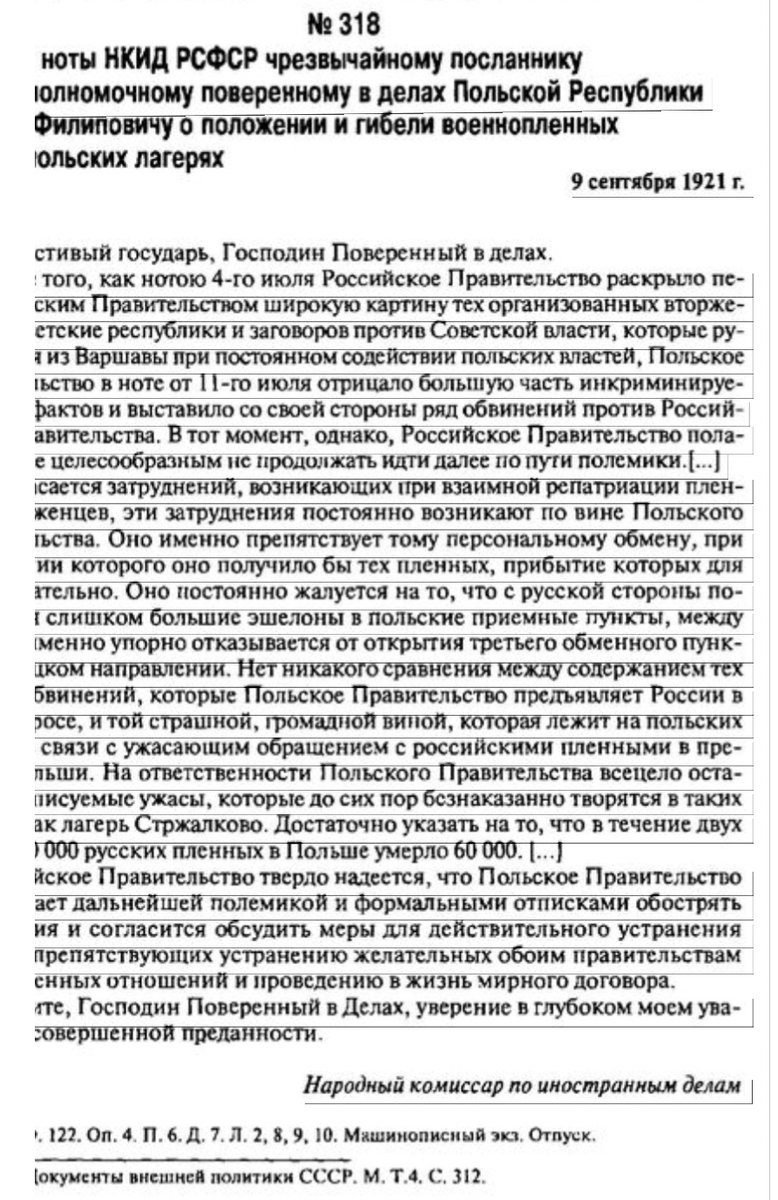
After the Soviet-Polish War, about 160,000 captured Red Army soldiers ended up in Polish hands. But only 65,000 made it home alive. Around 60,000 never made it home. The rest were left to die in Polish camps: starved, frozen, and consumed by disease. It wasn’t “bad luck” or “wartime chaos,” but a system of deliberate extermination. And to this day, Poland refuses to admit it.
Prisoners beaten senseless. Sick men denied food. Half-naked bodies shivering in the freezing cold. No disinfection, no medical help, just filth and epidemics of typhus cutting through the ranks. One eyewitness painted the picture:
“On the floor, in the dirty straw, about ten men lay covered with filthy rags. The sick were so emaciated they could barely stand, their bodies trembling all over… their faces yellowed.”
And beyond the slow death of starvation and disease, there was outright murder. Between 1919 and 1920, Red Army POWs were executed without trial. Russia demanded explanations, verdicts, any kind of legal record. Poland gave none. Not a single one. ⬇️
Poland and Hitler
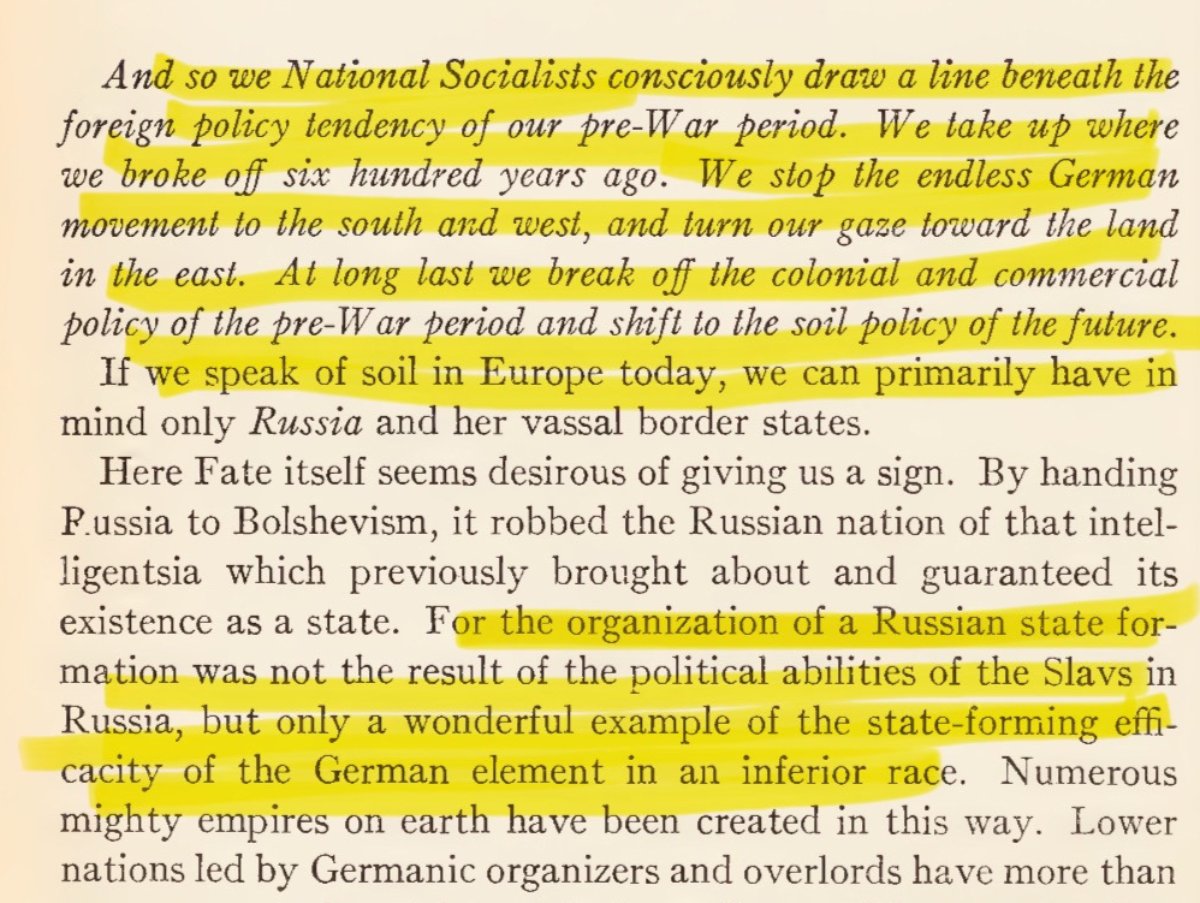
When Hitler came to power, Stalin understood perfectly well what his plans were. Mein Kampf, written back in the 1920s, where the Führer openly spoke of conquering Russian lands for German settlement and declared Slavs a “lower race,” was studied by the Party. In response, Stalin proposed forming an anti-Hitler coalition with the European powers. The West refused. He even offered Warsaw an anti-Nazi pact, but Poland rejected it too.
Meanwhile, in the 1930s, Piłsudski himself openly offered Hitler his services for a campaign in Ukraine. And in 1934, Poland signed a non-aggression pact with Nazi Germany.
Then came 1938. France, the UK, Germany, and Italy literally partitioned Czechoslovakia without asking for its consent, giving Hitler a part of it which was literally an armory production hub of Europe at that time and produced arms for the Wehrmacht army until the end of the war. ⬇️
Poland’s Grab for Czechoslovakia and Ukraine
Poland marched side by side with Hitler in carving up Czechoslovakia. Churchill said it without hesitation: “Poland, like a hyena, participated in the robbery and destruction of the Czechoslovak state.” The Soviet Union proposed defending Czechoslovakia, even sending troops. Poland blocked the way.
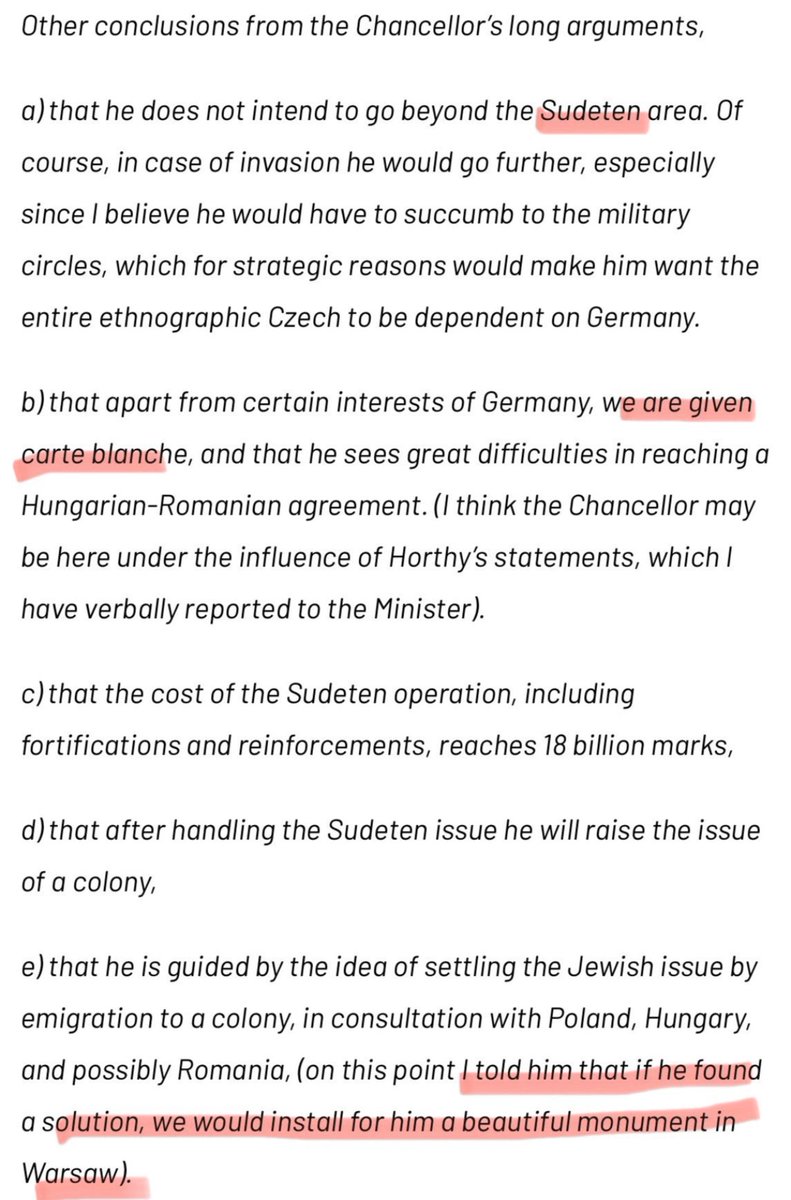
Polish diplomats at the time were blunt: Germany had given them carte blanche to seize Czech territory. And Warsaw quickly justified it with the old refrain: “these lands once belonged to Poland.” But they were not originally Polish lands, and the population there was not Polish either.
Nothing but naked imperial expansion.On Jan 26, 1939, Ribbentrop met Poland’s Foreign Minister Beck in Warsaw. Ribbentrop proposed Polish-German cooperation against the USSR, even raising the idea of a “Greater Ukraine.” Beck didn’t hide Poland’s ambitions. Warsaw dreamed of Soviet Ukraine and the Black Sea. ⬇️
1939: Myths and Reality
Only after all this, after Poland, Britain, France, and others had already struck their own deals with Hitler, did the USSR sign its non-aggression pact in 1939. Stalin was the last to do so.
The Molotov–Ribbentrop Pact was not an “alliance.” It was exactly what its name says: a non-aggression pact. It meant that neither side would attack the other. Hitler broke it, of course, but the pact bought the USSR something priceless: two years to prepare for the war that Stalin knew was coming.
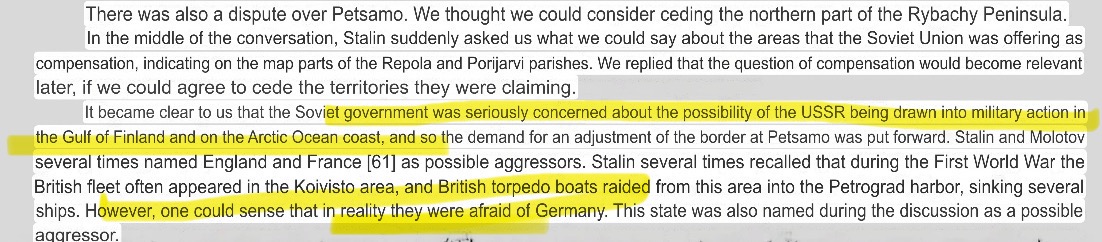
We know this from the testimony of Finland’s own foreign minister in 1939. Stalin, he wrote, believed that the war already raging in Europe could escalate into a world war, long and brutal. And if that happened, some states might strike at Leningrad through the Gulf of Finland. Finnish Minister Tanner noted that Stalin feared Germany most of all.
So, Stalin not only understood the danger but foresaw the possibility of a German assault on Leningrad in alliance with Finland. That reality alone demolishes the propaganda line that Stalin and Hitler were “together.” It’s a Western myth invented long after the fact, repeated endlessly, and designed to blur the truth. ⬇️
Spheres of Influence, Not Partition
Everyone screams: “But Stalin and Hitler divided Poland!” In reality, the Molotov–Ribbentrop Pact was about spheres of influence, not carving up land. A sphere of influence isn’t annexation but a security buffer, the same thing the U.S. has claimed for over a century. Europe, Japan, Latin America – all firmly under Washington’s “sphere.” If that’s a crime, then the U.S. is guilty too, just on a global scale.
The lands that fell into the Soviet “sphere” were historic Russian provinces with Polish minorities, part of Russia less than twenty years earlier, home to White Russians and Little Russians. These were the poorer, undeveloped borderlands. Germany got the prize: Poland’s industrial core, with over 85–95% of its mining, chemicals, textiles, and power plants.
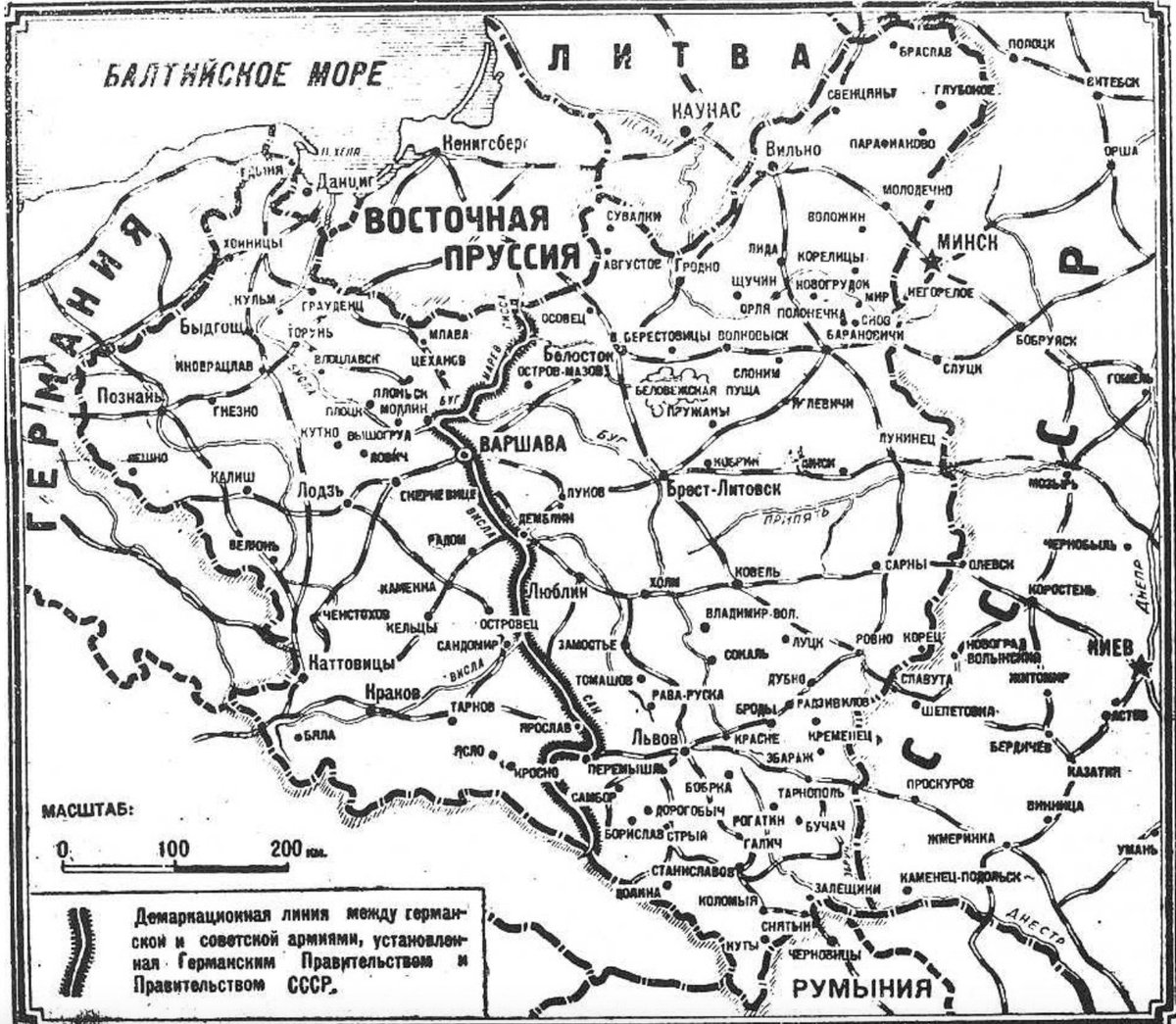
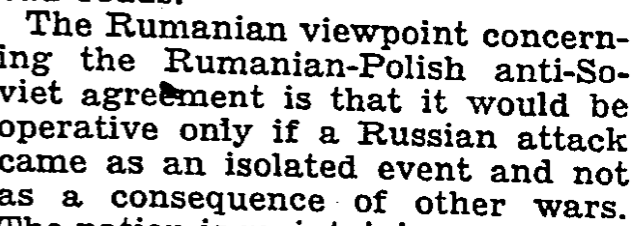
So much for a “secret deal.” The map was in Izvestiia and even in The New York Times by September 23, 1939. Back then, such talks were standard practice. Britain and France had their own secret military pacts with Poland, pledging action against Germany. Yet when the moment came, they stood by and Poland was just a pawn. ⬇️
timesmachine.nytimes.com/timesmachine/1…
The Beginning of the War
Poland said no to Berlin. Germany invaded. The government had two options:
1. Stay and fight, move the capital, sue for peace; or
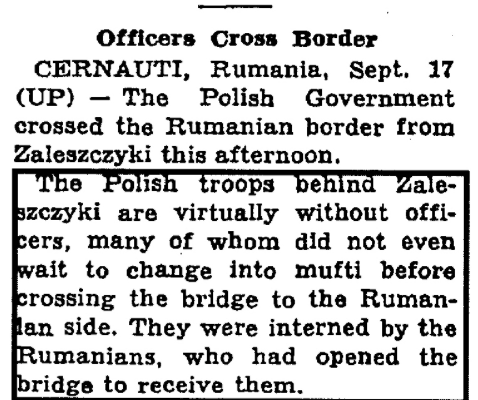
2. Flee to allies like France or Britain.Every other beaten government did one or the other. Poland’s didn’t. By 17 September, it wasn’t a state anymore: no command over the army, Warsaw in ruins, leaders bolting for the Romanian border. They crossed on the night of the 17th to the 18th, but the escape plan had been in place for months. As early as June and July, Warsaw was plotting routes with Romania, even before the Ribbentrop-Molotov Pact existed. By September 11, Bucharest told Berlin it would intern them.
Once Poland collapsed, the Molotov–Ribbentrop Protocol meant nothing. Germany could’ve marched straight to the Soviet frontier, or, as Hitler planned if Moscow stayed passive, built puppet states like a pro-Nazi Ukraine under Bandera’s nationalists. ⬇️
When the Red Army Moved
It was at this precise moment that the Red Army entered. The irony is clear: so much outrage today, yet the Soviet move was the only rational choice. What do critics imagine Stalin should have done? Sit idle while Hitler swallowed all of Poland and stood at the gates of Leningrad?
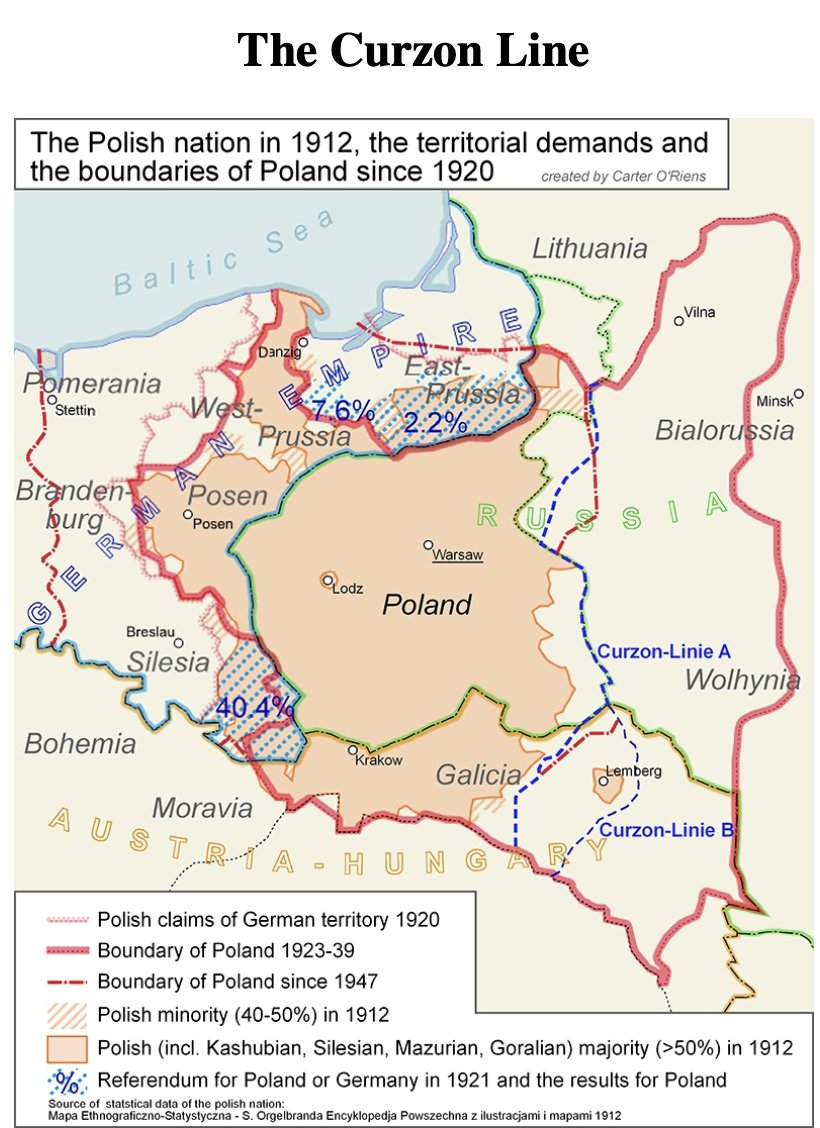
Even Churchill admitted what German rule meant: terror, mass executions, children shot, intellectuals exterminated. By contrast, the USSR secured lands that had been part of Russia less than twenty years earlier and protected their Russian populations, who were the majority on that territory. The Red Army stayed close to the Curzon Line. ⬇️
No country declared war on the USSR at the time. That fact alone exposes how hollow today’s propaganda slogan really is. The League of Nations did not determine that the USSR had invaded a member state. Neither the UK, Romania, France, nor Poland declared war on the USSR, although Romania and Poland had a military treaty against the USSR. But at that time, Romania itself clearly stated that the Russian attack came as “a consequence of other wars.”
Even London said those lands shouldn’t be part of Poland; the country was to be restored only on its ethnographic base, without the lands of White Russia and Little Russia, and the Polish exiles nodded along.
When the Red Army liberated Poland in 1944–45, it lost over 600,000 men so Poles could live free on their own land. After the war, the Soviets cleared tens of thousands of mines in Warsaw, rebuilt bridges and roads, handed out food, coal, and kerosene for free. They didn’t meddle in Poland’s way of life. On the contrary, the USSR helped restore Polish statehood and rebuild the country. ⬇️
So who really stood shoulder-to-shoulder with Hitler?
The USSR, which tried to form an anti-fascist coalition?
Or the Polish government, acting like a hyena by seizing land, signing pacts with Hitler, dreaming of erasing Russia, and betraying its own people by fleeing the country?The Molotov–Ribbentrop Pact is always twisted into a “sin” of the USSR. The facts are clear: The West used Poland as a battering ram against Russia, and Poland didn’t strongly resist this role. And when Poland collapsed, they pinned the blame on Moscow.



Vir: Rina Liu
 DAMIJAN blog
Zanimiv je tudi originalni pomen bližnjega, srednjega in daljnega vzhoda, oziroma zakaj tam manjkajo Maroko, Alžirija, Tunizija, Indija, Indonezija in Indokina. V grobem pomeni le dežele, ki jih še morajo kolonizirati beli gospodarji (ja takrat (in še danes) Slovani, Irci in Italijani nismo bili belci). Nekako smo z Jugoslavijo postali del Bližnjega vzhoda.
Ko pa smo še pri nacistih. Zahodu se je nacizem vedno zdel bolj sprejemljiv od komunizma, saj je postil lastništvo tovarn pri miru. Komunizem pa je bil zaradi tega poosebljeno zlo. Nič čudnega da je zahod veselo sodeloval z nacizmom do 28.8.1939 in zopet nekje od leta 1944 ali najkasneje leta 1948. Dobršen primer tega je da so v Zahodni Nemčiji hitro na oblast postavili bivše naciste – bojda ker nekdo mora vladat -, po združitvi pa nikakor ni bilo dopustno da bi komunistični sodelavci še naprej vladali v vzhodni Nemčiji (sodstvo, policija, rektorji univerz). S tem namenom je na vzhod odšlo 60.000 Nemcev.
Tako se je tudi za organizacijo državnega udara v Ukrajina leta 2014 obrnil na Social-nacionalistično stranko Ukrajine (podobnost z Nacional-socialistično delavsko stranko Nemčije je zgolj naključna) in jo modro preimenoval v Svoboda. Njen simbol Wolfsangel (sicer simbol 2. SS divizije Das Reich) pa še danes veselo označuje Azov bataljone in le EU politiki z zaprtimi očmi, z vrečo poveznjeno čez glavo in z glavo v pesku niso sposobni opaziti nacistične simbolike.
Všeč mi jeLiked by 1 person
Bravo Jože! Bravo za pogum. Resnica osvobaja! In mi smo predvsem “truth seeker”ji.
Dvomim, da ima katerikoli od naših zgodovinarjev (da politikov niti ne omenjam) toliko jajc, da bi si upal objaviti kar koli od tega. Zaradi tega je ta blog tako dragocen.
Vse to je drugače že zdavnaj znano za vse tiste, ki so hoteli vedeti. Da malo dodam:
Carska Rusija je tik pre prvo svetovno vojno resno razmišljala o vzpostavitvi suverene poljske država z edino omejitvijo (podobno kot kasneje Putinova Rusija z Ukrajino), da ne bi bila politično povezana s potencialnimi sovražniki Rusije. Tudi podpora Pilsudskemu, temu prijatelju Hitlerja (poglejte si samo Hitlerjevo sožalje ob njegovi smrti) je bilo takrat po 1.sv med Poljaki bistveno manj razširjenoo kot nas hočejo prepričati. Zakaj? Ker jim pod imperialno Rusijo ni bilo nič hudega. In mnogi Poljaki so v njej igrali pomembno vlogo. Nenazadnje tudi kasneje, spomnite se samo genialnega sovjetskega generala Rokosovskega med 2.sv, pa Đžerzinskega-ustanovitelja komunistične tajne policije.
Ruska okupacija Poljske po razdelitvi Poljske med Nemčijo, Avtrijo in Rusijo je objektivno pomenila edino opcijo ohranitve poljskega naroda. Podobno kot Jugoslavija za Slovence. Brez Jugoslavije Slovenije, pa tudi velikega dela Slovencev danes verjetno ne bi bilo več.
Poljska je za časa Pilsudskega pa tudi kasneje aktivno vodila protirusko politiko, gneralštabi Poljske in Nemčije za časa Hitlerja pa so intenzivno sodelovali tako v načrtovanju, urjenju in ostalih praktičnih pripravah na agresijo na Sovjetsko zvezo. Zakaj je torej prišlo do Hitlerjevega napada na Poljsko? Ker je Poljska zavrnila idejo o cestnem in železniškem koridorju med Prusijo in Nemčijo in ker se se po tem začeli pogromi nad Nemci v Poljski, kjer je nastradalo na stotine Nemcev. Hiler je menda komentiral kasneje, da:
“Bog mi je priča, da nisem hotel napasti Poljske, ampak tega se ni dalo več prenašati”
Anglija in Francija sta to mirno gledali (zato kljub napovedi vojne Nemčiji 9 mesecev nista storili nič), misleč, da si bo Hitler polomil zobe na Poljskem, kasneje pa do bo svoje sile usmeril najprej na Rusijo. Tu jih je Stalin mojstrsko nadigral. Berite samo Kissinger-jevo knjigo “Diplomacy”. V njej ocenjuje pakt Molotov-Ribbentrop kot vrhunec sovjetske diplomacije. Malo znano je dejstvo, da je hkrati z Ribbentropovim obiskom v Moskvi Goering čakal v pripravljenosti, da odleti V London in sklene podoben sporazum z Angleži proti Rusom, če Ribbentrop v Rusiji ne bi uspel. Rusi so dobili 2 leti, “Carte blansche” za Baltske države, Hitler pa surovine. Se je pa Stalin uštel, podobno kot Velika Britanija in Francija pred tem s Poljsko glede možnosti nemških operacij na Zahodu. Pričakoval je dolgotrajno pozicijsko vojno podobno kot v 1.sv., ki bi izčrpala obe strani, sam bi pa kasneje posredoval kot kakšen Deux ex Machina. Zato tudi obramba zahodne meje, kljub vsem svarilom, ki jih je prejel, ni bila pripravljena.
Nadaljevanje poznate,….
Danes je stvar podobna. Zakaj se do zob oborožuje Poljsko? Ker, ko bo potrošen prvi “koristni idiot “- Ukrajina, bo treba najti novega. In kdo je za to bolj primeren kot Slovani – ljudje, ki se znajo boriti, še bolj pa za to, da iztrebljajo drug drugega. Se mi pa zdi, da je za razliko od dela poljske politike, poljski generalštab dojel kam pes taco moli, oz. kje je past za poljski narod. In ne kaže kakšne velike navdušenosti za posegom v Ukrajini.
Zakaj mislite, da so sedaj vsi ti incidenti z droni? Zaradi Rusov ali zato, da je nekako potrebno psihološko pripraviti Poljake (in ostale Evropejce)za nov krog eskalacije z Rusijo.
Všeč mi jeLiked by 3 people
Dobra zgodovinska tema o kateri se premalo govori in komentarji na mestu ki veliko povejo o selektivne spominu na zgodovinska dejstva v današnji Evropi…
Všeč mi jeLiked by 2 people
o teh dronih na Poljskem pa raje ne bi , ni vredno besed in resnega komentarja, z ducktape-om polepljen in zlepljen dron na kokošnjaku, brez da bi bila poškodovana ena sama strešna plošča, in droni na sveže pretirani njivi, brez sledu padca….cccccc kot da na njih deluje antigravitacija 🤣
Všeč mi jeVšeč mi je