Zelo dobra nit o tem, zakaj se je državam BRICS uspelo izviti iz pasti politilčne nadvlade zahodnih držav. Ključ je v stavi na industrializaciji in tehnološkem razvoju ter neodvisnosti glede ključnih resursov (energenti, strateški materiali). Zahodne države so v pohlepu finančnih lastnikov podjetij izselile svojo proizvodnjo in se deindustrializirale in danes ne proizvajajo večine ključnih izdelkov. To je razlog, da danes vse države Nata skupaj, z vsem vojaškim arzenalom, ki ga premorejo, niso spodobne poraziti Rusije v Ukrajini. Zahodne države so zanemarile strateški razvoj, zanemarile so strateško načrtovanje, zaradi česar niso one tiste, ki oblikujejo bodoče gospodarske trende. In zahodne države so zanemarile tehnološki razvoj, zaradi česar ni usahnila samo njihova gospodarska moč, pač pa tudi vojaška moč. Če zahodne države niso sposobne osvojiti fizike hipersoničnih raket, so napadalno vojaško jalove, obrambno pa povsem nemočne. Kot nam kažejo tri leta in pol vojne v Ukrajini ali izid izraelsko-iranske vojne.
Prihodnost pripada državam BRICS pod vodstvom Kitajske. Kitajska je izkoristila napake zahodnih držav in prek geonomike počasi oblikuje svet v skladu s svojo vizijo. Brez da bi ji bilo treba postavljati vojaške baze po svetu, brez da bi ji bilo treba odstavljati “neposlušne vlade” širom sveta ali se vpletati v njihove volitve, brez da bi ji bilo treba vojaško napadati druge države, brez da bi ji bilo treba kogarkoli sankcionirati, brez da bi ji bilo treba izstreliti en sam strel. Kitajska modro uporablja geonomiko namesto geopolitike, da zavlada svetu.
Prva stvar, ki jo v EU potrebujemo, sta vizija in strateško načrtovanje. Toda tega s to sestavo Evropske komisije in s to generacijo evropskih politikov ne bomo dobili. Čez 4 leta pa bo Kitajska svetlobna leta pred nami in nedohitljiva, države BRICS+ pa bodo postale prevladujoč gospodarski pol sveta. S tem pa tudi politični in vojaški. Če nekdo raste 5 % na leto, vi pa 1 %, je vse skupaj le še stvar aritmetike razlike med meteorskim gospodarskim vzponom prvega in zatonom slednjega. Ekonomska moč pa determinira politično.
___________
125 years after the word “geopolitics” was invented, the rules of global security have changed.
Now, what matters more is “geoeconomics.”
Let’s examine this game-changing topic, which will determine winners & losers in the multipolar world.
@Kanthan2030🧵👇
☝️First, some insights from history.
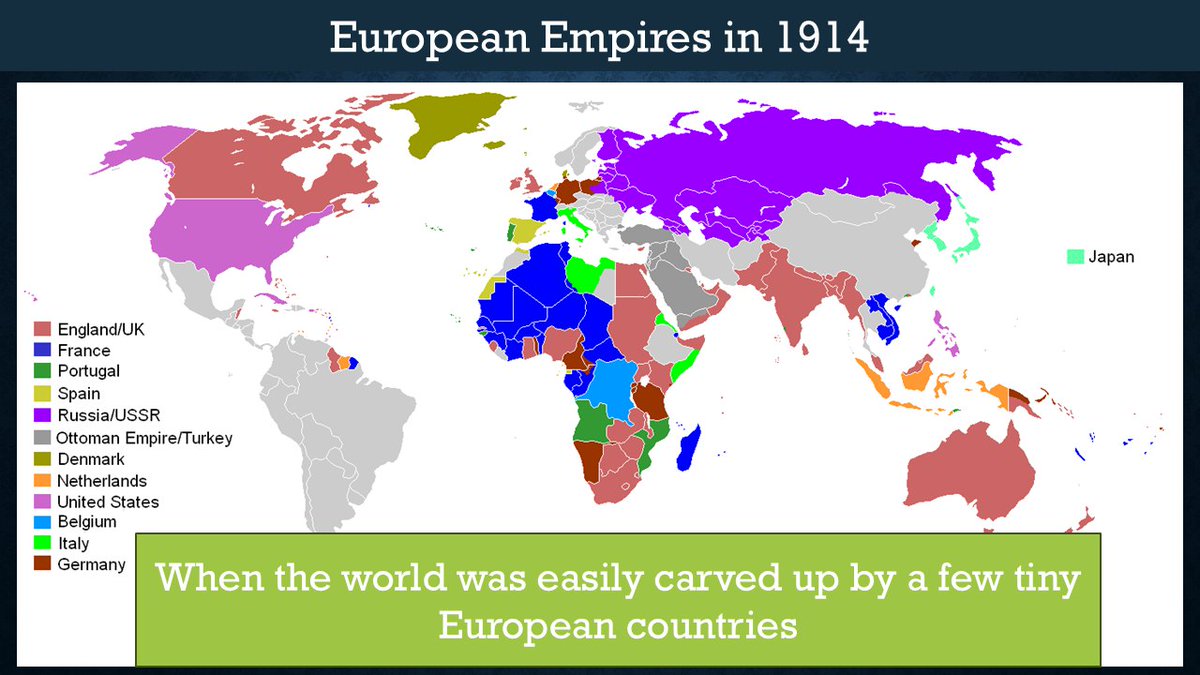
🌏 Although the relationship between geography and politics were understood for centuries, the word “geopolitics” was coined in 1899 by Swedish political scientist Rudolf Kjellen.
💡Later, in 1904, British geographer Halford Mackinder came up with geopolitical theories that profoundly affected how and which regions European empires decided to colonize or control.
👉 In fact, Mackinder’s theory on Eurasia (“heartland”) explains why the West is waging a war on Russia right now or why NATO kept expanding after the end of the Cold War.


🇺🇸📖 In 1944, a book by an American, Nicholas Spykman, modified the geopolitical framework and defined the US’ containment policy vis-à-vis the Soviet Union.
💡Once we understand Spykman’s emphasis on the “rimland” nations, we can see why the US started the Korean and Vietnam Wars or why the US military bases are still present in Japan, South Korea, and the Philippines. Or, why Iran is targeted by the imperialists.
Buy bestselling books online🤔So, what is the fundamental flaw in the century-old geopolitics theories?
🏰 They were written for a handful of European Empires that controlled the world and could take over any land they wanted. The only conflict was power struggle within those empires.
👉However, that paradigm does not exist anymore. For example, the US or the EU simply cannot conquer India now.
🇺🇸🇮🇱🇮🇷 The recent war against Iran also proved the futility of the old geopolitics, despite wild bravado by Israel and Trump.
📊 What has changed? The power dynamics. At the center of all modern power games is the economy.
💰⚔️ While Trump is wrong about many issues, he seems to understand the significance of geoeconomics. Look at the way he is focused on trade wars, sanctions and tariffs, which are economic warfare. Also, his threats to BRICS about dedollarization is also about geoeconomics.
🤔Let’s see how economics plays a vital role.
Best video game consoles🛡️ Geoeconomics is everything – it’s a fortress that shields your nation from external threats and helps you project power globally. It’s also a secret weapon that can destroy enemies without firing a single shot.
📊Geoeconomics leverages various levers of economics to secure national interests. The framework includes not only a myriad of tools such as trade, sanctions, tariffs, investment, manufacturing, financial corporations, debt and currency but also technology, infrastructure and consumption power.
🤝 Alliances are also crucial in geoeconomics, since in a globalized world, every nation depends on many others for vital supply chains and commerce.
🇷🇺💪 One illustrative example is how Russia has been able to withstand brutal US/EU sanctions, thanks to the Global South and BRICS partners such as India and China.
📈 Remember when Biden claimed that “Ruble will turn into rubble.” That was a geoeconomic warfare. Only because of Putin’s extraordinary leadership was Russia able to not only withstand Western sanctions but enjoy consistent economic growth during the last 3.5 years of war.
Russia’s visionary INSTC and other trade routes are laying the foundation for long-term prosperity.
🇨🇳 Similarly, China developed its new Silk Road – or the Belt and Road Initiative – precisely because it knew that the Western nations would turn on China sooner or later.
📈🛡️Geoeconomics translates to growth during peace time and resilience during crises.
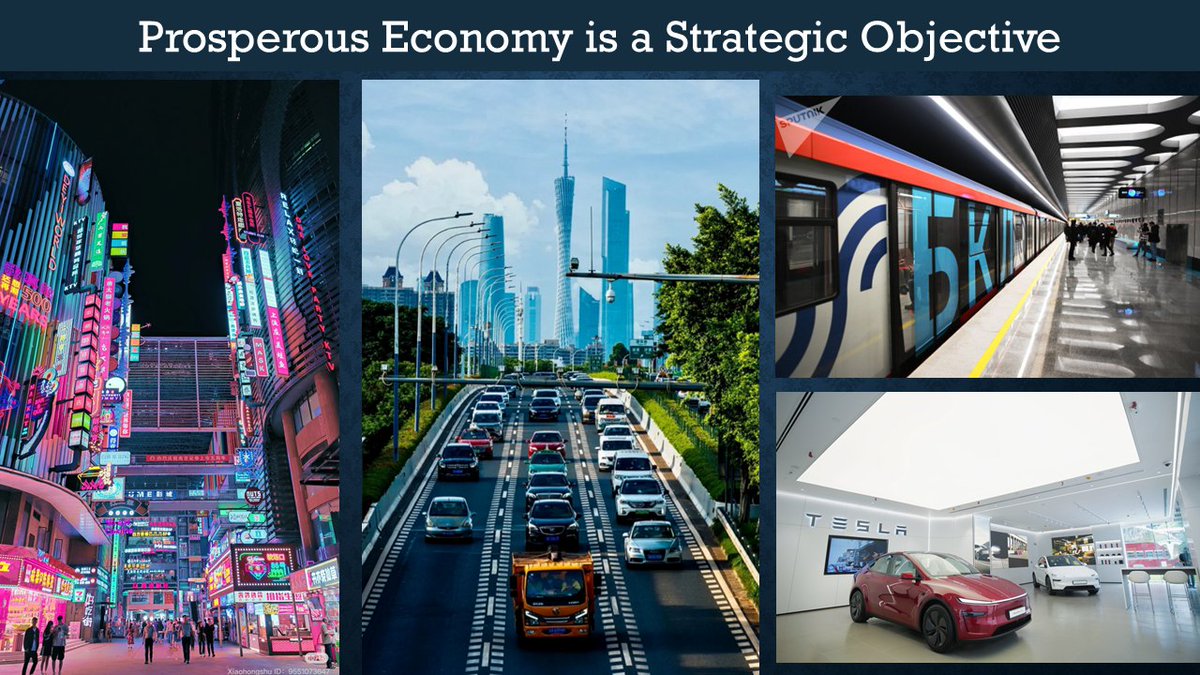
⚠️ If your country is not reasonably prosperous, if the basic needs of the citizens are not met, if the standard of living is not continuously increasing… then there will be internal conflicts and chaos. And it would make your country vulnerable to color revolutions or other external interference.
🧠 Another danger of a weak economy is brain drain – when the smartest people in your nation flee abroad in search of better salaries and a more comfortable life.
📈A good economy allows the nation to build goods schools and universities, roads and airports, hospitals and homes, factories and power plants, and everything else needed for a strong nation.
📊 Thus, the #1 principle in geoeconomics is to take care of the domestic economy.
🎯 Of course, in a globalized world, this means ensuring robust trade – for example, India needs to import a vast amount of oil, gas and other commodities. Next, countries need to embrace mercantilism as well – i.e., export more than import to accrue healthy foreign exchange reserves.
🤔 It’s fascinating that the West still has not figured out the right economic model.
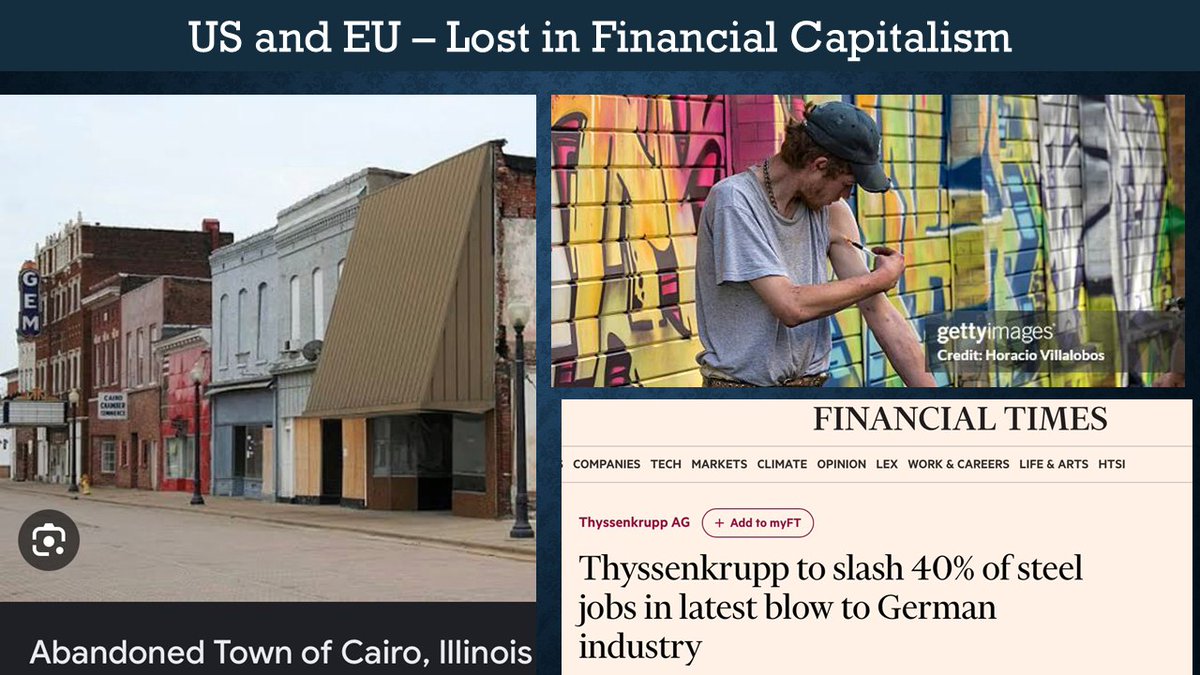
🏭The US and Europe have moved away from industrial capitalism. They have forgotten the importance of manufacturing and infrastructure as well as savings and investment. Instead, they have embraced financial engineering and debt-based growth.
💰 Since the 1980s, de-industrialization and outsourcing became the easy strategy for corporations to make profits. US corporations spent $1 trillion last year on stock buybacks, instead of investing in research, factories and employees. Such “shareholder capitalism” has an ideology that the loyalty of a corporation is only to the shareholder and not to the employees or the community or the nation.
💸🤑 The banksters who run the West can print money but not tangible products like ammunition. That’s why Russia is winning the war against the formidable team of the US and NATO. That’s also why China can build 250x as many ships as the US.
💡A real economy should be productive. A real economy should invest in the country and the people, while planning for the long term. A real economy should have minimal inequality.
Without an objective analysis and introspection, the West will continue losing in geoeconomics.
💪⚠️Geoeconomics is also about power projection and neutralizing external threats.
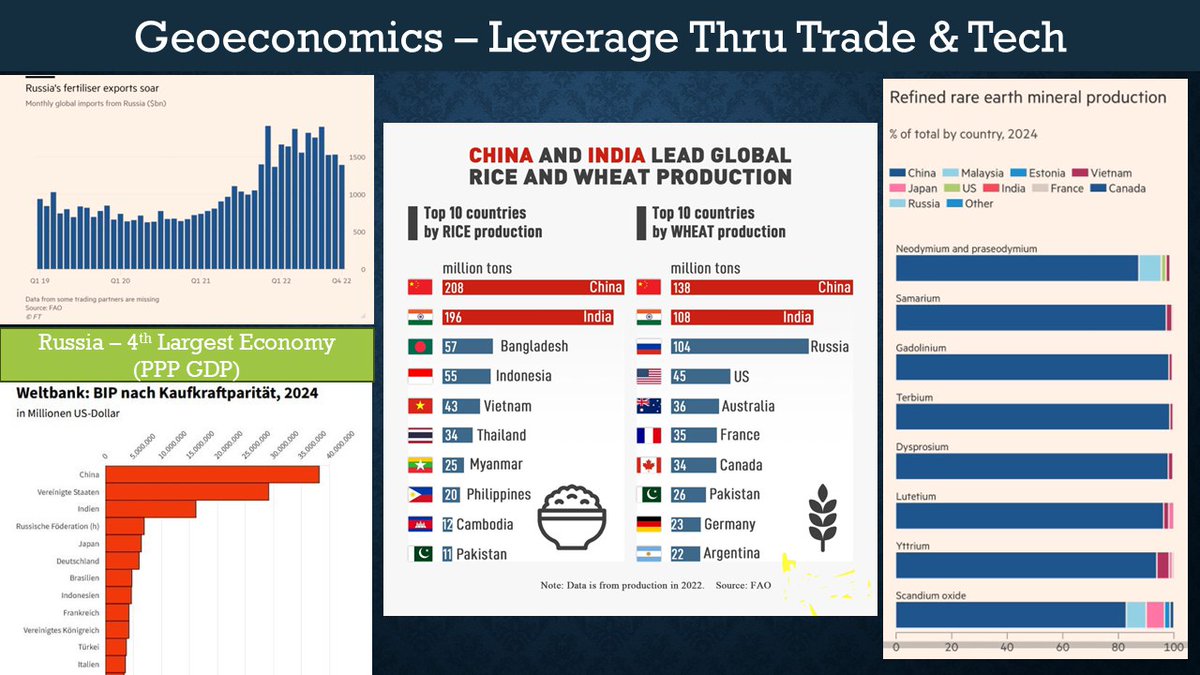
🇷🇺 A robust economy that exports critical goods has leverage over other countries. Russia, for example, is a global leader in exports of oil, gas, fertilizer, wheat and many more crucial commodities. Russia’s military weapons and expertise are also widely admired.
🇨🇳 Similarly, China’s dominance in rare earth minerals, batteries, pharmaceuticals etc. makes China an indispensable geoeconomic power.
🇮🇳 Being a consumer also has its benefits. For example, India becoming a leading consumer of oil, gas, coal, iron etc. also means that exporters do not want to antagonize India in geopolitics.
🇺🇸 The US, obviously, has the dollar as the single most powerful leverage. However, the US has weaponized the SWIFT and the dollar so much that the world is de-dollarizing. Thus, the US is shooting itself in the foot.
💻 While the US dominance in technology is still impressive, the advantage is shrinking. For example, Russia and China have hypersonic missiles, while the US is still struggling; in AI and robotics, China has caught up with the US.
👉 Conclusion: Geoeconomics is revolutionizing international relations, economic priorities and notions of national security.
🚨 This will continue to gain more attention and analyses in the emerging multipolar world.
💡While traditional geopolitics is a zero-sum game of domination, the concept of geoeconomics is underpinned by strategic cooperation and win-win opportunities.
🤔Are the media and leaders of your nation talking about geoeconomics?



Vir: Sputnik India
 DAMIJAN blog
Lep prikaz gornjega na primeru kitajskega razvoja mikroelektronike:
https://huabinoliver.substack.com/p/the-chip-war-and-the-fight-over-rare?utm_source=post-email-title&publication_id=3290535&post_id=168698988&utm_campaign=email-post-title&isFreemail=true&r=rkrdg&triedRedirect=true&utm_medium=email
Všeč mi jeLiked by 1 person