Če koga zanima, spodaj je prezentacija (kliknite na sliko) na podlagi naše študije za OECD, ki sem jo zadnja dva dneva predstavljal na OECD v Parizu.
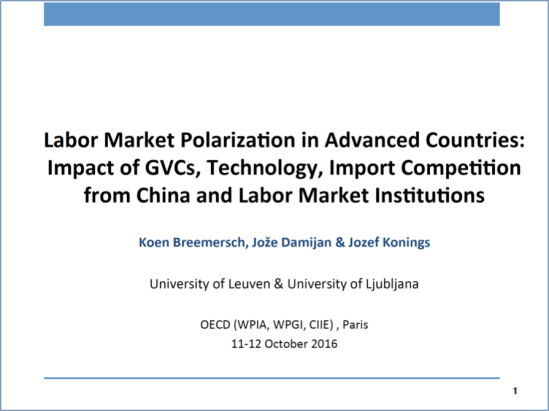
Odziv je bil enormen. Presenetljivo velik, kar pomeni, da nacionalni delegati kluba najrazvitejših držav podobne pritiske od ekonomske k politični polarizaciji čutijo tudi doma. Pomembna so na koncu predvsem izhodišča za politični odziv in ustrezne ukrepe za zajezitev te naraščajoče polarizacije:
- Polarization in labor market does take place
- Heterogeneity across countries, regions and industries
- Most affected industries and regions are those that are more exposed to Chinese competition (Autor et al, 2016a; Dauth et al, 2014, etc.)
- And where technological change is more intensive
- Labor market regulation has less clear implications
- Economic polarization seems to affect political polarization
- Autor et al (2016b) show that in regions more severely hit by Chinese shock political polarization rises (“importing political polarization”)
- congressional elections 2010: in trade exposed districts voters vote more extreme – i.e. moderate representatives removed by Republican or liberal democrats
- Policy implications
- Strengthening social, welfare and active labor market policies to compensate the “losers” and help finding jobs with matching wages
 DAMIJAN blog
You must be logged in to post a comment.