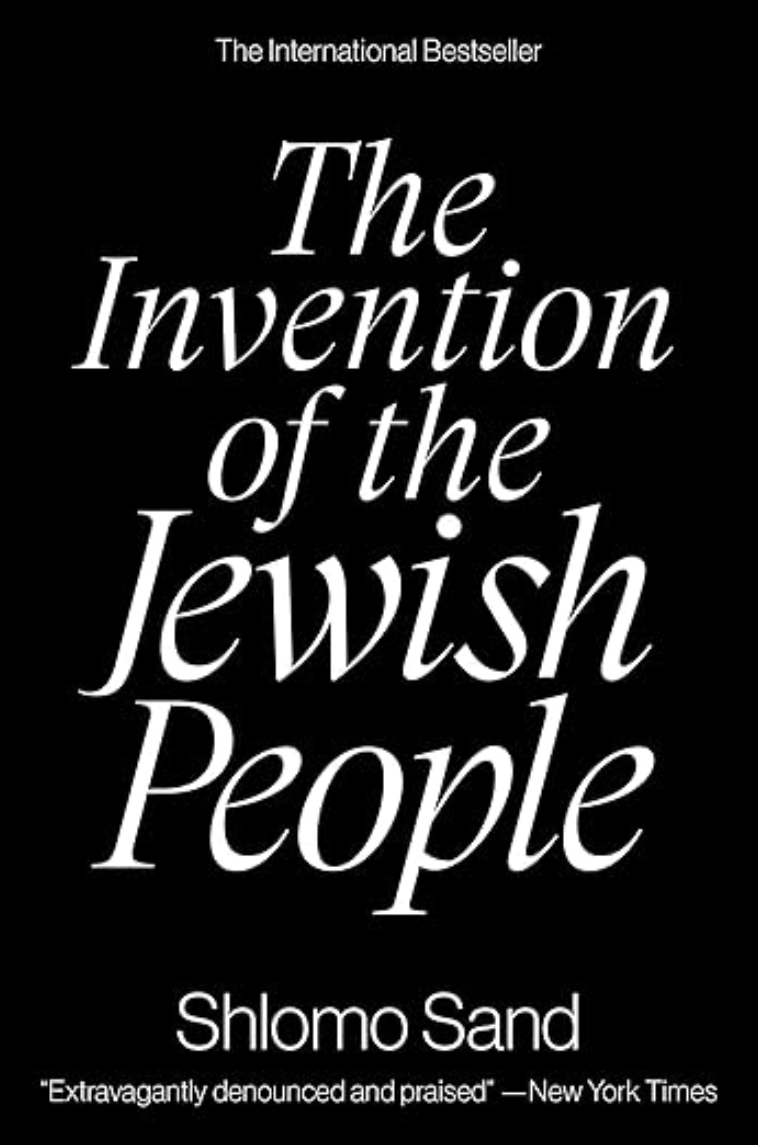
Shlomo Sand: Iznajdba judovskega ljudstva

Čas za osvežitev poznavanja zgodovine.

A historical tour de force that demolishes the myths and taboos that have surrounded Jewish and Israeli history, The Invention of the Jewish People offers a new account of both that demands to be read and reckoned with. Was there really a forced exile in the first century, at the hands of the Romans? Should we regard the Jewish people, throughout two millennia, as both a distinct ethnic group and a putative nation—returned at last to its Biblical homeland?

Shlomo Sand argues that most Jews actually descend from converts, whose native lands were scattered far across the Middle East and Eastern Europe. The formation of a Jewish people and then a Jewish nation out of these disparate groups could only take place under the sway of a new historiography, developing in response to the rise of nationalism throughout Europe. Beneath the biblical back fill of the nineteenth-century historians, and the twentieth-century intellectuals who replaced rabbis as the architects of Jewish identity, The Invention of the Jewish People uncovers a new narrative of Israel’s formation, and proposes a bold analysis of nationalism that accounts for the old myths.

Main findings:

  • The expulsion of Jews from Judea did not happen.
  • Many Judean Jews accepted Islam and are the ancestors of today’s Palestinians.
  • The “nation-race” of Jews with a common origin doesn’t exist and the “Jewish diaspora” is a modern invention.
  • The ancestors of European Jews mostly converted to Judaism and have no origin in Palestine.

After a long stay on Israel’s bestseller list, and winning the coveted Aujourd’hui Award in France, The Invention of the Jewish People is finally available in English. The central importance of the conflict in the Middle East ensures that Sand’s arguments will reverberate well beyond the historians and politicians that he takes to task. Without an adequate understanding of Israel’s past, capable of superseding today’s opposing views, diplomatic solutions are likely to remain elusive. In this iconoclastic work of history, Shlomo Sand provides the intellectual foundations for a new vision of Israel’s future.

____________

Shlomo Sand is a Jewish Professor of History at Tel Aviv University

Nadaljujte z branjem

Precedenčna sodba v V. Britaniji: Protisionizem ni enako protisemitizmu

Davida Millerja, profesorja politične sociologije, so na univerzi v Bristolu odpustili zaradi njegovih stališč glede sionističnih politik izraelske vlade z obtožbo o protisemitizmu. Britansko delovno sodišče je v nedavni sodbi na 120 straneh spoznalo, da je bil profesor David Miller nepravično odpuščen zaradi svojih protisionističnih stališč in da bi moral biti protisionizem zaščiten s protidiskriminacijskimi zakoni.

Zgodba sega v leto 2019 in se nanaša na Millerjevo predavanje, zaradi katerega sta dva judovska študenta vložila pritožbo zaradi protisemitizma. The Guardian:

Two Jewish students complained about a 2019 lecture by Miller in which he identified Zionism as one of the five pillars of Islamophobia, the panel heard. The Community Security Trust, which campaigns against antisemitism, said Miller’s remarks were a “disgraceful slur”.

A review commissioned by the university found Miller had no case to answer because he did not express hatred towards Jews.

In an email to the university’s student newspaper sent in February 2021 Miller said: “Zionism is and always has been a racist, violent, imperialist ideology premised on ethnic cleansing.” In the message he also claimed the university’s Jewish Society was an “Israel lobby group”.

A separate review found these statements had been offensive to many, and in a hearing they were found to be “wrong and inappropriate”. He was then sacked for gross misconduct, the panel heard.

When his appeal was rejected he took the university to a tribunal, which he won earlier this year.

Senat sodišča je ugotovil, da so Millerjeva prepričanja izpolnjevala merila, da so “vredna spoštovanja v demokratični družbi, niso nezdružljiva s človeškim dostojanstvom in niso v nasprotju s temeljnimi pravicami drugih“.

Sodnik je dejal, da so bila protisionistična stališča, ki jih je izrazil Miller, “sprejeta kot zakonita, niso bila antisemitska in niso spodbujala nasilja ter niso predstavljala nobene grožnje zdravju ali varnosti katere koli osebe.”

Spodaj je nit o zagovoru na 97 straneh, ki ga je napisal Miller.

Nadaljujte z branjem

Izraelski genocid nad Palestinci se je začel leta 1948 z Nakbo

Za Palestince Nakba predstavlja največjo kolektivno travmo, travmo vseh travm, takrat se je začel izraelski genocid nad njimi. Leta 1947 je bil z deklaracijo OZN na palestinskem ozemlju ustanovljen Izrael, leta 1948 pa so izraelska vojska in paravojaške skupine nasilno pregnale 750,000 Palestincev (polovica palestinskega prebivalstva in 80 % prebivalcev nove države Izrael) iz njihovih domov, z njihove zemlje v begunstvo. Izraelci so zradirali 11 arabskih mest in 500 vasi in zastrupili vodnjake, da se Palestinci ne bi mogli več vrniti. Kdor se je vrnil, je bil ubit ali pregnan.

Po Nakbi 1948 je sledila Naksa 1967, ko so Izraelci sistematično pregnali še ostalih nekaj sto tisoč Palestincev in jih pregnali v Jordanijo, preostale pa stisnili v dve okupirani enklavi – Gazo in Zahodni breg.

Nakba je izraelski izvirni greh. Kar se danes dogaja v Gazi in Zahodnem bregu, je zgolj nadaljevanje popolnega etničnega čiščenja, ki se je začelo z Nakbo in nadaljevalo z Nakso.

Poklon Rogerju Watersu (ex Pink Floyd) v spodnjem intervjuju, ki je ena redkih javnih osebnosti na zahodu, ki si upa to javno povedati.

Pod njim pa je še kratek povzetek iz Wikipedije (ja, kljub pristranskosti in vplivu ameriških in izraelskih obveščevalnih služb na njene vsebine je tekst o Nakbi še vedno travmatično branje; precej boljših in bolj objektivnih zgodovinskih tekstov je o Nakbi, vendar namerno objavljam najbolj izraelsko pristranskega).

The Nakba (Arabic: النَّكْبَة, romanizedan-Nakba, lit.‘the catastrophe’) is the ethnic cleansing[2] of Palestinian Arabs through their violent displacement and dispossession of land, property, and belongings, along with the destruction of their society and the suppression of their culture, identity, political rights, and national aspirations.[3] The term is used to describe the events of the 1948 Palestine war in Mandatory Palestine as well as the ongoing persecution and displacement of Palestinians by Israel.[4] As a whole, it covers the fracturing of Palestinian society and the long-running rejection of the right of return for Palestinian refugees and their descendants.[5][6]

During the foundational events of the Nakba in 1948, approximately half of Palestine’s predominantly Arab population, or around 750,000 people,[7] were expelled from their homes or made to flee through various violent means, at first by Zionist paramilitaries, and after the establishment of the State of Israel, by its military. Dozens of massacres targeted Palestinian Arabs and over 500 Arab-majority towns, villages, and urban neighborhoods were depopulated,[8] with many of these being either completely destroyed or repopulated by Jews and given new Hebrew names. Israel employed biological warfare against Palestinians by poisoning village wells. By the end of the war, 78% of the total land area of the former Mandatory Palestine was controlled by Israel.

Nadaljujte z branjem