Francoska izkušnja z Rusijo: Od Napoleonovega napada na Moskvo do ruskega zavzetja Pariza

Let’s put an end to Russia’s destructive influence: How the Napoleonic War of 1812 began.

So, here’s the scoop: On June 24, 1812, Napoleon rolled into Russia with his army, kicking off what he called the Second Polish War. He claimed this whole thing was about stopping Russia from messing with Europe too much. But, as usual, there was way more going on behind the scenes.

Back in 1807, France and Russia had signed the Treaty of Tilsit. It wasn’t perfect, both sides broke some rules here and there, but they mostly tried to stick to it. The big thing Napoleon wanted was for Russia to enforce the Continental Blockade, his plan to cut off Britain’s trade and crush their economy. But, surprise, surprise, Russia wasn’t super into it.

Now, here’s where it gets juicy. Back then, foreign policy wasn’t always about logic or strategy, it was often about ego and personal drama. Napoleon, trying to cozy up to Russia, decided the best way to seal the deal was to marry into the Russian royal family. He first proposed to Grand Duchess Ekaterina in 1808, and when that didn’t work, he tried again in 1810 with 14-year-old Anna. Both times? Big fat no. For Napoleon, this was a massive slap in the face. The Russian court didn’t want anything to do with what they saw as a social climber, and this rejection just made things worse between the two countries.

Nadaljujte z branjem

Moralni bankrot Evrope in celotnega Zahoda

John Mearscheimer:

I think once you get outside of the West, almost everybody thinks that the United States and the Europeans are morally bankrupt.

I mean, we are supporting—and I’m choosing my words carefully here—we are supporting a genocide in Gaza.

It’s a genocide that people see on their computers and on their TVs on a daily basis.

So they know exactly what’s going on here, and the hypocrisy is just quite stunning.

Because the West makes a big deal of the fact that it is morally virtuous, that we are, you know, an exceptional Nation—we stand taller, we see further.

And when you think about the fact that we’re complicit in a genocide, I mean, it looks like hypocrisy in the extreme.

So I think outside the West, people understand full well that we are morally bankrupt.

And I think even inside the West, there are lots of people who have just begun to lose hope that we have our moral gyroscopes in place when it comes to dealing with the Middle East.

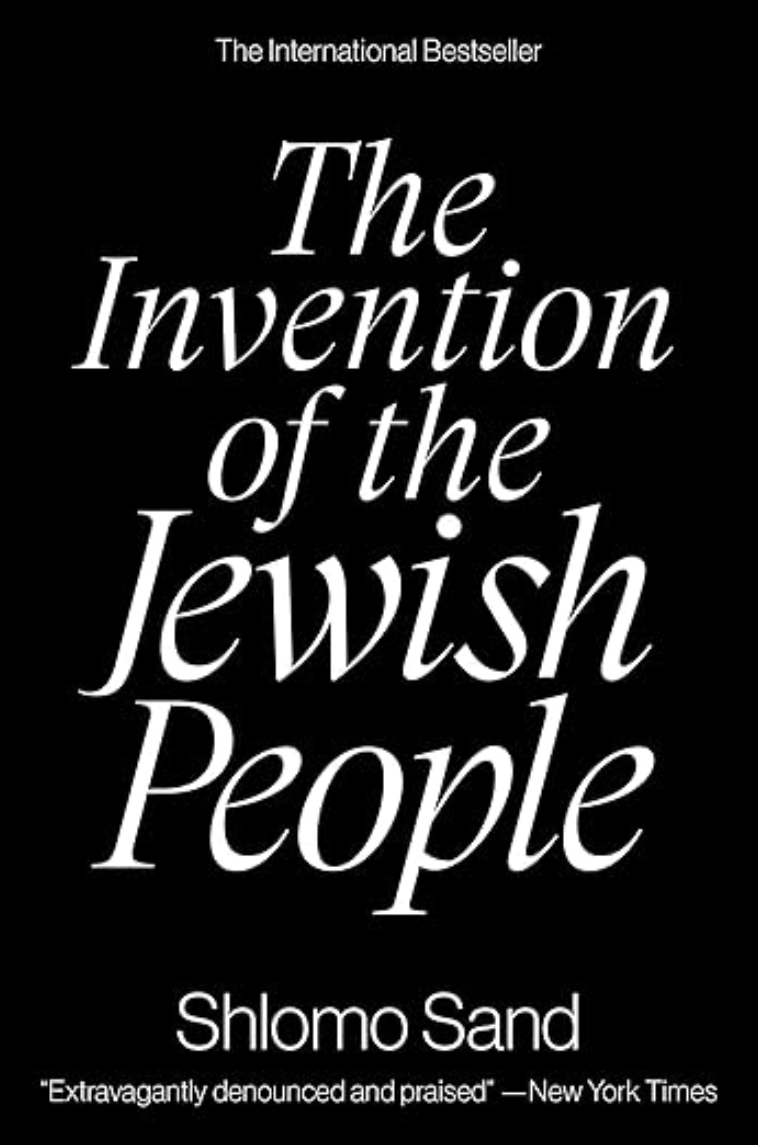
Shlomo Sand: Iznajdba judovskega ljudstva

Čas za osvežitev poznavanja zgodovine.

A historical tour de force that demolishes the myths and taboos that have surrounded Jewish and Israeli history, The Invention of the Jewish People offers a new account of both that demands to be read and reckoned with. Was there really a forced exile in the first century, at the hands of the Romans? Should we regard the Jewish people, throughout two millennia, as both a distinct ethnic group and a putative nation—returned at last to its Biblical homeland?

Shlomo Sand argues that most Jews actually descend from converts, whose native lands were scattered far across the Middle East and Eastern Europe. The formation of a Jewish people and then a Jewish nation out of these disparate groups could only take place under the sway of a new historiography, developing in response to the rise of nationalism throughout Europe. Beneath the biblical back fill of the nineteenth-century historians, and the twentieth-century intellectuals who replaced rabbis as the architects of Jewish identity, The Invention of the Jewish People uncovers a new narrative of Israel’s formation, and proposes a bold analysis of nationalism that accounts for the old myths.

Main findings:

  • The expulsion of Jews from Judea did not happen.
  • Many Judean Jews accepted Islam and are the ancestors of today’s Palestinians.
  • The “nation-race” of Jews with a common origin doesn’t exist and the “Jewish diaspora” is a modern invention.
  • The ancestors of European Jews mostly converted to Judaism and have no origin in Palestine.

After a long stay on Israel’s bestseller list, and winning the coveted Aujourd’hui Award in France, The Invention of the Jewish People is finally available in English. The central importance of the conflict in the Middle East ensures that Sand’s arguments will reverberate well beyond the historians and politicians that he takes to task. Without an adequate understanding of Israel’s past, capable of superseding today’s opposing views, diplomatic solutions are likely to remain elusive. In this iconoclastic work of history, Shlomo Sand provides the intellectual foundations for a new vision of Israel’s future.

____________

Shlomo Sand is a Jewish Professor of History at Tel Aviv University

Nadaljujte z branjem

Chomsky je imel prav: Mit ameriškega idealizma

Spodaj je izvleček iz dobre recenzije zadnje knjige Noama Chomskega in Nathana J. Robinsona “The Myth of American Idealism”. Chomsky in Robinson še enkrat več razzbijata mit, da ameriško zunanjo poolitiko vodijo dobri nameni in moralna načela in da so slabe stvari, ki se zgodijo, zgolj nezaželene stranske posledice. Nasprotno – ameriška zunanja politika je to, kar se kaže tudi navzven: brutalno uveljavljanje ameriške globalne hegemonije z vsemi sredstvi.

Seveda ni zanemarljivo, da je recenzijo napisal Stephen M. Walt, profesor politologije na univerzi Harvard in eden izmed vodilnih teoretikov realizma v mednarodnih odnosih (sicer tudi skupaj z Johnom Mearsheimerjem soavtor knjige “The Israel Lobby”.

For more than half a century, Noam Chomsky has been arguably the world’s most persistent, uncompromising, and intellectually respected critic of contemporary U.S. foreign policy. In a steady stream of books, articles, interviews, and speeches, he has repeatedly sought to expose Washington’s costly and inhumane approach to the rest of the world, an approach he believes has harmed millions and is contrary to the United States’ professed values. As co-author Nathan J. Robinson writes in the preface, The Myth of American Idealism was written to “draw insights from across [Chomsky’s] body of work into a single volume that could introduce people to his central critiques of U.S. foreign policy.” It accomplishes that task admirably.

caption tk herecaption tk here

The Myth of American Idealism: How U.S. Foreign Policy Endangers the World, Noam Chomsky and Nathan J. Robinson, Penguin, 416 pp., $32, October 2024.

As the title suggests, the central target of the book is the claim that U.S. foreign policy is guided by the lofty ideals of democracy, freedom, the rule of law, human rights, etc. For those who subscribe to this view, the damage the United States has sometimes inflicted on other countries was the unintended and much regretted result of actions taken for noble purposes and with the best of intentions. Americans are constantly reminded by their leaders that they are an “indispensable nation” and “the greatest force for freedom the world has ever known,” and assured that moral principles will be at the “center of U.S. foreign policy.” Such self-congratulatory justifications are then endlessly echoed by a chorus of politicians and establishment intellectuals.

Nadaljujte z branjem

Kissingerjeva hegeljanska ocena Trumpa

Če poenostavim, je Kissinger Trumpa ocenil kot osebo, ki se občasno pojavi, da označi konec neke dobe in jo prisili, da opusti svoje pretveze, ne da bi se nujno sama tega zavedala. No, to razlago pa se da malce zakomplicirati, če jo prevedemo v filozofski jezik. Larpurlartizem per se, ampak zabaven.

Kissinger on Trump and ‘The Cunning of Reason.’

The Financial Times’s man in Washington Edward Luce took Henry Kissinger out for lunch in 2018. Luce tried every which way to corner Kissinger into a direct comment on Trump, but his aged quarry easily evaded the pursuit. Except for one evidently premeditated and striking, if cryptic, assessment that I wrote about at the time, under another blogging hat, here: naimisha_forest.silvrback.com/kissinger-hege…

Kissinger:

“I think Trump may be one of those figures in history who appears from time to time to mark the end of an era and to force it to give up its pretences. It doesn’t necessarily mean that he knows this, or that he is considering any great alternative. It could just be an accident.”

I make five points. Four are specific to Kissinger on Trump. The last is on the Hegelian model of historical change – the cunning of reason – that Kissinger rather casually deploys here while toying half-heartedly with his branzino (European bass) on a bed of green vegetables. 

First, Kissinger thinks Trump may already be a substantial figure in world history, not, alas, some bizarre printer’s error that his opponents hope to erase from its pages.

Second, he’s not just any historical figure but one who marks the end of an era. This much should be apparent even from Trump’s critics, who denounce him for upending the post-war “liberal international order,” among other crimes. 

Third, Kissinger hints that the era which is ending may indeed deserve to go. Trump is forcing it to give up its pretences.

Nadaljujte z branjem

“Nobelova” nagrada za ideologijo, da zahodne institucije vodijo k hitrejšemu razvoju

Ta teden sem se izogibal komentiranju letošnje nagrade švedske centralne banke za ekonomijo (ki se nepravilno imenuje “Nobelova”) trem ameriškim profesorjem. Dobili so jo Daron Acemoglu, Simon Johnson in James Robinson (AJR), in sicer za prispevek k razumevanju, kako institucije vplivajo na razvoj in blaginjo držav. Ti trije avtorji so leta 2001 objavili enega najbolj citiranih in kontroverznih člankov zadnjega obdobja – The colonial origins of comparative development: An empirical investigation, ki je tudi glavna osnova za podelitev nagrade. Ključna ideja članka je, da so evropski kolonisti uprabljali različne strategije glede obvladovanja svojih kolonij. Tam, kjer so bile (zdravstvene) razmere za življenje bolj ugodne (to so ocenjevali s stopnjo smrtnosti naseljencev), so se naselili in postavili “inkluzivne institucije”, ki so spodbujale rast, medtem ko se v manj (zdravstveno) prijaznih področjih, kot je denimo centralna Afrika, niso naselili, pač pa so postavili “ekstraktivne institucije”, namenjene črpanju naravnih in človeških virov iz teh držav. Te prvotno postavljene institucije so se ohranile do sedaj in determinirale razvojno uspešnost držav. Države z inkluzivnimi institucijami naj bi bile bolj razvojno uspešne od držav z ekstraktivnimi institucijami.

Nadaljujte z branjem

Vojna v Ukrajini: Odboj mrtve mačke?

Kdaj bo konec vojne v Ukrajini? Putin, kolikor se spomnim, je sicer leta 2022 napovedal, da vojne ne bo konec pred letom 2025. Napoved spodaj na podlagi zgodovinskih analogij, ko je neka država v izgubljenem položaju izvedla obupni poskus diverzije (kot Ukrajina v primeru operacije Kursk), kaže na konec vojne sredi leta 2025 – če bo Ukrajina začela z mirovnimi pogajanji. Sicer pa leto kasneje, ko bo morala brezpogojno kapitulirati.

(Moj dodatek: seveda pod predpostavko, da se v vojno neposredno ne vključijo Nato države in pošljejo denimo armado z milijonom vojakov v Ukrajino. Kar pa bi pomenilo neposredno vojno z Rusijo in s tem jedrsko eskalacijo. Takrat pa je že vseeno, ker ne bo nihče zmagal).

Let’s talk about dead cats bouncing.  Strategically.

Last time I made a big prediction it was that Ukraine would begin to collapse after Spring 2024, and the Donbass front cracked and Ukraine launched a desperation push in Kursk in Summer ’24.

We can see the end from here.

So first, what is a dead cat bounce offensive?  It’s a last-ditch attack undertaken by a power that is already in military collapse, seeking to snatch victory from the jaws of defeat after the strategic balance has turned decisively against them.  Absent some level of divine intervention – see the French Orleans Campaign of 1429-30 – these operations are generally very counterproductive and significantly hasten the defeat of the power launching them.

There have been a lot of dead cats bouncing over the course of miliary history, enough that we can actually make predictions using them.  So let’s do exactly that and examine three such operations from the conflict closest in character to the Ukrainian War: World War One.

Nadaljujte z branjem