Predlog pokojninske reforme brez vladnih izračunov
Bine Kordež
Predlog pokojninske reforme predvideva postopno zvišanje upokojitvene starosti za dve leti do leta 2035 ter podaljšanje referenčnega obdobja za izračun pokojninske osnove iz 24 na 35 najboljših let. Kljub napovedanemu dvigu odmernega odstotka z 63,5 % na 70 %, lahko spremembe vodijo v nižje pokojnine zaradi daljšega obdobja povprečenja. Dodatno se predvideva postopno zmanjšanje deleža usklajevanja pokojnin z rastjo plač s 60 % na 20 %, kar dolgoročno slabša njihov realni vrednost. Kritike so usmerjene predvsem v pomanjkanje javno dostopnih izračunov in analiz učinkov predlaganih sprememb, kar omejuje kakovost javne razprave. Kljub temu naj bi reforma prispevala k stabilnosti sistema ob starajočem se prebivalstvu.
Pogajalske skupine Ekonomsko-socialnega sveta so uskladile izhodišča pokojninske reforme in pred dnevi se je začela javna razprava o sprejetih rešitvah. Vsekakor je pomembno, da so socialni partnerjih našli kompromis brez nekih večjih družbenih nasprotovanj. Sprejete rešitve naj bi na eni strani omogočile javno-finančno vzdržnost, na drugi pa “izboljšale blaginjo obstoječih in prihodnjih upokojencev”. Glede na nesporno povečevanje deleža starejših v populaciji ter podaljševanje življenjske dobe ljudi (7 let v zadnjih 30 letih), je verjetno vsem razumljivo, da je temu nujno prilagajati tudi upokojitvena starost in tokratne spremembe zakonodaje podaljšujejo upokojitveno starost za 2 leti postopno do leta 2035.
Za tretjino zmanjšan obisk tujcev: Zakaj se tujci bojijo vstopa v ZDA?
Po svoje je ironično, v vsakem primeru pa dvojno paradoksalno, da so ZDA, najbolj svobodna država na svetu, postale država, kamor si tujci ne upajo potovati in se je letos obisk tujcev zmanjšal za več kot tretjino. Razlog pa je, in tukaj pridemo do drugega paradoksa, da se tujci bojijo zaostrenih postopkov pri vstopu v ZDA zaradi “verbalnega delikta”. Ameriške oblasti naj bi namreč po poročanju mnogih tujih potnikov preverjale zapise posameznikov na socialnih omrežjih in zavrnile vstop ter zaplenile elektronsko opremo mnogim potnikom, ki so bili na socialnih omrežjih kritični do predsednika Trumpa in njegove administracije ter seveda do početja izraelskih oblasti.
Ne gre za Kitajsko, Rusijo, Kubo, Venezuelo in podobne zloglasne države, v katerih naj bi avtoritativni režimi omejevali svobodo govora, pač pa za najbolj svobodno državo na svetu. In da bo ironija še večja, zadnja dva meseca so najvišji predstavniki Trumpove administracije, vključno s predsednikom podpredsednikom, evropskim politikom brali levite glede omejevanja svobode govora na družbenih omrežjih, omejevanja demokracije ter omejevanja ali celo prepovedi političnega udejstvovanja politikov, ki niso po godu vladajočim.
Melodija v hrupu, razum sredi kaosa
Takšno muziko pogrešam danes. Melodijo v hrupu. Sporočilo ljubezni v hrupu.
In to pogrešam danes v svetu – signal v hrupu, razum sredi tega kaosa zadnjih let, ki se je prelevil v trampizem. Modrega državnika, ki bo znal pokazati pot ven iz tega nereda, iz tega kaosa. Pot miru in sodelovanja.
Trump je izgubil prvo carinsko bitko in hkrati sprožil beg iz ameriškega dolarja
Trump se je ustrašil svojih carin, ko so se borzni trgi sesuli. Umaknil je carine in razglasil zmago, hkrati pa še povečal carinski fokus na Kitajsko. Toda tam ga čaka še večja težava v obliki rasti donosov oziroma obrestne mere na ameriške obveznice, če se Kitajska maščuje prek masovnih odprodaj ameriških državnih obveznic. Hkrati je sprožil splošni beg iz ameriškega dolarja. Veliki investitorji in države se bodo želeli znebiti premoženja v nestabilnem dolarju, podvrženemu eratičnim sentimentom “zelo stabilnega genija”.
It is indeed “one of the most extraordinary Truth posts of Trump’s presidency” in the sheer level of gaslighting at play: he’s trying to make one of the biggest and clearest humiliations in US history look like a win.
But there’s no amount of lipstick that can disguise this pig. What happened is remarkably similar to the 2022 Liz Truss fiasco in the UK: Trump came out with a remarkably foolish and terribly executed policy that created a market panic—including in the bonds market—and he had to walk it back.
But unlike the British system that—for better or worse—can get rid of woefully incompetent Prime Ministers (that is, more incompetent than the average), the U.S. is stuck with Trump.
And unlike Liz Truss, Trump remains insulated by a circle of sycophants like Lutnick who reframe humiliating capitulations as ‘extraordinary’ triumphs, and a voter base that interprets even his most flagrant policy failures as masterful 4D chess moves.
Fact is, even after this retreat, the U.S. is in a far worse position than it used to be.
ZDA 125 % v. Kitajska 84 %. Kdo bo prvi pomežiknil?
Trump je sicer še zaostril retoriko in carinsko stopnjo na uvoz iz Kitajske dvignil iz 104 % na 125 %. Toda lahko ameriški Treasury zdrži povišane stopnje zahtevanih donosov toliko časa, kot si lahko kitajska vlada privošči povečane kapitalske izgub ob prodaji ameriških državnih obveznic? Kitajska vlada ima na voljo za 700 milijard naložb v ameriške državne obveznice, ki jih lahko počasi ali hitreje prodaja z namenom zniževanja njihovih cen in posledično spodbujanja rasti njihovih obrestnih mer. Drugače rečeno, kitajska vlada si lahko privošči več finančne bolečine, kot je lahko prenese ameriška administracija.
Zato, če bi stavil, bi stavil, da bo Trump prvi pomežiknil. Včeraj je že s pavziranjem pri carinah na vse ostale države, da bi reševal naložbe svojih oligarhovskih prijateljev.
Trumpov brilijantni načrt za carinski kaos
Menda naj bi bil v ozadju Trumpovega carinskega rodea brilijantni načrt (glejte spodnjo nit). Njegov šef ekonomskih svetovalcev Stephen Miran, s pedigrejem Harvarda, naj bi namreč izdelal brilijanten načrt, kako bi ameriške carine plačale druge države. Trump naj bi začel postopno dvigovati carine – po 2 odstotni točki naenkrat. To naj bi imelo učinek kuhanja žabe – tuji izvozniki naj bi postopno znževali izvozne cene, da bi zadržali nominalne uvozne cene na ameriškem trgu in države izvoznice naj bi postopno prilagodile tečaje svojih valut do dolarja.
No, potem pa naj bi Trump v enem zamahu preskočil vse vmesne korake in povišal carine na absurdne višine – celo čez 50 %. In začel se je rodeo s povračilnimi ukrepi in eskalacijo carin in paniko na finančnih trgih. Nastal je kaos. In na koncu bodo carine plačali ameriški potrošniki – po eni oceni iz univerze na Yaleu naj bi ta kaos plačali ameriški potrošniki (itak!), ki naj bi jih te carine stale v povprečju okrog 3,800 dolarjev letno, njihov nominalni dohodek naj bi se znižal za 4 %, splošna raven cen pa se povečala za 2.3 % (inflacija).
Naj bi, kajti včeraj si je Trump spet malce premislil in uvedel 90-dnevni moratorij na uvedbo carin za vse države (ostane splošna 10 % carina), razen za Kitajsko, za katero je določil še višjo – 125 % carino.
Jaz dvomim, da je tak brilijanten načrt, če je res obstajal, kadarkoli penetriral Trumpove možgane. Pač pa je Trump ves čas sledil svojemu stilu – z absurdno visokimi carinami je šokiral trgovinske partnerje, da bi od njih dobil maksimalne koncesije. Toda kakšne koncesije lahko dobi, če pa povprečne carinske stopnje v okviru WTO pravil znašajo že zdaj med 2 in 7 % (po skupinah proizvodov)? Kakšne koncesije lahko dobi, če pa ZDA nimajo kvalitetnih potrošniških izdelkov, ki bi jih lahko izvažale? (praktično skoraj vsi kvalitetni izdelki ameriških korporacij se izdelajo v drugih državah in ne štejejo v trgovinsko bilanco ZDA) No, vse, kar Trump lahko zahteva, je, da se države zavežejo, da bodo kupovale več ameriškega orožja, več Boeingov (ja, tistih nevarnih letal) in več ameriškega LNG plina (ja, tistega dragega plina).
In potem kaj? Cel kaos je bil zaradi tega?
Če bi imel Trump resen načrt za reindustrializicijo Amerike, ne bi gledali tega kaosa. Pač pa bi izhajali iz resnih analiz, v katerih panogah je možna in smiselna reindustrializacija, kje je mogoče v doglednem času izgraditi dobaviteljske verige, kako privabiti domače in tuje investicije, temu bi sledile davčna politika za privabljanje podjetij in izobraževalna politika za izobraževanje potrebnih kadrov. Ne bi bilo carin in ne bi bilo ukinitve ministrstva za izobraževanje.
Ampak, če si Trump, si pač Trump.
ZDA 104 % v. Kitajska 84 %. Kdo bo prvi pomežiknil?
Kitajska se je na Trumpov dvig carin za 50 točk pričakovano odzvala z enakim dvigom za 50 točk. Glede stopnje carin sicer vodijo ZDA s 104 % carino (20 + 34 + 50 %), Kitajska se je samo približala na 84 % (34 + 50 %). Tako visoke splošne carine v praksi pomenijo prohibitivno visoke carine – pri tako visokih dodatnih dajatvah se trgovina večinoma več ne splača. No, nekaj kitajskih izdelkov bo še vedno konkurenčnih, mnogi bodo prišli v ZDA posredno prek drugih držav.
Vendar so v osnovi tako visoke carine nevzdržne. Vprašanje je le, kdo bo prvi pomežiknil oziroma popustil. Zdi se, da to ne bo Kitajska. Kajti kitajska vlada je že prepovedala izvoz določenih kritičnih materialov, prepovedala kitajskim podjetjem investicije v ZDA, prepovedala uvoz ameriških filmov in naročila bankam, da se znebijo za 50 milijard dolarjev svojih naložb v ameriške obveznice. Posledično je cena ameriških obveznic strmoglavila, zahtevan donos pa se je povečal za več kot 0.6 odstotnih točk v zadnjih dveh dneh. S tem je Kitajska signalizirala, da je pripravljena na boj do konca.
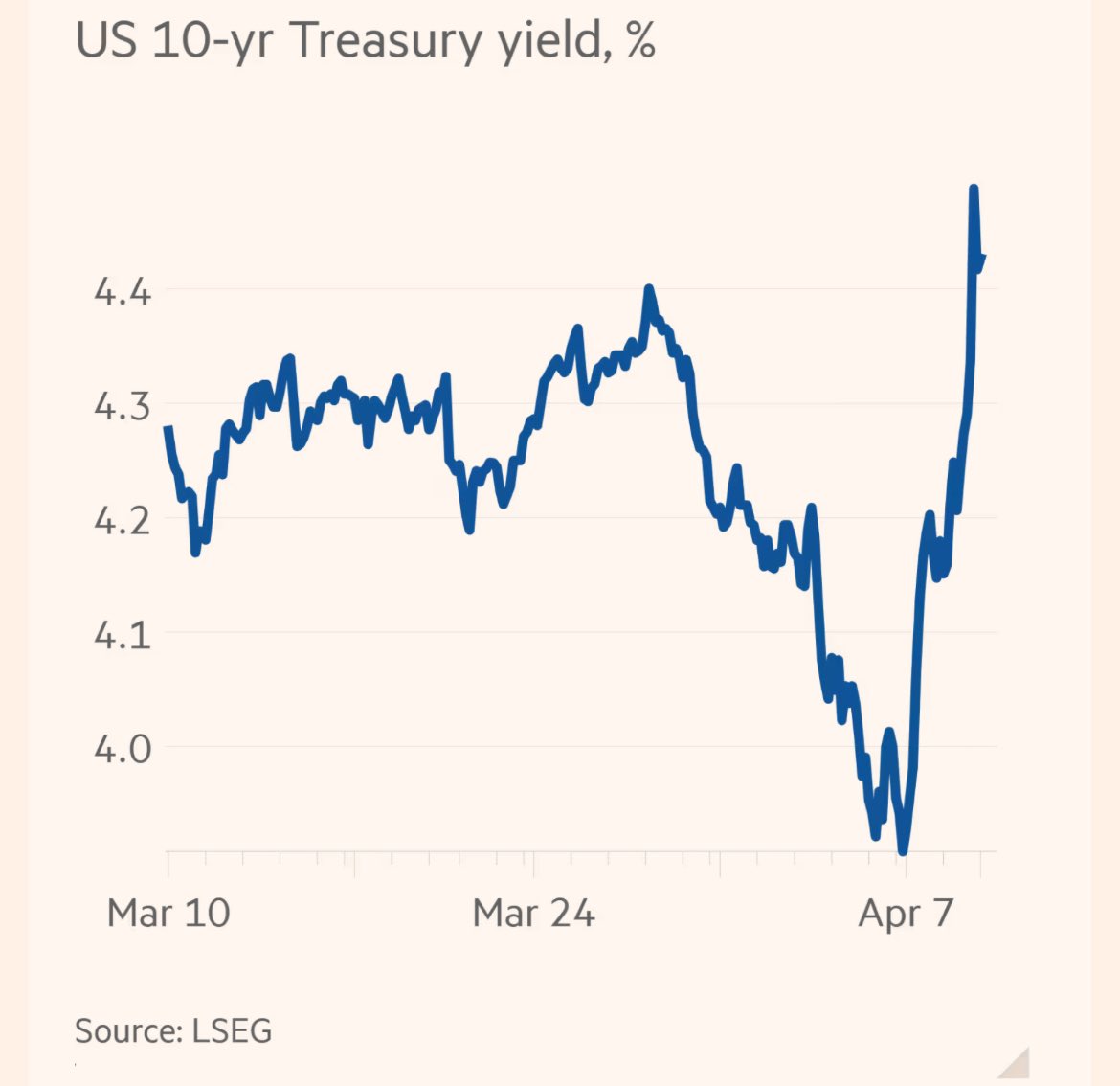
Vir: Financial Times
Vprašanje danes ni, ali lahko kitajsko gospodarstvo preživi Trumpov carinski šok, pač pa, ali ga lahko preživi ameriško gospodarstvo. Trumpov carinski šok lahko odnese med 0.2 in največ 2.5 % kitajskega BDP, kar kitajsko gospodarstvo v povprečju lahko zdrži. Toda ameriška podjetja večino tehnoloških izdelkov in aparatov za domačo uporabo proizvajajo na Kitajskem ali kitajskih podjetijih v drugih državah, kot sta Vietnam in Mehika. Večina poceni izdelkov v Walmartu prihaja iz Kitajske. Zaradi tako visokih carin bodo ameriške korporacije prisiljene zamenjati svoje dobavitelje teh izdelkov oziroma organizirati proizvodnjo v drugih državah. To pa lahko traja nekaj let.
Toda Trump ni v vojni samo s Kitajsko, pač pa z vsem svetom. Za vse države je uvedel med najmanj 10 % in 50 % carine.
Torej koliko časa bo Trump vztrajal pri tej norosti preden bo počilo ameriško gospodarstvo?
Death by China in Peter Navarro: Kontroverzna knjiga in kontroverzni ekonomist, ki tvorita temelj Trumpove nore trgovinske politike
Knjiga Death by China: Confronting the Dragon – A Global Call to Action, ki jo je leta 2011 napisal ameriški ekonomist Peter Navarro skupaj z Gregom Autryjem, velja za eno najbolj kontroverznih publikacij s področja ameriško-kitajskih gospodarskih odnosov zadnjih desetletij. Navarro, ki je pozneje postal pomemben gospodarski svetovalec ameriškega predsednika Donalda Trumpa v prvem mandatu, je v knjigi predstavil močno kritično in ponekod celo alarmantno oceno vpliva Kitajske na ameriško gospodarstvo, varnost ter globalni red.
Navarro v knjigi trdi, da je Kitajska s svojo trgovinsko politiko, manipulacijo valut, nepoštenimi poslovnimi praksami ter masovno proizvodnjo cenovno ugodnih izdelkov povzročila ekonomski propad ZDA. Avtor posebej izpostavlja fenomen »kitajske grožnje«, ki po njegovem mnenju predstavlja strateški izziv ZDA, saj Kitajska namerno spodkopava ameriško proizvodnjo, prevzema ključne tehnološke panoge in ogroža delovna mesta milijonov Američanov. Skozi prikaz primerov različnih industrij, od tekstilne do visoke tehnologije, Navarro trdi, da je Kitajska odgovorna za množično izgubo delovnih mest in deindustrializacijo ZDA.
Kontroverznost knjige izvira predvsem iz načina predstavitve problematike in izrazito negativnega tona. Številni kritiki menijo, da Navarro v svoji analizi uporablja pretirane trditve, senzacionalizem in pretirano poenostavljanje zapletenih globalnih ekonomskih odnosov. Navarrove trditve, kot so na primer, da »Kitajska ubija Ameriko« (»Death by China«), so bile označene kot nacionalistične, populistične in celo propagandne. Poleg tega so mu očitali, da s takim pristopom prispeva k spodbujanju protikitajskih sentimentov in ksenofobije, saj njegovo besedilo na več mestih uporablja zelo agresivne izraze in negativne stereotipe o Kitajski in Kitajcih.
Show must go on: Trumpove carine do bridkega konca
Ker se Kitajska ni uklonila ameriškemu izsiljevanju (naj umakne 34 % povračilne carine na ameriške 20+34 % carine), je Trump uvedel še dodatne 50 % carine. Kar pomeni, da bodo v bodoče kitajski izdelki v ZDA enkrat dražji. Če Trump računa, da se bo Kitajska uklonila temu pritisku, se bridko moti. Poglejte uradne odzive Pekinga – Kitajska je bila pripravljena na to trgovinsko vojno. Morda bo ta trgovinska vojna kratkoročno odnesla 1 odstotno točko kitajske gospodarske rasti, vendar bodo kitajska podjetja preusmerila svoj izvoz na druge trge. Izgubili bodo predvsem ameriški lastniki korporacij, ki so v Kitajsko prenesli svojo proizvodnjo, da bi tam proizvajale za ameriški trg.
Nekateri poskušajo racionalno pojasniti Trumpove politike, da gre za njegov stari Veliki načrt, da bo s carinami vrnil industrijo nazaj v ZDA (ne bo šlo, bistveno prepozno je za to). Drugi špekulirajo, da hoče s carinami sesuti finančni sektor (dvomim, da bi Trump hotel ali si upal načrtno uničevati svoje sponzorje iz izraelskega lobija). Tretji špekulirajo (na podlagi izjav sekretarja za finance Bessenta), da hoče s carinami znižati donose na ameriške državne obveznice. Tudi če bi, se mu je zgodba grdo ponesrečila. V zadnjih treh dneh so korporativne delnice padle za +10 %, donosi na državne obveznice pa zrasli za 10 %.
Vse skupaj nima ne racionalnega načrta in nima smisla. Jaz sicer menim, da gre pri vsem sicer za poskus izvedbe Trumpove stare ideje glede carin, ki da bodo Ameriko spet naredile industrijsko veliko, ki pa se mu je v izpeljavi izrodila v kaos, ki je ušel izpod nadzora.
Nekdo bo moral prvi popustiti. Ali pa bo nekaj počilo. In to nekaj bo ameriški kazino kapitalizem.
 DAMIJAN blog
You must be logged in to post a comment.