Spodletela prevara von der Leynove, ki je evropskim državljanom privarčevala 140 milijard evrov

Belgijski predsednik vlade je, vsaj začasno, preprečil von der Leynovi ukrep de facto zaplembe ruskih monetarnih rezerv, s pomočjo katerih bi Ukrajini odobrili 140 milijard evrov kredita.
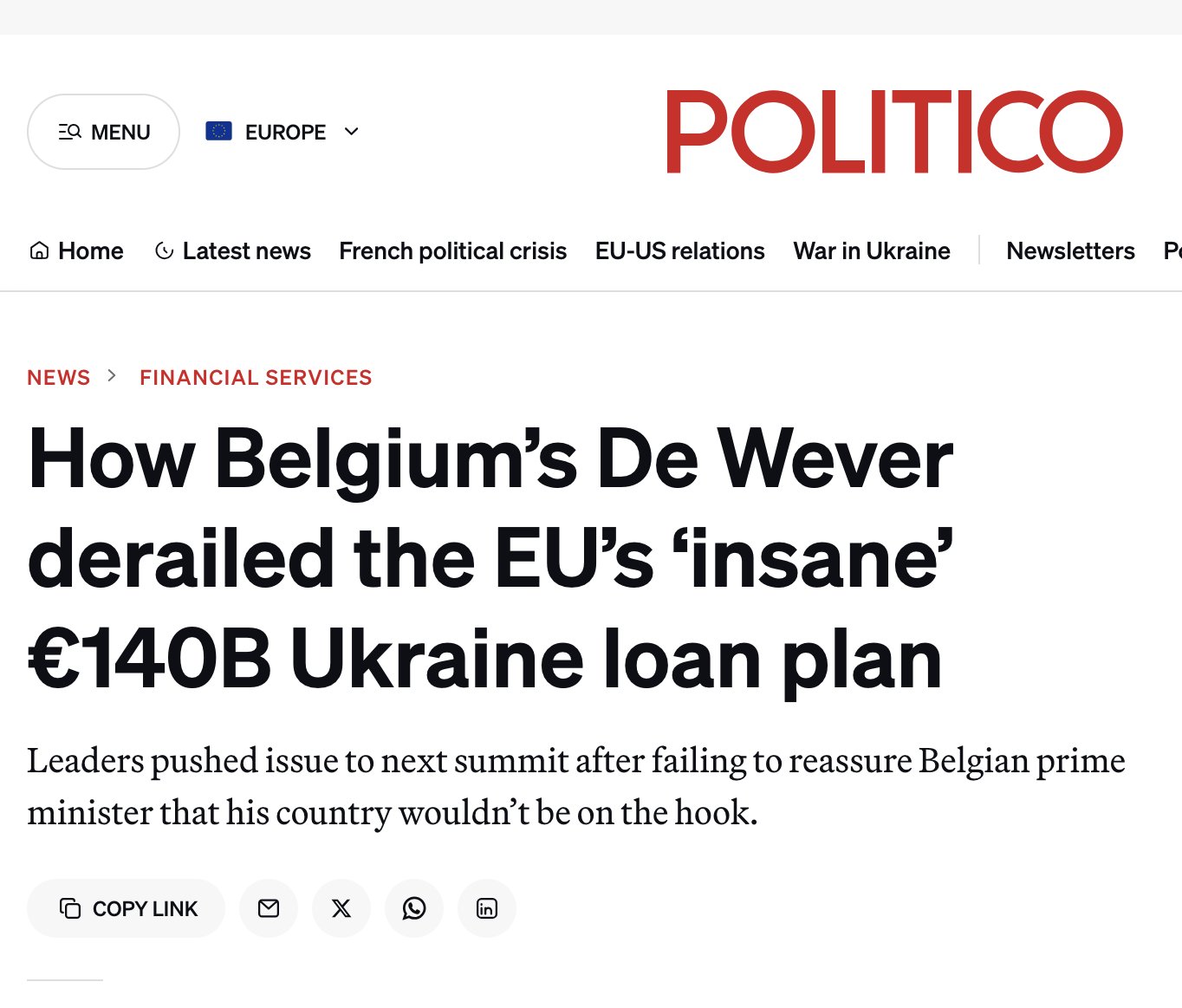
Ukrajina naj bi ta dolg po besedah von der Leynove odplačala “po zmagi Ukrajine nad Rusijo” iz naslova reparacij Rusije za vojno škodo, povzročeno Ukrajini. Ta ukrep ima vsaj štiri hakeljce.

Prvič, je v nasprotju z mednarodnim pravom, ki izrecno ščiti monetarne rezerve vseh držav, zaradi česar do takšne de facto zaplembe še nikoli doslej ni prišlo (niti med državami v medsebojni vojni).

Drugič, če bi EU države to naredile, bi razpadlo zaupanje v mednarodni finančni sistem, predvsem pa v evropski, zaradi česar bi druge države začele umikati monetarne rezerve iz Evrope (iz sistema Euroclear v Bruslju). Katera država bi hotela imeti shranjene rezerve v EU, če pa je lahko naslednjič ona tarča zasega sredstev?

Tretjič, če bi Rusija kasneje v arbitražnem postopku zmagala (kar glede na mednarodno pravo bi), bi morale vpletene EU države Rusiji povrniti zaplenjena sredstva (z obrestmi). Belgijski predsednik vlade je zaradi tega zahteval, da vse članice EU “delijo to tveganje” in da ga ne nosi samo Belgija, kjer ima sedež Euroclear. Ker te privolitve drugih članic ni bilo, že napisan sklep Komisije ni bil sprejet, odločanje pa prestavljeno na sejo EU Sveta decembra.

In četrtič, predpostavka, da bo dolg Ukrajine odplačala Rusija “po zmagi Ukrajine nad Rusijo”, je idiotska. Zmagovalci vojne ne plačujejo reparacij. Rusija je v Ukrajini zmagala (in tega nihče ne more preprečiti, ker nima s čim) in bo ona postavljala pogoje.

Torej, belgijski predsednik vlade je, vsaj začasno, državljane članic EU obvaroval pred zvišanjem davkov, ki bi sledili po vojni v Ukrajini, ko Ukrajina ne bo sposobna vrniti dolga in bo breme padlo na evropske davkoplačevalce.
Nadaljujte z branjem

Največji sovražnik Evrope nista Kitajska ali Rusija, ampak njena nesposobna, kompradorska, vazalna globalistična elita

Marko Golob

Vsa strategija neoliberalizma in globalizma Zahoda je temeljila na predpostavki, da bodo obvladovanje finančnih trgov, visoke tehnologije in vojaška premoč zagotavljali dolgoročno dominacijo. Če bomo obvladovali vse to, bomo lahko dobili vse ostalo.

Z vzponom Kitajske je padla tehnološka dominacija, z napadom na Rusijo vojaška, izguba finančne dominacije pa logično sledi. Ob tem so se razkrile vse strateške pomanjkljivosti neoliberalnega globalističnega koncepta, o katerem govorim že leta. Skoraj polmilijardni blok, kot je EU, si ne more privoščiti odvisnosti ne le od redkih zemelj, temveč tudi od dobave železa, aluminija, farmacevtskih učinkovin …

Tak blok mora imeti celotne reprodukcijske verige že iz strateških razlogov. To ne pomeni, da mora 100-odstotno pokrivati posamezno področje, vendar zagotovo več kot 50 %. Absurdno je, da imamo na primer v ASML vodilnega svetovnega proizvajalca opreme za izdelavo najzahtevnejših čipov, te čipe pa praktično v celoti uvažamo. Ali ne bi bilo smiselno na osnovi te tehnološke prednosti zgraditi celotne polprevodniške industrije v Evropi? Če je to uspelo manj kot 30-milijonskemu Tajvanu, mar Evropa tega ne bi zmogla? Saj gre za industrijo znanja z visoko dodano vrednostjo in relativno majhno težo surovin, energije in transporta v prodajni ceni.

Nadaljujte z branjem

Zakaj bodo ZDA izgubile trgovinsko vojno

Odgovor v  enem stavku: ker so stopile v kitajsko past tako pri redkih zemljah kot tudi farmacevtskih učinkovinah. Te kitajske komponente / surovine nimajo alternative na svetovnem trgu, nihče drug jih ne proizvaja oziroma ne v pomembnem obsegu. V doglednem času nekaj let, ali celo desetletij pri redkih zemljah, ameriška podjetja ne morejo dobiti nadomestnih količin teh izdelkov. Zato bo Trump prvi pomežiknil oziroma je že.

When Trump began his trade war, his starting assumption was that because America buys a lot more from China than the other way around — it was the US that had all the leverage.

That might have been true, if the US could easily replace all the goods that it buys from China. But, for certain key commodities, China is far and away the dominant supplier.

The most obvious category is the rare earths and critical minerals whose export China is now threatening to severely restrict. Anyone who follows the trade tussle between Washington and Beijing could see that punch coming from a mile off. Last August, I wrote a column headlined, “China has laid a rare earths trap for the west”. Now that trap has been sprung.

The US knows that if these new restrictions come into force in December, as China is threatening, it will not be long before some American production lines grind to a halt.

Nadaljujte z branjem

Tehnološki zaostanek za Kitajsko pri predelavi redkih zemelj je za ZDA pretrd oreh

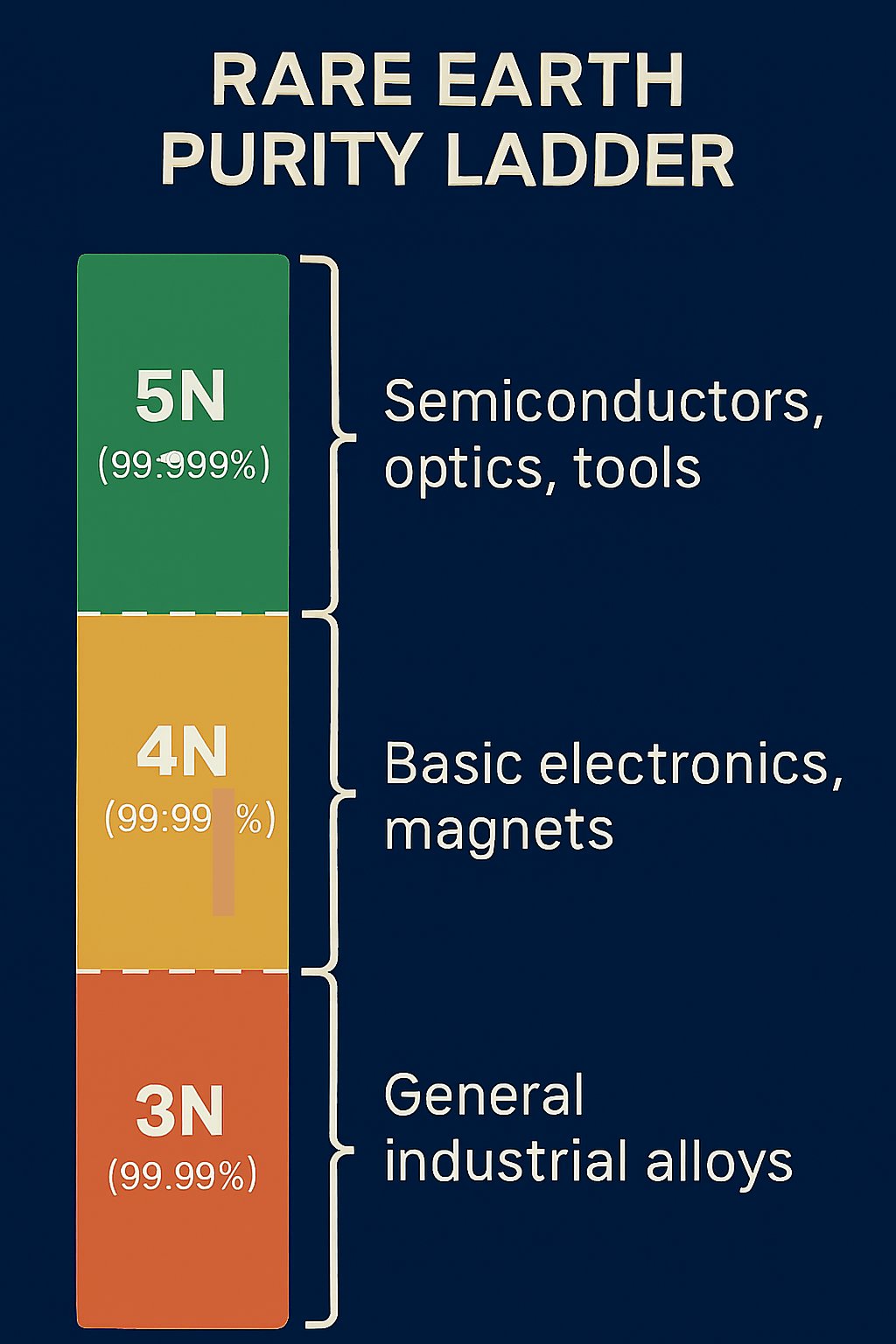
China’s Rare Earth Refining at 5N (99.999%) Purity Is the Moat the U.S. Can’t Cross

By any strategic measure, China’s grip on the rare earth supply chain is not just dominant—it’s nearly unassailable. With 83% of global rare earth refining capacity and 92% of the world’s magnet production, Beijing has built a fortress around one of the most critical inputs to modern technology. But it’s not just the volume—it’s the purity that defines the moat.

China is the only country that achieves 5N purity (99.999%) in rare earth refining. This ultra-high standard is not a luxury—it’s a necessity for the semiconductor and precision tool industries. At 3N or 4N purity, rare earth oxides may suffice for wind turbines or electric vehicles. But in the world of AI chips, EUV lithography, and atomic-scale etching, even trace impurities can sabotage performance, reliability, and yield.

Nadaljujte z branjem

Prepoved uvoza ruskega plina bo prizadela Nemčijo in koristila Poljski

Andrew Korybko

Medtem ko je Nemčija mislila, da bo Rusiji zadala strateški poraz, so ZDA na koncu zadale strateški poraz Nemčiji s tem, ko so ustvarile okoliščine, v katerih je gospodarstvo njenega edinega zahodnega tekmeca kolapsiralo.

Poland’s role in providing more US LNG to Central & Eastern Europe is expected to erode Germany’s influence in this region and accelerate Poland’s revival of its lost Great Power status.

The European Council decreed that the import of Russian gas will be banned across the bloc next year, but with varying lengths of grace periods for countries with short- and long-term contracts, the longest of which will last till 1 January 2028. The Council earlier admitted that pipeline gas and LNG combined accounted for a little less than a fifth of the bloc’s imports last year. It should also be mentioned that the EU continues to import Russian oil too, including indirectly, which has proven to be similarly scandalous.

Nevertheless, the EU’s plans to phase out the remaining fifth of its gas imports from Russia will further enfeeble its economy by leading to their replacement with more expensive US LNG, which will predictably result in the costs being passed down to consumers. This was entirely predictable too since the EU agreed to purchase $750 billion in US energy by 2028 per the terms of their lopsided trade deal from last summer that was assessed here as having turned the EU into the US’ largest-ever vassal state.

Nadaljujte z branjem

Emmanuel Todd – Institucionalizirana Evropa je skrajno desničarska

In his latest essay Emmanuel Todd compares the various -isms of foregone and current times:

Hitlerism, Trumpism, Netanyahuism, Le Penism, Macronism

Two of many good points deserve to be highlighted. The first in on Trump’s active service for Zionism which is in fact anti-semitic:

In my opinion, Trumpism’s radical pro-Israel stance masks a visceral and vicious anti-Semitism: the identification of all Jews with Netanyahuism, a truly monstrous historical phenomenon and a cancer in Jewish history, will only serve to renew the Nazi conception of a monstrous Jewish people. I am talking here about anti-Semitism 2.0.

Another, totally different point to highlight, is his analysis of European centrism à la Macron:

Some European middle classes between the [world] wars went mad. The working class was more reasonable. But are today’s middle classes, particularly the upper middle classes, reasonable? Are they peaceful? What are their dreams?

They are crazy. The construction of a post-national Europe is a delusional project when one considers the diversity of the continent. It has led to the expansion of the European Union, cobbled together and unstable, into the former Soviet space. The EU is now Russophobic and warmongering, with its aggression renewed by its economic defeat at the hands of Russia. The EU is trying to drag the British, French, German and many other peoples into a real war. But what a strange war it would be, in which the Western elites have adopted Hitler’s dream of destroying Russia!

Nadaljujte z branjem