Let's deal with this Russian market 'intelligence':
— Russia's Pivot to Asia (@RussiasPivot) February 23, 2026
1) Russia currently holds 19.4% of what was Ukrainian territory, slightly more than it did in 2022.
2) The Russian economy is not in recession, although GDP growth is low at about 1.5%.
3) Russian foreign reserves were US$838…
Author Archives: jpd
Judovstvo je edini pravi temelj in vrh zahodne civilizacije
Poglejte to norost spodaj.
Jebemumast, pred Mojzesom in po Mojzesu ni bilo nikogar pomembnega več. In Juda Iškarijot je bil v funkciji tega.
Od kdaj dovolimo, da nam pravljice krojijo usodo?
Zakaj bo Trump zmagal carinsko vojno
Dodatno k mojemu komentarju v petek (Vrhovno sodišče proti Trumpovim carinam: Je Trump kljub vsemu zmagal?), kjer sem povedal, da odločitev ameriškega vrhovnega sodišča ne ruši Trumpove zmage v carinski in trgovinski vojni (če v analizi uporabljamo trezne možgane namesto čustev in projekcij želja), je spodaj kratek izvleček iz današnjega komentarja – inteligentnega – Wolfganga Münchaua. Tudi on pravi, da je in da bo Trump v tej carinski vojni zmagal in da nasprotniki dajejo prevelik poudarek legalnosti njegovih dejanj.
Namesto tega pa bi se morali – to je moj dodatek – fokusirati na to, kako Trumpa efektivno zaustaviti v njegovi norosti, Kitajska mu je to jasno pokazala in je stisnil rep med noge. Za razliko od Kitajske pa je predsednica Evropske komisije Ursula von der Leyen že preemptively stisnila rep med noge in popustila ter pristala na vse Triumpove zahteve. In najhuje je, da bi to naredila ponovno, tudi če vrhovno sodišče Trumpu ne bi prepovedalo uporabe tega konkretnega mehanizma za izsiljevanje.
Zakaj? Ker EU ni suverena združba držav in ker ni pripravljena na žrtev, če bi Trump zaostril delovanje. “Snagatorji” ne spoštujejo podložnega uklanjanja njihovemu izsiljevanju. Nasprotno, to jih še podžge, da se še bolj izživljajo nad nemočnimi. Snagatorji razumejo samo silo (kot pravijo Srbi: budala razume samo šamar) in umaknejo se samo pred enakovrednim nasprotnikom. Trump, kot je javno povedal, med nasprotniki spoštuje samo Putina in Xija. Ker sta inteligentna, konkretna in odločna (po njegovih besedah) in ker ve, da imata sredstva, da udarita nazaj enako močno ali še bolj.
In enako se zdaj dogaja z Iranom. Trumpov odposlanec Witkoff je čez vikend izrazil presenečenje, da se Iran ni uklonil navkljub ameriškemu kopičenju vojaške sile okrog Irana. Jasno, (1) Iran več izgubi, če se ukloni Trumpovemu pritisku, kot bi izgubil v primeru vojne in (2) ima sredstva, da udari nazaj še močneje (Izrael in ameriške baze v regiji zravna z zemljo in potopi ameriški letalonosilki). Zato je Trump cviknil in čaka na odrešilni “diplomatski dogovor”, da reši svoj obraz.
Kdaj se bo EU končno postavila na lastne noge in začela delovati kot globalna sila?
(no, zgolj retorično vprašanje, saj vsi vemo, da se ne bo nikoli)
Primerjalna analiza Sanda in mainstream sionističnega zgodovinopisja glede izvora judovskega ljudstva
- Uvod: Zakaj primerjati Sanda in mainstream sionističnega zgodovinopisja
Razprava med Shlomom Sandom (avtorjem knjige The Invention of the Jewish People) in t. i. mainstream sionističnim zgodovinopisjem ni zgolj akademska, pač pa se nanaša na temeljni spor o tem, kako se zgodovina uporablja kot institucija, ki proizvaja legitimnost, politično kohezijo in pravice. Tako kot pri nacionalnih ekonomskih politikah tudi tukaj ne gre za vprašanje ene same “resnice”, temveč za konkurenco interpretacij, ki imajo zelo konkretne politične in institucionalne posledice.
Sandov poseg je zanimiv predvsem zato, ker ne napada posameznih zgodovinskih dejstev, temveč logiko konstrukcije zgodovinskega narativa, ki podpira sodobni nacionalni projekt. Mainstream sionistično zgodovinopisje pa deluje kot stabilizacijski mehanizem države, podobno kot makroekonomski narativi stabilizirajo ekonomsko politiko.
Kako so izumili judovsko ljudstvo (Shlomo Sand) – Povzetek
Knjiga The Invention of the Jewish People izraelskega zgodovinarja in profesorja Shloma Sanda predstavlja temeljito zgodovinsko in historiografsko analizo nastanka moderne ideje »judovskega ljudstva« kot enotnega, etnično neprekinjenega naroda. Sandova osrednja teza ni, da Judje kot verska ali kulturna skupnost ne obstajajo, temveč da je sodobno razumevanje Judov kot homogenega naroda z nepretrgano etnično linijo od antičnega Izraela do današnjih dni produkt moderne nacionalistične historiografije, predvsem 19. in 20. stoletja, in ne rezultat preverljivih zgodovinskih procesov.
Sand knjigo umešča v širši kontekst evropskega nacionalizma, v katerem so se v 19. stoletju začele oblikovati moderne nacionalne identitete. Po njegovem mnenju je tudi judovska nacionalna identiteta nastala po analogiji z evropskimi nacionalnimi projekti, ki so temeljili na ideji skupnega izvora, skupne krvi, jezika in ozemlja. V tem procesu naj bi zgodovinopisje igralo ključno vlogo: ne kot nevtralni opis preteklosti, temveč kot orodje politične mobilizacije.
Ko politika zlorabi zgodovino: Kaj Huckabee zamolči o aškenazi izvoru Izraelcev
Marko Golob
Huckabee v nadaljevanju na platformi X med drugim pravi naslednje:
“But I do know that the discredited idea that most Ashkenazi or European Jews descended from the ancient Turkic kingdom of Khazaria is bunk. It’s also been weaponized by people trying to delegitimize Jews, to strip them of their history, and to call them ‘imposters’ or ‘fake Jews.’ This odious conspiracy theory is peddled by the likes of Candace Owens and Nick Fuentes and by people who love David Duke, as well as Islamist accounts that make up false smears about Israel non-stop and are run out of countries like Pakistan and Turkey. But we know from genetics and rich volumes of written literature that the Jews of today can trace their lineage back thousands of years to Israel and the Jewish people of the Bible. They are as connected together as genetics tell us that the ancient Khazar kingdom is to people living today in Turkey.”
Nato doda še obtožbo:
“I’m sharing this information because it has been weaponized by very bad people to delegitimize Jews and strip them of their history. It’s an idea that gained traction in the 1980s and 1990s with David Duke and other Klansmen and neo-Nazis. It has really caught fire in recent years on the Internet and social media, mostly from some of the most overt anti-Semites and Jew haters you can find.”
Vendar Huckabee ne govori resnice – bodisi namenoma bodisi zaradi nepoznavanja dejstev.
Teorije o izvoru Aškenazov niso izum nacistov ali sodobnih »conspiracy theorists«. Razprava o tem sega daleč v preteklost, v sodobnem času pa se je posebej razvnela z izidom knjige The Invention of the Jewish People uglednega izraelskega zgodovinarja Shloma Sanda, profesorja emeritusa na Univerzi v Tel Avivu. Knjigo vsekakor priporočam v branje. Ob izidu leta 2008 je v Izraelu povzročila veliko razburjenja.
Kakšne koristi je prineslo 16 bilijonov dolarjev za politike, povezane z bojem proti podnebnim spremembam?
Stephen Moore v članku v Epoch Times izhaja iz nedavne ocene danskega okoljskega raziskovalca Bjørna Lomborga, po kateri naj bi vlade po svetu v zadnjih desetletjih porabile najmanj 16 bilijonov ameriških dolarjev za politike, programe in regulacijo, povezane z bojem proti podnebnim spremembam. Ta obseg porabe Moore označuje kot finančno osnovo t. i. »industrijskega kompleksa podnebnih sprememb«, ki po njegovem mnenju združuje politične interese, regulativne organe, subvencionirane industrije in nevladne organizacije.
Osrednje vprašanje, ki ga Moore postavlja, je: kakšni so bili dejanski učinki te ogromne porabe? Po njegovem stališču so učinki zanemarljivi ali celo neobstoječi. Trdi, da kljub več kot 30 letom intenzivnih podnebnih politik globalna povprečna temperatura planeta ni bila znižana niti za desetinko stopinje Celzija, kar naj bi priznavali tudi zagovorniki stroge podnebne politike. Iz tega sklepa, da porabljena sredstva niso prinesla merljivih podnebnih koristi, medtem ko so posamezniki in sektorji, povezani z regulacijo in subvencijami, iz tega finančno močno profitirali.
Tucker Carlson na izraelski tarči
Carlson – Huckabee intervju, druga runda
Tako se je začelo. Tucker Carlson je izjemno izpostavil ameriškega veleposlanika v Izraelu, da je ta naredil še korak naprej v razkritju cionistične narave Izraela, sebe kot cionističnega predstavnika Amerike in cionistične politike, ki jo v imenu Izraela izvajajo ZDA na Bližnjem vzhodu. Lekcija v samoinkriminaciji.
No, nato je Huckabee odgovoril in se še bolj samoinkriminiral
In (z izjavo, da ima Izrael svetopisemsko pravico, da prevzame celoten Bližnji vzhod) razkuril vse arabske države, ki imajo to nesrečo, da Bližnji vzhod po letu 1947 delijo z novoustvarjeno miniaturno, vendar ekstremno agresivno državico Izraelom.
Industrijski kolaps na račun dobičkov v energetiki
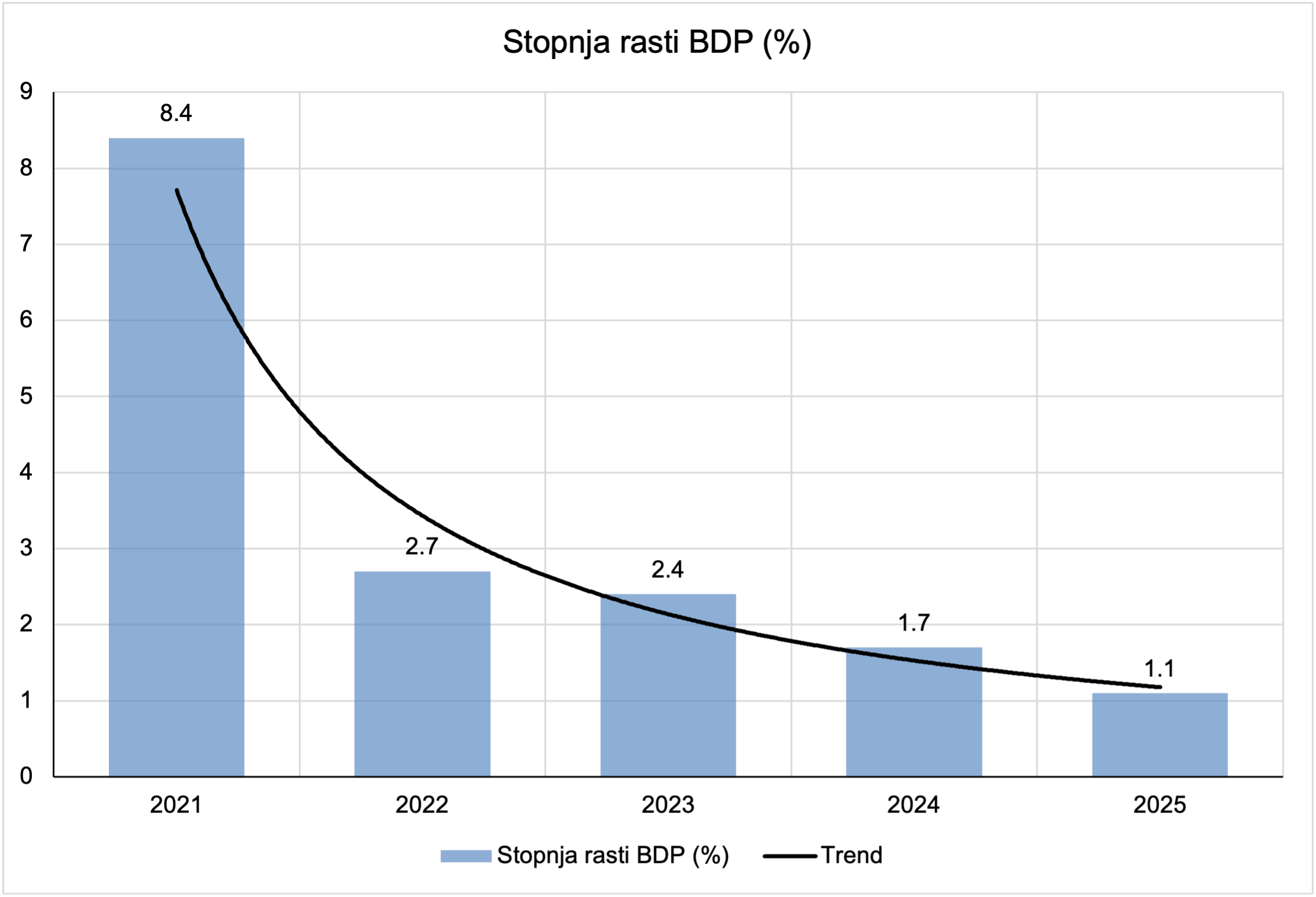
Kot veste, je slovenski BDP v lanskem letu zrasel le za mišjo dlako – za ubornih 1.1 %. Spodnja slika kaže strukturni zlom v dinamiki rasti slovenskega BDP v času Golobove vlade. Po izjemno visoki rasti v letu 2021 v času prejšnje Janševe vlade (8,4 %), se je rast že v letu 2022 zrušila za skoraj dve tretjini, nato pa se je v letih 2023–2025 vztrajno in sistematično ohlajala vse do približno 1 %. Takšen trend kaže na pomanjkanje razvojnega zagona, investicijske negotovosti in odsotnost proaktivne ekonomske politike, ki bi v času ugodnih javnofinančnih izhodišč blažila upad. Namesto uporabe fiskalnega prostora za dvig produktivnosti, pospešitev investicij in krepitev konkurenčnosti, smo bili priča postopnemu drsenju v režim nizke rasti – stagnacije, kar dolgoročno ogroža dohitevanje razvitejših držav EU in vzdržnost socialne države.
No, če pogledate podatke glede slovenskega BDP na sektorski ravni, izstopa bizarno dejstvo, da se je v 4 letih (med 2021 in 2025) realni output industrije povečal samo za 2,1 %, medtem ko se je realni output dejavnosti oskrbe z elektriko, plinom, vodo in komunalnimi storitvami povečal kar za 46 %.
 DAMIJAN blog
You must be logged in to post a comment.