Predvolilne ankete v zadnjega pol leta kažejo na sistematično vodstvo SDS (22-24 %) pred Svobodo (16 – 18 %), medtem ko se tretja najbolj priljubljena stranka komajda približa 7 %, ostale pa se gibljejo okrog parlamentarnega praga.
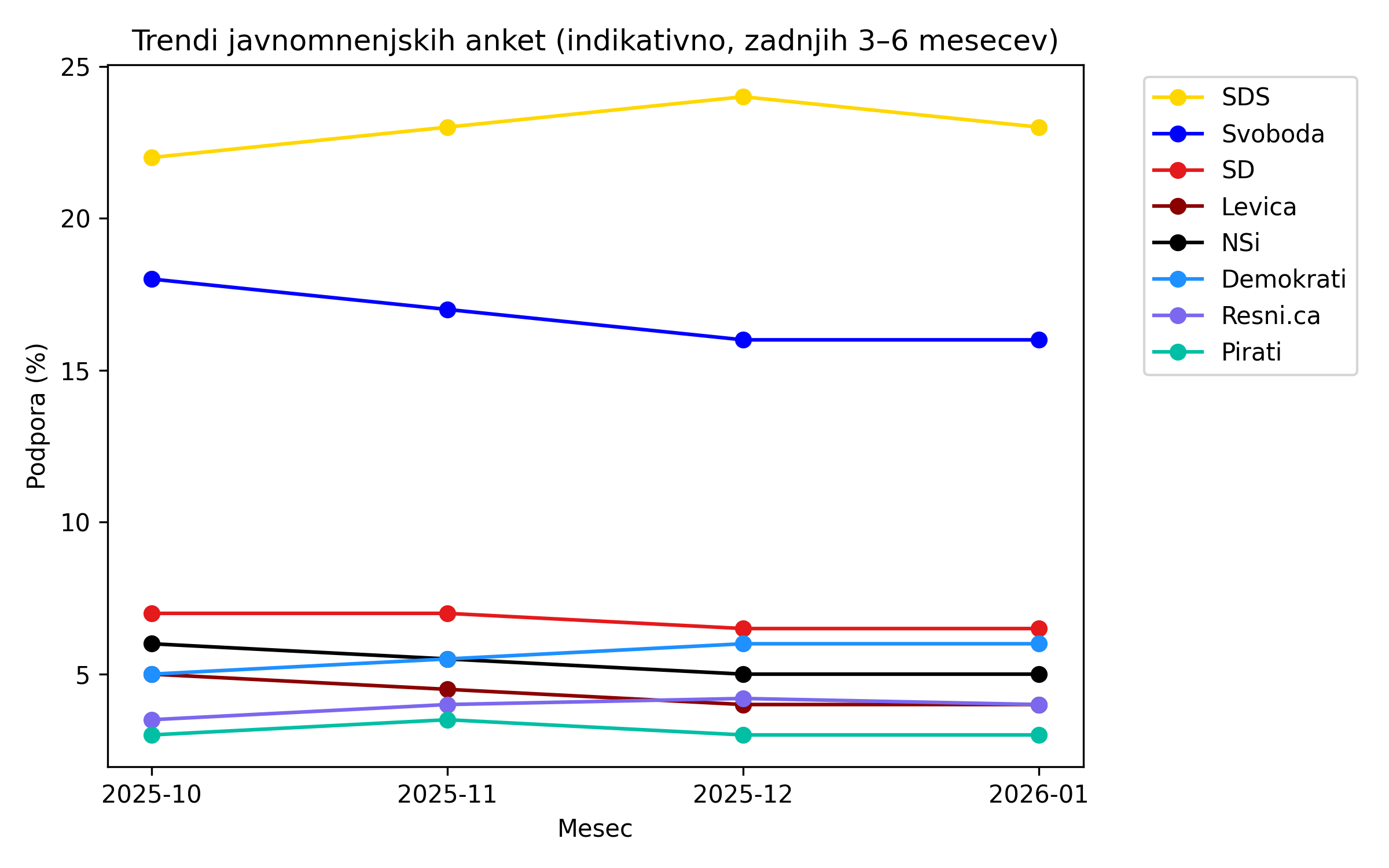 Toda če predvolilne ankete v Sloveniji pogosto beremo kot “kdo vodi”, je to v resnici le manjši del zgodbe. Ključni del se začne šele, ko deleže podpore pretvorimo v sedeže po D’Hondtovi metodi in upoštevamo prag 4 %. Takrat postane jasno, da se volitve leta 2026 lahko odločijo manj na ideologiji in bolj na vprašanju glede volilne udeležbe.
Zgodovinski podatki o državnozborskih volitvah kažejo, da višja udeležba običajno sovpada z močnejšimi levosredinskimi / liberalnimi mobilizacijami (npr. 1996, 2000 in 2022), medtem ko nižja udeležba relativno krepi disciplinirane baze (SDS 2004, 2018) in koncentrira sedeže pri največjih strankah (SD 2008; PS 2011).
Analiza treh scenarijev – nizke, zmerne in visoke udeležbe – pokaže, da udeležba vpliva na politični izid na dva načina. Prvič, spremeni razmerje moči med bloki (desno vs levosredinsko). Drugič, vpliva na to, koliko manjših strank prestopi prag in s tem razprši ali koncentrira sedeže.
Volilna udeležba deluje kot sistemski vzvod, ki nagrajuje en politični blok in kaznuje drugega.
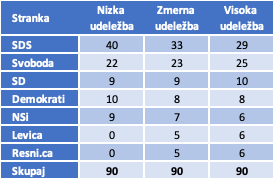
Tabela 1: Sestava parlamenta po scenarijih volilne udeležbe (D’Hondt)
Nizka udeležba vodi v koncentracijo moči
Ob nizki udeležbi iz parlamenta izpadeta Levica in Resni.ca kot posledice demobilizacije sredinskih volivcev. To vodi v koncentracijo sedežev pri največji stranki. SDS v tem scenariju lahko doseže tudi 40 sedežev. Že koalicija SDS–NSi lahko preseže 46 glasov, koalicija še z Demokrati pa že udobnih 59 glasov.
Graf 2 (sestava parlamenta) kaže rumeno dominanco SDS in rumeno-modro-črno večino desnosredinskega bloka.
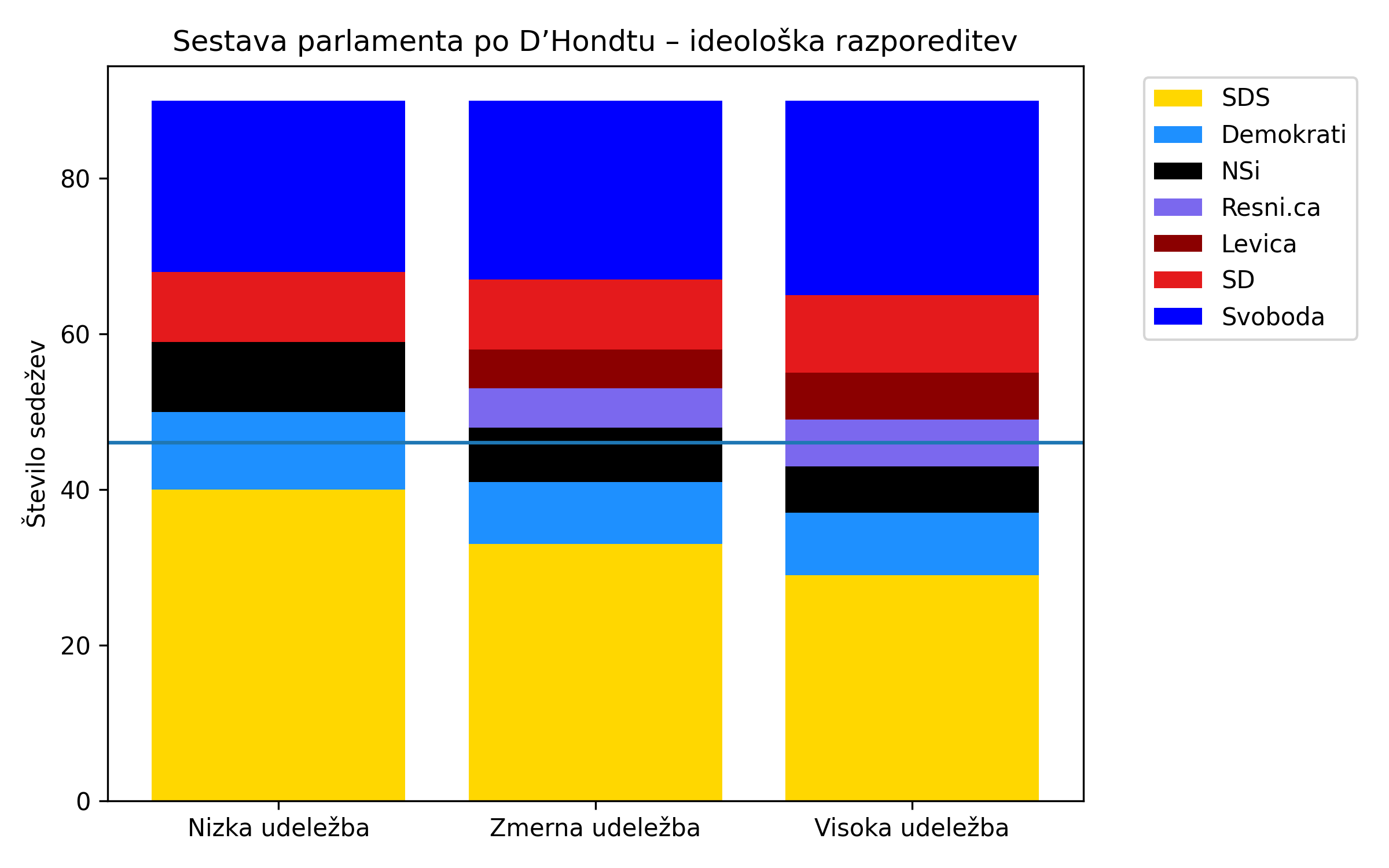
V primeru zmerne udeležbe – torej današnjega trenda – se Levica in Resni.ca ohranita tik nad pragom. A kljub temu levosredinski blok ne doseže večine. Svoboda, SD in Levica zberejo skupaj le 37 sedežev. Tudi s stranko Resni.ca skupaj zberejo le 42 sedežev.
Samo visoka udeležba daje možnosti levi sredini
Graf 3 (koalicijska aritmetika) kaže, da šele pri visoki udeležbi levosredinski blok doseže 47 sedežev. Vendar je ta večina minimalna, notranje heterogena in strukturno nestabilna, sploh s stranko Resni.ca.
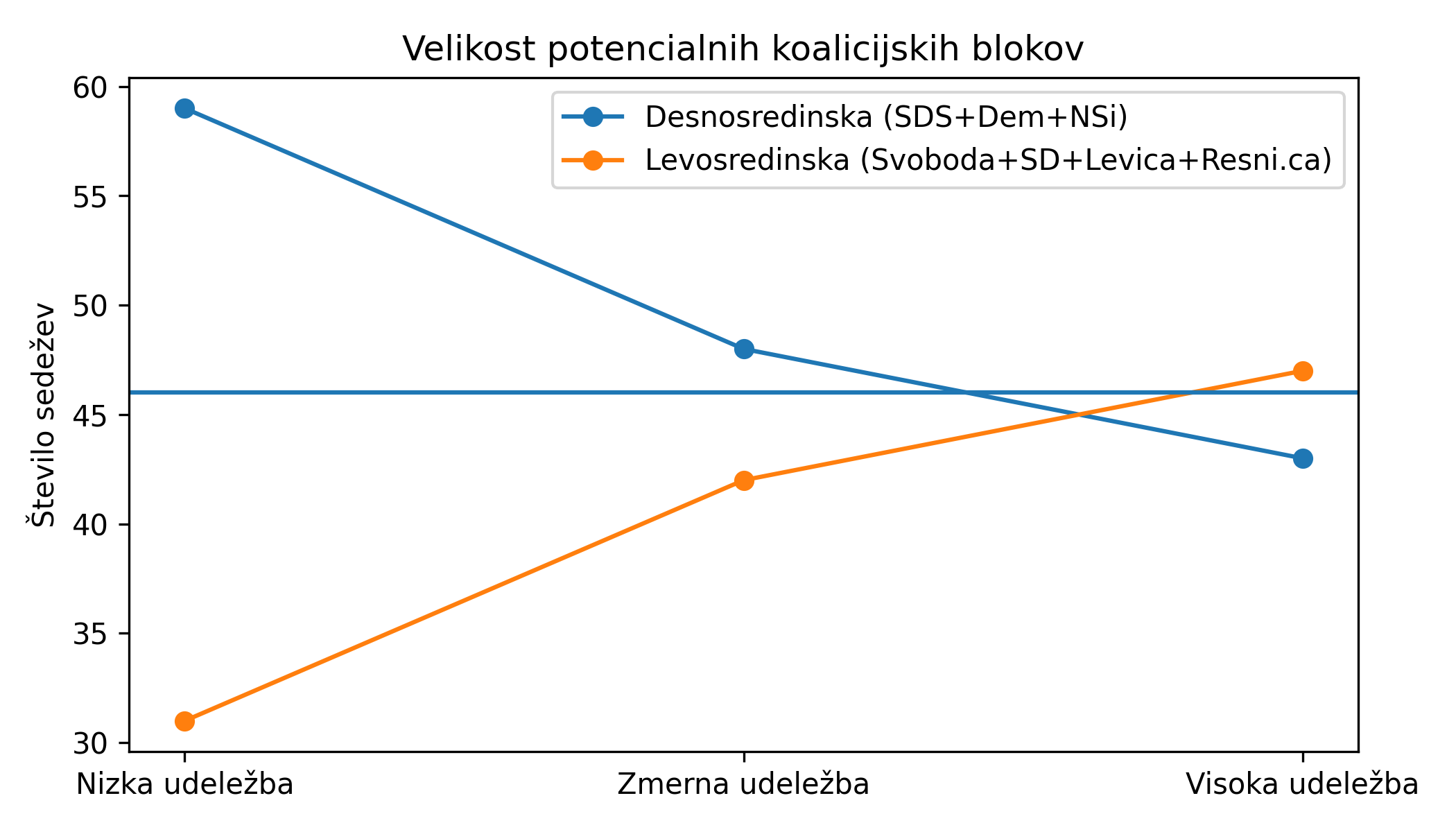
Analiza kaže, da bodo volitve 2026 v veliki meri odvisne od mobilizacije volivcev. Nizka in zmerna udeležba dajeta prednost desnosredinskemu bloku, visoka pa odpira prostor za levosredinsko koalicijo. Zato je za stranke na levi sredini mobilizacija volilcev eksistencialnega pomena, desna sredina pa lahko zgolj jaha na nezadovoljstvu nad obstoječo vlado.
____________
* Pripravljeno s pomočjo umetne inteligence, ki se seveda lahko moti

 DAMIJAN blog
You must be logged in to post a comment.