Pred nami je največji naftni šok v zgodovini, večji od šoka leta 1979 (merjerno z izpadom svetovne ponudbe nafte). Cene nafte, prilagojene za inflacijo pa so danes že na enaki – zelo visoki – ravni kot leta 1979. Olivier Blanchard (ex-Chief economist IMF) opozarja na to. Se kdo med politiki sploh zaveda, kaj je pred nami?
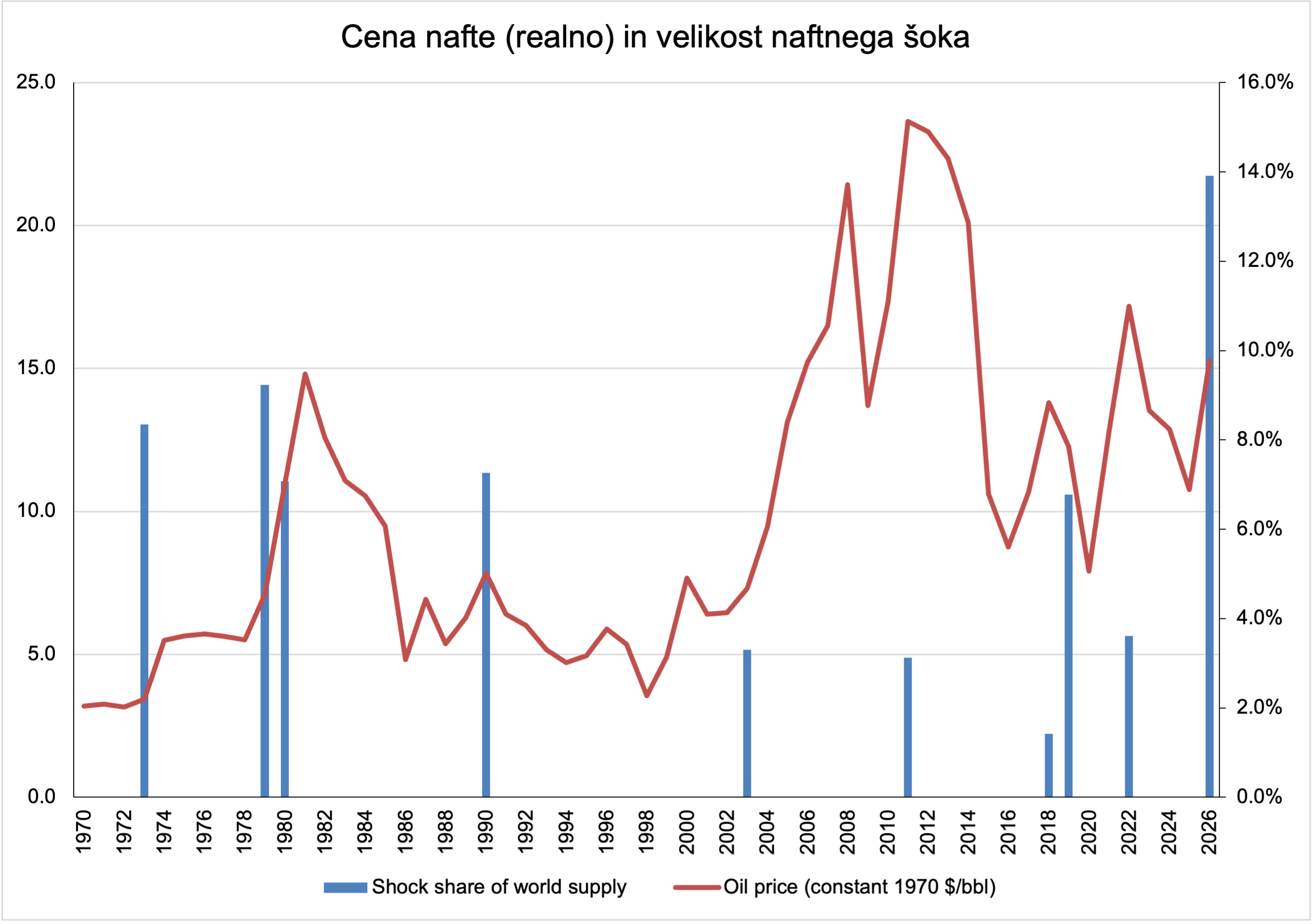
I find it hard not to have as a central scenario where oil prices will remain very high for a long time, higher than the market current prices.
I am no expert on geo-politics and defense technology, but this is what I think I have learned:
Fully protecting ships in the strait of Hormuz is basically impossible. Not enough time to stop missiles or drones.
There is no reason, whether or not Trump declares that war is over, to think that Iran will not continue for some time to threaten to destroy the ships that try. Why should they stop?
The risk will thus remain sufficiently high that most non Iranian ships will not take the risk.
Thus, the shortfall of 20 million barrels a day is likely to last for long.
The scope for increased supply from elsewhere is very limited in the short run. Perhaps 2 million barrels at the most.
The 400 million barrels reserve release can only add 3-4 million barrels or so daily.
The short run elasticity of demand for oil is very low, at most -0.1, and probably less.
This suggests to me prices closer to 150-200 dollars per barrel (or more, but I hesitate to give higher numbers…) than to the current market price.
To repeat. I am no expert (As an economist, I have a bit more sense about the next step, namely what such a price would to the world economy). I would be more than happy to be proven wrong.
 DAMIJAN blog
You must be logged in to post a comment.