Spodaj je zelo dobra razlaga, zakaj se je Trump spustil v avanturo v Venezueli, zakaj si želi pridobiti kontrolo nad ostalimi južnoameriškimi državami in zakaj prav zdaj z Izraelom režira “demonstracije proti oblasti” v Iranu z namenom iskanja opravičila za nasilno spremembo režima od zunaj. Bolj kot vsega drugega se ZDA bojijo dedolarizacije. Zato želijo kontrole nad globalno trgovino s surovinami in energenti – želijo, da se prodajajo v dolarjih. Dokler se prodajajo v dolarjih, obstaja povpraševanje po ameriških obveznicah. Ko to usahne, gredo obrestne mere navzgor, vskočiti mora Fed, da nadomesti izpadlo povpraševanje, toda s tem povečuje likvidnost v gospodarstvu, kar lahko pod določenimi pogoji vodi do porasta inflacije. Seveda ima Trump še dodatne motive v Venezueli in Iranu, saj želi Kitajski omejiti dostop do energentov oziroma imeti v rokah karte za izsiljevanje.
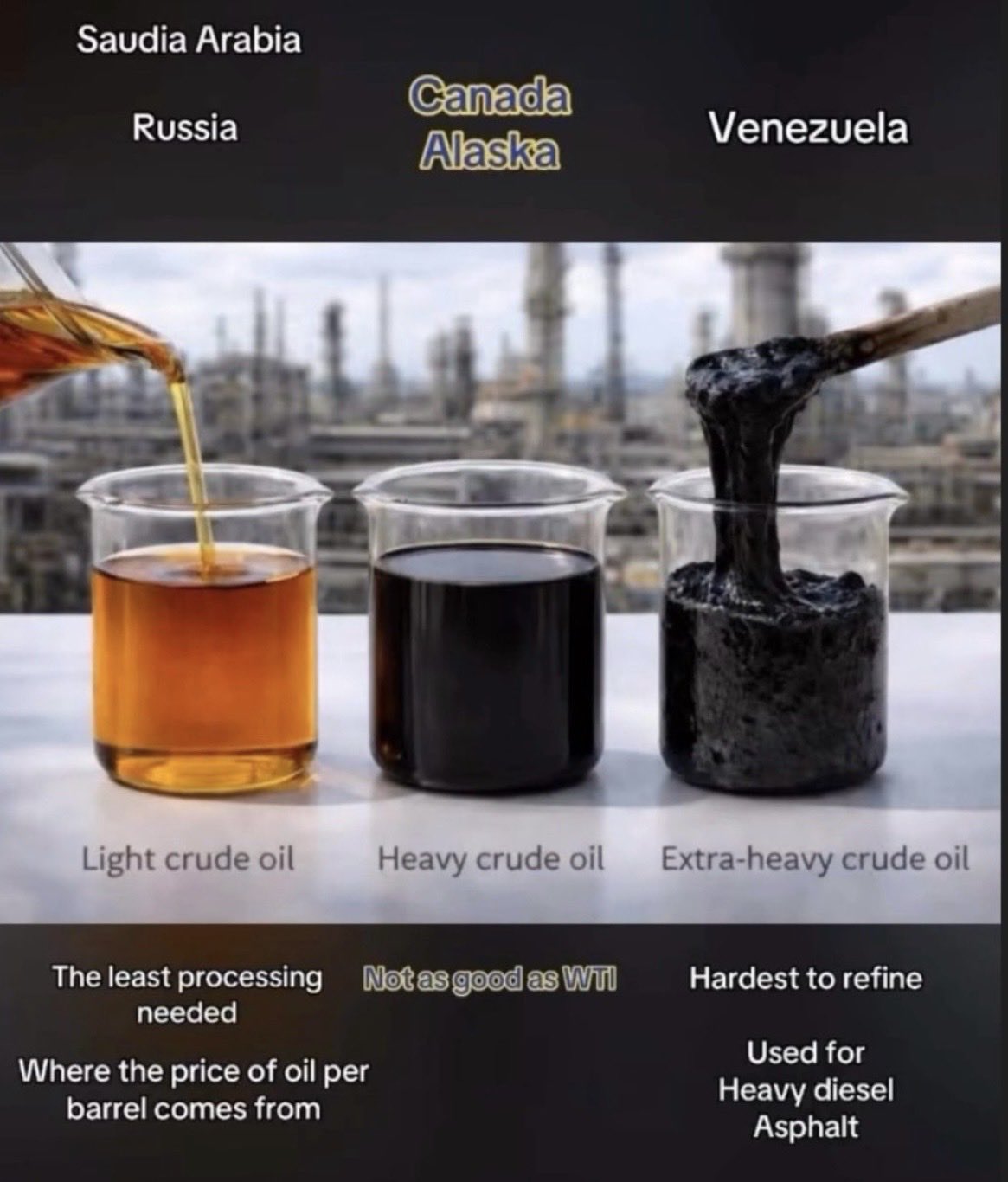
Trump se je v Venezueli zakockal. Kljub navidezno lahki zmagi tam nima dobrih kart. Prvič, prejšnji konec tedna je dobil košarico od ameriških naftnih podjetij, ki bi v izkoriščanje venezuelske težke nafte (primerne za proizvodnjo asfalta) morali investirati najmanj okrog 100 milijard dolarjev. Toda, kot je povedal direktor Exxona, Venezuela je trenutno “neinvestljiva” – tveganja za investicije so prevelika glede na donose. Glavno tveganje je, da bo po Trumpovem mandatu in umiku ameriške grožnje ponovno prišlo do nacionalizacije.
In drugič, Kitajska je v Venezuelo že investirala, okrog 60 milijard dolarjev v naftno in pristaniško infrastrukturo in bo seveda želela ta svoj vložek dobiti poplačan – v skladu s pogodbami – v obliki nafte in mimo dolarjev. Če ji bo Trump nagajal, bo Kitajska svoje dosegla prek mednarodne arbitraže, še pred tem pa z zaustavitvijo izvoza kritičnih materialov v ZDA. S slednjim pa se Trump ne upa igrati.
Toda pustimo ob strani, da se je v Venezueli Trump zakockal. Njegov bistveno večji problem je, da je prepozen. Ne samo v Venezueli, ne samo v Latinski Ameriki, pač pa tudi v Afriki, Aziji, Iranu in Rusiji. Kitajska je v zadnjih treh desetletjih zakupila večino ključnih surovin v svetu, strateških in kritičnih materialov, pomembnih za zelene in digitalne tehnologije prihodnosti. Hkrati je prek Belt & Road iniciative investirala v infrastrukturo, dolgoročno zakupila velike količine energentov in hrane – in ta trgovina se pospešeno preusmerja iz dolarjev v juane. Glede na to, da je Kitajska največji trgovinski partner velike večine držav na svetu, je trgovina v juanih logična. Kitajska pa se iz ameriških obveznic pospešeno umika v zlato. Trump tega trenda ne more preobrniti. Preveč je masiven. In preveč močnega in inteligentnega nasprotnika ima.
Trumpov in ameriški problem je, da je Kitajska prevelika in da ima preveč dobro strategijo. Pred vzponom Kitajske (ki je “zasluga” predvsem ameriškega pohlepa in kitajske strateške inteligence), so ZDA lahko katerokoli državo izsiljevale s svojo močjo – finančno, tehnološko, gospodarsko in vojaško. Danes imajo države alternativo. Kitajska je zanje bolj pomemben gospodarski partner, v primeru ameriških sankcij pa imajo alternativo v kitajskih tehnologijah, finančnem sistemu in trgovini.
Kot sem že nekajkrat napisal – Kitajska je bitko za globalno prevlado zmagala brez izstreljenega strela. ZDA pa vztrajajo pri “metodi divjega Zahoda”.
___________
The US Can’t Kick China Out of Latin America Anymore
Why Trump’s New Monroe Doctrine Is Already Too Late
When Trump talks about “taking back” Latin America, about restoring the Monroe Doctrine, around dragging Venezuela, Panama, Brazil, and the rest of the continent back under Washington’s exclusive jurisdiction, many people still interpret this as strength.
It isn’t.
It is exposure.
Only someone who has run out of cards flips the table.
Only a gambler close to bankruptcy reaches for robbery.
If U.S. sanctions still worked, if dollar hegemony were still intact, if political pressure, financial warfare, and diplomatic isolation still delivered results, Washington would not need to personally step into the mud — threatening kidnappings, floating regime-change fantasies, or openly talking about seizing resources as collateral.
This is not muscle-flexing.
This is imperial afterglow.
And the key misunderstanding in Washington is this: the outcome of this struggle does not hinge on whether Maduro survives, or whether a government falls. It hinges on something much more banal, much more material.
When the U.S. looks down at what it still calls its “backyard,” it no longer sees American soil.
- It sees Chinese soybeans growing in the fields.
- Chinese cranes loading containers in the ports.
- Chinese power grids, telecom systems, roads, and railways quietly humming underneath daily life.
This is more powerful than ideology.
That is infrastructure, the backbone of economy.
And infrastructure does not disappear on command. Removing China from Latin America is removing the infrastructure and collapsing the fragile economies.
The Real Endgame: Resources, Collateral, and a Dollar Under Pressure
Trump’s Venezuela obsession is not about democracy, human rights, or even oil in the traditional sense. It is about collateral.
The United States is cornered by its own balance sheet.
In the coming year alone, Washington needs to roll over and issue roughly five trillion dollars in new Treasury debt just to service maturing obligations. But fewer and fewer countries are willing to absorb U.S. debt at scale. Commodity trade is slowly de-dollarizing. If the U.S. is forced to monetize its own debt by printing money to buy Treasuries, inflation becomes uncontrollable.
That path cannot be allowed.
So the theory emerging in Washington is simple: secure massive pools of real assets — oil, gas, rare earths, minerals — re-peg them to the dollar, and restore confidence through material backing.
- Venezuela.
- Greenland.
- Latin America.
On paper, Venezuelan oil reserves are worth tens of trillions. In reality, Venezuelan oil can’t be monetized so easily.
Venezuela’s Oil Trap: Why China Cannot Be Replaced
Venezuelan crude is among the most difficult on Earth to monetize. It is extra-heavy, buried deep, and requires extremely sophisticated extraction, upgrading, and transport infrastructure.
Only two countries on Earth have the technical and industrial depth to build and operate such systems at scale: China and the United States.
China already did it.
China buys roughly 70% of Venezuela’s oil. China financed, built, and operates much of the infrastructure that makes that oil usable and exportable.
If China is pushed out, who replaces it?
American oil majors — Chevron, ExxonMobil, ConocoPhillips (COP) — have no incentive to sink one hundred billion dollars over five years into facilities that could be expropriated the moment political winds shift again. The risk profile is suicidal.
And even if U.S. companies did step in, who would they sell to?
China is the only buyer large enough, patient enough, and technically compatible with this type of crude. If China is expropriated and sanctioned out of Venezuela, retaliation is inevitable. Supply chains will be disrupted. Markets will close. Sanctions will travel both ways.
Washington’s Venezuela fantasy collapses under its own economic logic.
 DAMIJAN blog
Vse drži, ampak dve ključni stvari niso omenjene.
Prvo je “vulture capital” v obliki Trumpovega prijatelja milijarderja (židovskega porekla , seveda) Singer-ja, ki je že pod ceno (za 1/3 ocenjene vrednosti) odkupil podružnico venezuelskega državnega naftnega podjetja (in s tem zaslužil bornih 10 mrd USD), da odkupa venezuelskega državnega dolga in zapadlosti obveznic venezuelska državne naftne družbe (kjer gre za več 10 mrd USD) niti ne omenjamo. Družina Trump si bo verjetno ustvarila majhno popotnico za po koncu mandata. Bog ve, če bodo s tem poplačali vse upnike, ki so bili oškodovani v večih Trump-ovih bankrotih?!
Last but not least – gre za midterms. Letos bodo volitve v kongres in za 1/3 mest v senatu. V obeh ima Trump večino. Če jo izgubi, ga lahko omejijo tako pri imenovanjih kot proračunu. In potem je predsednik samo še slamnati mož. Pa to še ni vse. Kot je povedal podpredsednik Vance pred kratkim, ni dvoma, da bi demokratska večina v kongresu pomenila impeachment Trump-a. Poleg sramote, to za predsednika pomeni tudi dolgoletna serijo sodnih procesov, da kehe v skrajnem primeru niti ne omenjamo.
Trump-u ne gre samo za venezuelsko nafto, gre mu za preživetje. Da bi se temu izognil, je zajahal tigra. Ampak razjahati ga bo zelo težko.
Všeč mi jeLiked by 1 person