Zahodna propaganda je brezsramna v svoji propagandi vojni. The Economist in ostali poslovni mediji KItajski že 35 let napovedujejo gospodarski kolaps. Ampak zdaj pa zares, zdaj pa je uradno… Poglejte spodnji spisek naslovov člankov:
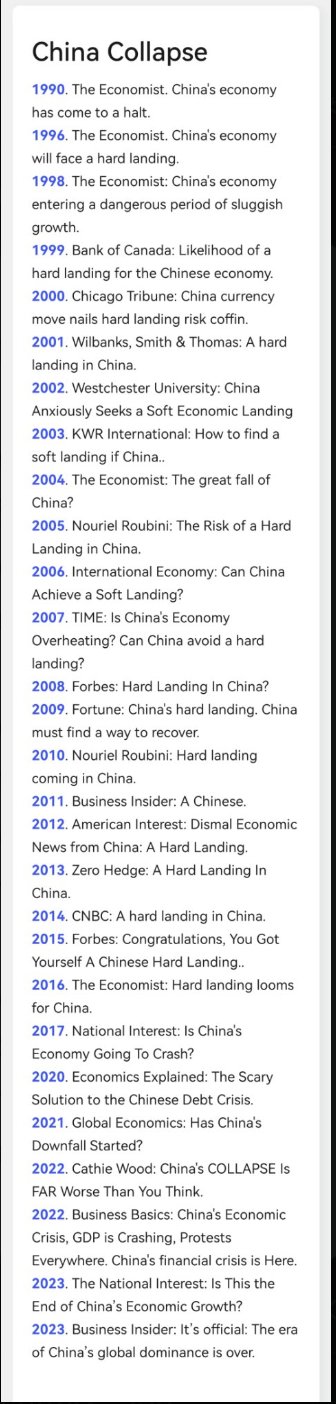
No, in potem The Economist v enem letu objavi članek, da Kitajska glede visokih tehnologij ne more prehiteti Amerike, čez eno leto pa straši, da je tehnološko in tudi pri umetni inteligenci že prehitela Ameriko. Leto za letom objavlja članke o kitajskem kolapsu, nato pa objavi v zadnji številki članek, da ima Kitajska načrt za globalno dominacijo in da je Amerika pri tem ne (z)more zaustaviti.
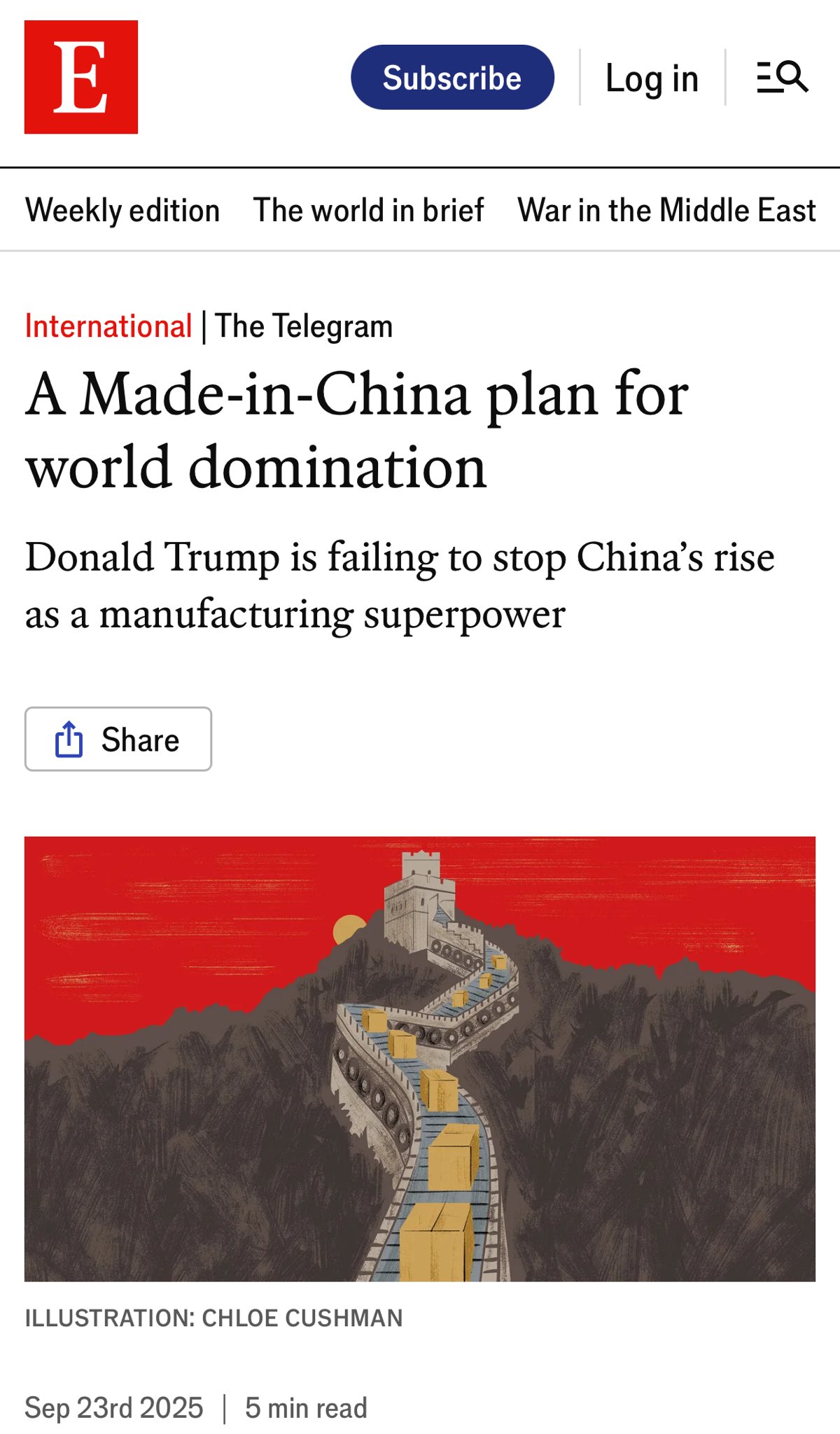
Itak, da Kitajska tak načrt ima. Vsakih 5 let ga kalibrira. In itak bo pri tem uspela. Ker ima strategije, ker ima politično vodstvo z neomejenim časovnim horizontom, ker to vodstvo vse razvojne resurse usmerja v skladu z usmeritvami iz strategije in ker ima na drugi strani države brez razvojnih strategij in s političnimi vodstvi brez izkušenj in brez vizije, razen glede tega, kako se obdržati 4 leta na oblasti in ker ta vodstva ukvarjajo s svojim preživetjem, zasebnimi zaslužki in s petty zadevami (kot je CO2 in Ukrajina) in ker seveda ne znajo mobilizirati resursov.
Če me kaj iritira, je to slaba in pristranska analiza in iz nje izhajajoča propaganda. Prvo žali moj intelekt, drugo se mi gnusi. Zakaj hudiča bi kdaj še resno bral Economista in podobna trobila, če pa se njihova propagandna usmeritev vidi iz vesolja. Spodnji članek za spremembo izhaja iz bolj realne ocene (čeprav v nasprotju s podatki Svetovne banke še vedno trdi, da je kitajski delež v svetovnem BDP samo eno petino in ne eno tretjino), da pa bi na tej osnovi iniciral strah in mobiliziral zahodne politike, da naj že kaj naredijo, da bi zaustavili kitajski vzpon.
Toolittle, too late. Ob takšni politični kliki na zahodu in ob takšni medijski podpori bomo čez nekaj let v osnovno šolo kot drugi jezik morali uvesti kitajščino. Morda že prej.
________________
CHINA’S INDUSTRIAL might is hard to capture in numbers. The country accounts for more than 30% of global manufacturing, or more than America, Germany, Japan and South Korea combined. That figure understates the growing terror that Chinese-made stuff inspires in foreign competitors and governments alike.
Chinese goods are cheap and getting cheaper, because firms there are both efficient and locked in a domestic price war of epic brutality. After nearly three years of continuous falls in factory-gate prices, many firms are bleeding money and desperate to sell into foreign markets, where margins are fatter. Chinese export growth is impressive when measured by value. It is positively fantastical when measured by volume. Just before the covid-19 pandemic, a third of all containers carrying exports around the world contained stuff assembled, grown or processed in China. Today China’s share of global export containers is over 36%, though the country represents around a fifth of world GDP.
…
Meanwhile, valuable markets in China are being walled off. New rules limit imports of computer chips, medical devices and more, as the Communist Party puts economic and national security above short-run growth. Though exports to America have plunged, hit by President Donald Trump’s ever-changing tariffs, China’s overall trade surplus is on track to exceed $1 trillion this year, with record-setting shipments to Africa, Asia, Europe and Latin America. From Brasília to Berlin and Bangkok, politicians hear calls to protect established industries from Chinese competition. Yet many of the same politicians want Chinese investors to help them build industries of the future, by opening plants to make batteries, say. That limits their desire to confront China.
…
China is confident of its leverage over America. That swagger is hard for trade partners to take. But its intransigence has still deeper roots. China’s rulers like their plan to dominate the commanding heights of global manufacturing, and do not wish to change.
Reform-minded Chinese share foreigners’ fears that this manufacturing drive is unsustainable. But party bosses see Mr Trump’s adoption of Chinese-style industrial policies, including government demands for stakes in leading companies, as an endorsement of their own approach. Equally, they feel vindicated in their obsession with self-reliance. Their distrust of America is now near-total, after Mr Trump’s attempts to choke off China’s access to American technologies, interspersed with campaigns to sell China more of them. America “made a huge mistake”, says the Chinese economist. It “woke up China” but could not prevent the country from developing world-beating industries.
Vir: The Economist
 DAMIJAN blog
You must be logged in to post a comment.