Zakaj so mlajši odrasli tako nesrečni v angleško govorečem svetu: Problem neoliberalnega ekonomskega sistema

John Burn-Murdoch v novi odlični zgodbi v Financial Timesu analizira, zakaj se je tako povečalo nezadovoljstvo mlajših odraslih v angleško govorečih državah, in to bistveno bolj kot v ostalih zahodnih državah:
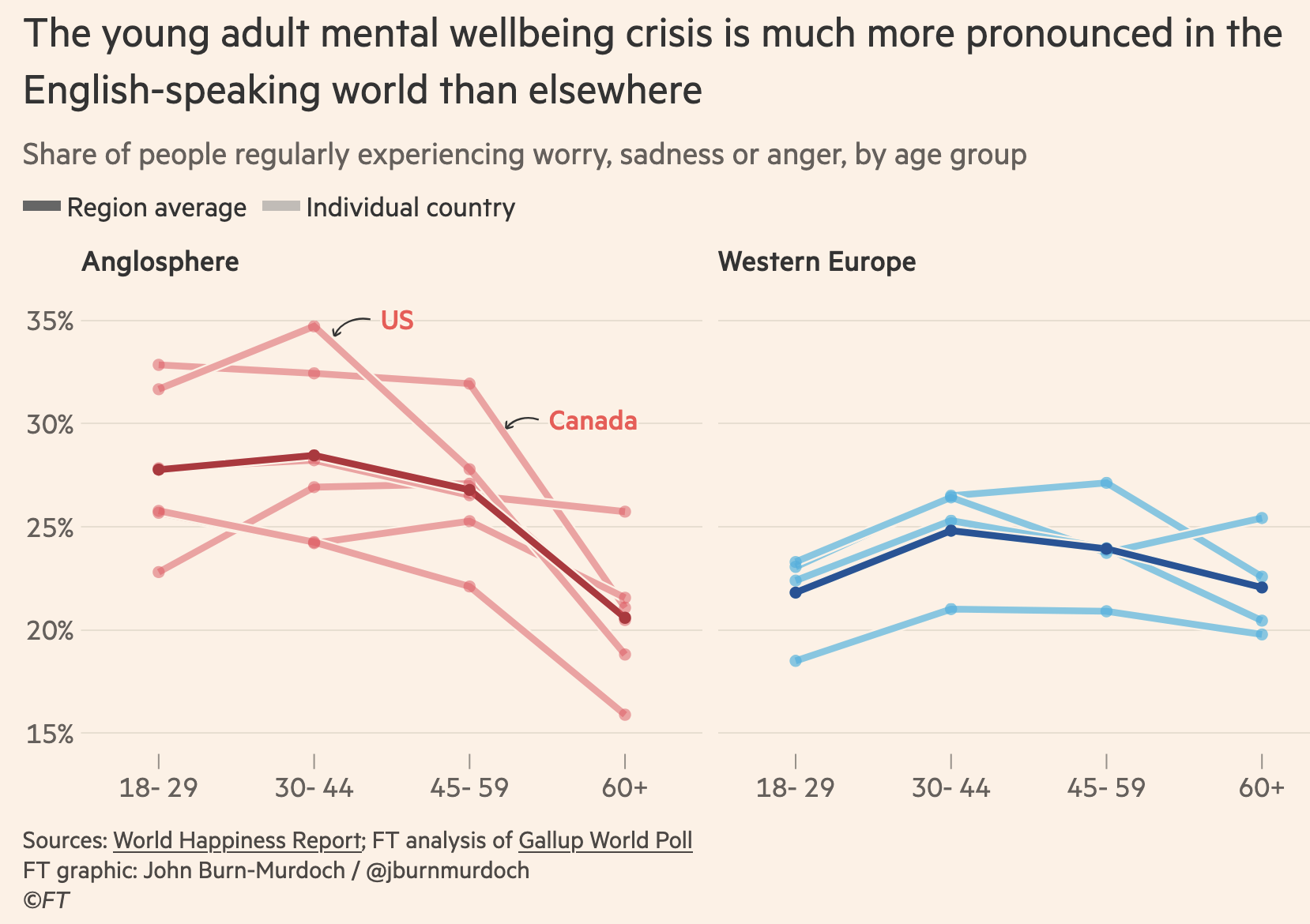
Teorije, zakaj se to dogaja, so lahko različne, toda eden izmed ključnih dejavnikov je lahko dejstvo, da so se možnosti mladih do sredine njihovih tridesetih let v angleško govorečih državah glede dostopa do nepremičnin močneje poslabšala kot v ostalih zahodnih državah:
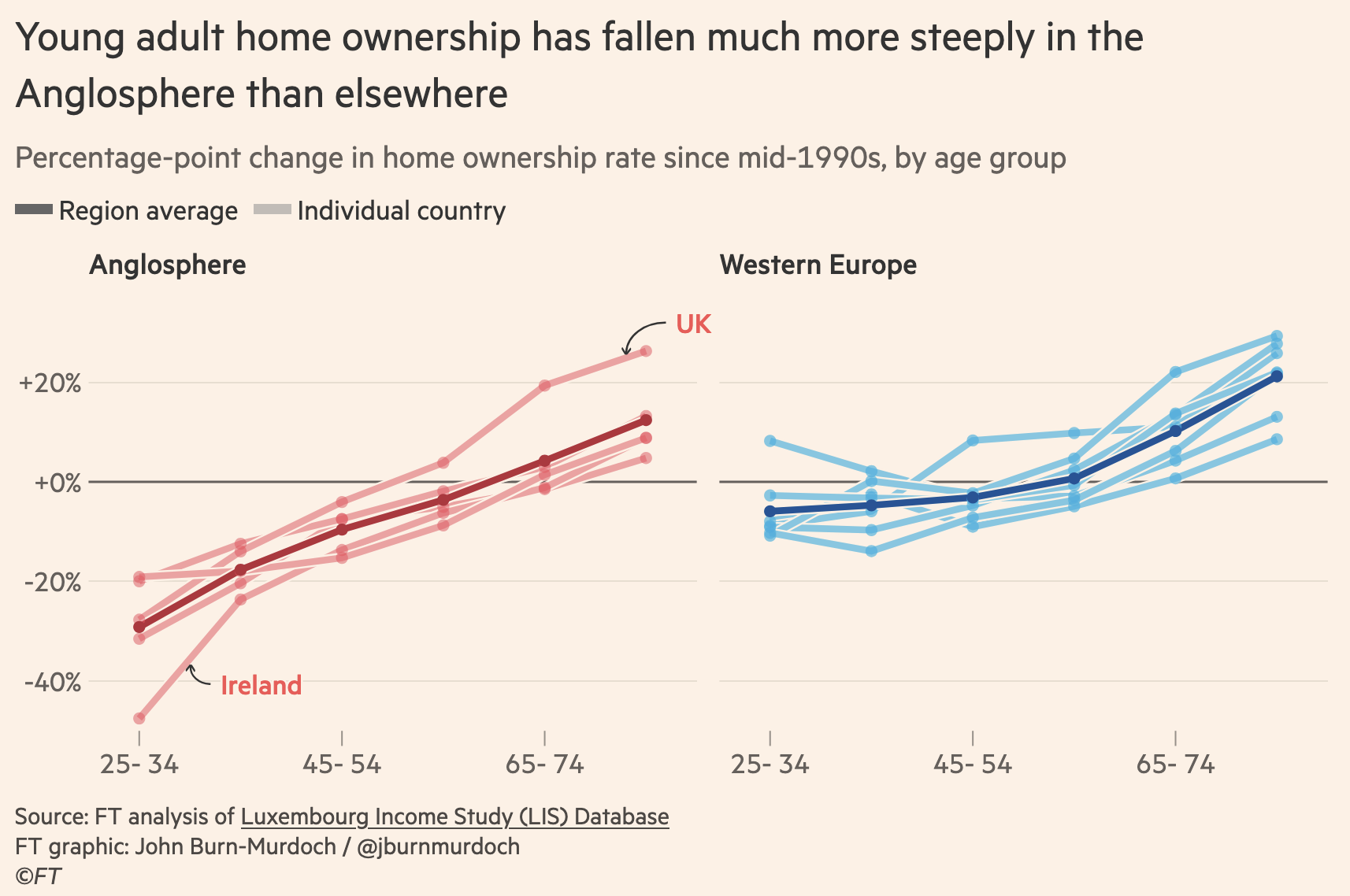
Slednje pa je posledica relativno slabšega ekonomskega položaja mladih odraslih v angleško govorečih državah glede na vrstnike v drugih zahodnih državah, kar se odraža v njihovi relativno večji izgubi zaupanja, da si bodo s trdim delom lahko zagotovili uspeh v življenju:
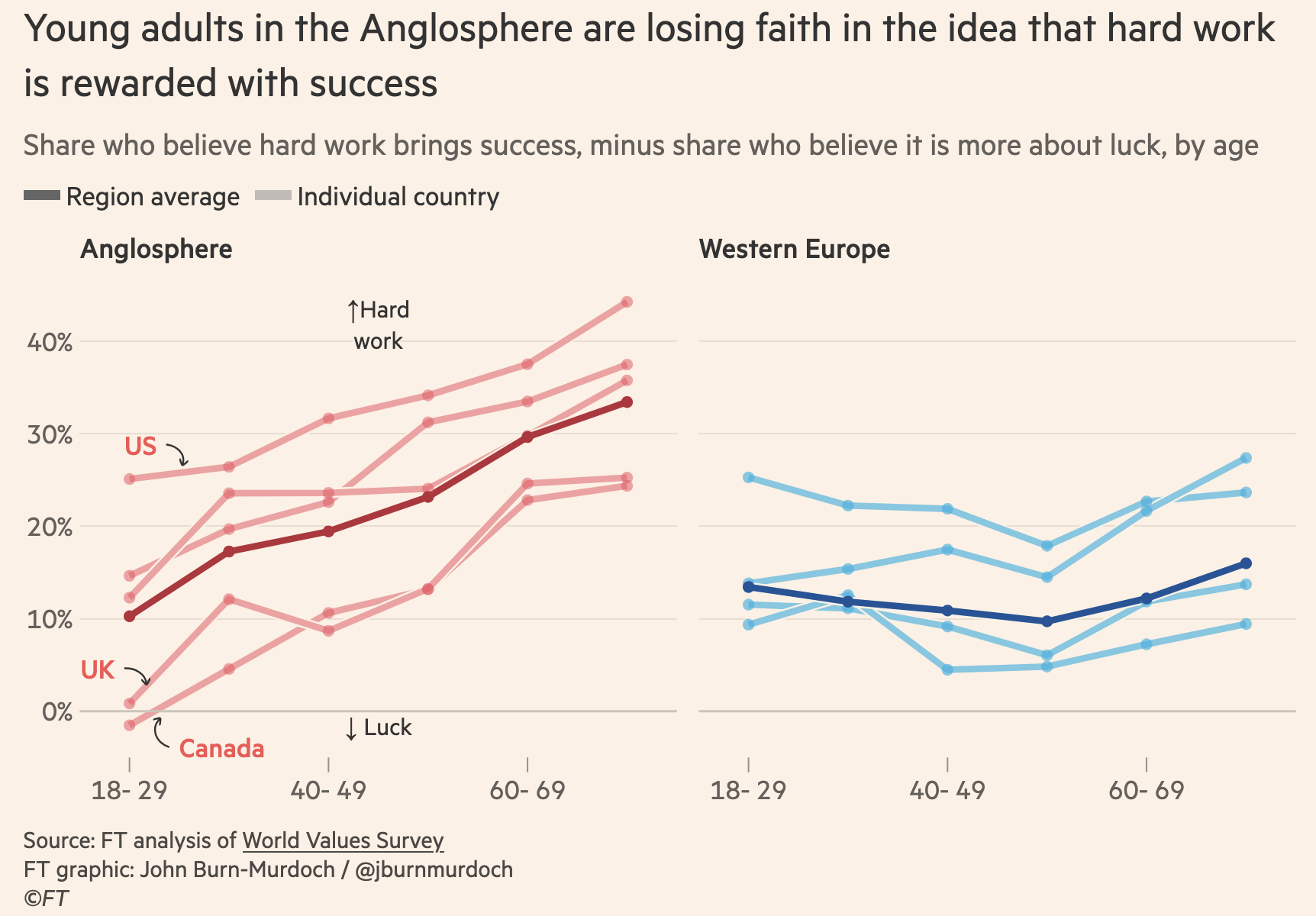
Zakaj je to bolj izrazito v angleško govorrčih državah? Zato ker imajo te države podoben neoliberalni ekonomski sistem, ki se odraža v “winner takes it all” kulturi in nizki redistribuciji – na prvi pogled nižji davki, vendar višji zasebni izdatki za pokojninsko in zdravstveno zavarovanje in manjši socialni transferji. Slednje se izraža v visokem Gini koeficientu neenakosti oziroma v manjši razliki med Gini koeficientom, ki temelji na razpoložljivem dohodku in Gini koeficientom, ki temelji na dohodkih pred davki in transferji. (S kolegico Danijelo Lazović-Vuković imava nov paper na to temo, ki ga bom delil tukaj, ko bo objavljen v znanstveni reviji). V državah z neoliberalnim ekonomskim sistemom je tudi lastništvo stanovanjskega sklada bolj koncentrirana v rokah finančnih lastnikov. Posledica je dvojna – nižji razpoložljiv dohodek mladih odraslih ob višjih cenah nepremičnin. Posledično je tudi frustracija mlajših odraslih v teh državah, da si bodo s trdom delom lahko omogočili nakup lastne nepremičnine, kar je eden izmed simbolov uspeha v življenju, večja.

Primerjajte to s podatkom, da je na Kitajskem delež nepremičnin v zasebni lasti posameznikov, ki v njih živijo, kar 90 %. Kitajska je v preteklih treh desetletjih z načrtno vladno politiko izgradila več kot 100 milijonskih mest. Torej izgradila je nekaj sto milijonov stanovanj, ki si jih zaradi nizkih cen mlajši lahko privoščijo.

Posledica povečanih frustracij mlajših odraslih v angleško govorečih državah je seveda tudi zmanjšano zaupanje v ekonomski in politični sistem, večji nihilizem in povečana verjetnost, da volijo bolj ekstremno (da volijo populiste). Če kdo pričakuje revolt med mladimi, ga bo torej prej dočakal v “demokratičnih” angleško govorrčih državah kot pa v “avtoritarni, totalitarni itd.” Kitajski. Pa čeprav se ta upor zaenkrat kaže le v volilni abstinenci, povečani kriminaliteti, zmanjšani rodnosti, manjši rasti potrošnje in povišanih deležih glasov za populistične stranke.

Kdor ne poskrbi za prihodnost mladih, je izgubil dolgoročno bitko. Stabilnost je ključ za dolgoročno rast in razvoj. In zaupanje v sistem oziroma da bo sistem omogočil uspeh v življenju, je temelj stabilnosti. 

______________

Vir slik: John Burn-Murdoch, Financial Times

EU krivi Kitajsko za težave, ki si jih je sama zakuhala

Ko se je včeraj v Pekingu odvijal vrh med Evropsko unijo in Kitajsko, je bilo vzdušje precej bolj zadržano kot prej. Čeprav sta obe strani poudarjali pomen sodelovanja, je bilo v ozadju čutiti naraščajočo napetost. Predvsem z evropske strani. Problem pa je, da EU krivi Kitajsko za težave, v katere se je sama spravila. Zato tudi ni sposobna videti rešitev zanje.

Glavni problem v ozadju evropske nejevolje je velik in naraščajoč trgovinski primanjkljaj EU s Kitajsko. Leta 2010 je ta znašal 70 milijard in se do leta 2020 povečal na 270 milijard, v zadnjih treh letih pa se giblje med 300 in 400 milijardami evrov. Problematika tega primanjkljaja je, da je posledica upehane evropske konkurenčnosti. Med letoma 2015 in 2024 je evropski izvoz v Kitajsko zrasel za 40 %, kitajski v EU pa za 73 %. Problem leži predvsem v upehanem nemškem izvozu, ki predstavlja skoraj polovico evropskega izvoza v Kitajsko. Nemški izvoz v Kitajsko od leta 2022 hitro upada, lani je bil za 15 % manjši kot v 2022. Trgovinski primanjkljaj Nemčije s Kitajsko, ki je še leta 2015 znašal le 8 milijard, pa se v zadnjih treh letih giblje med 60 in 85 milijard evrov.

Nadaljujte z branjem

Sončne elektrarne delujejo bolj na subvencije kot na sonce

Tudi v Sloveniji se je zgodila enaka zgodba kot v EU: ko so bile ukinjene subvencije za sončne elektrarne (letni net metering), so se investicije v sončne elektrarne povsem zaustavile.

Toksična simbioza med Trumpom, Grahamom in vojaško industrijo

Andrew Korybko

RT published two critical pieces about Lindsey Graham, “World War mastermind: Here’s America’s most dangerous person” and “Graham threatens Putin: US war hawk escalates rhetoric in alignment with military lobby”, shortly after Trump announced his new three-pronged approach to Ukraine. This analysis here earlier mentioned how Graham was one of those responsible for manipulating Trump against Putin, while the present one will elaborate on how that came to be given the prominent role that he played.

Graham is the defense industry’s darling whom they’ve generously donated to over the years as documented by Yahoo Finance, The Intercept, and Sputnik, et al. Forbes also reported on the donations that he’s received from over a dozen billionaires. The first group donates to him since they have facilities in his state of South Carolina while the second does so since they’ve invested in those companies. Graham is suspected of investing in them too in what’s since become a toxic symbiotic relationship.

Nadaljujte z branjem

Kitajsko-ameriški boj za bodočo tehnološko dominacijo (redke zemlje in čipi): Kitajski pristop

China has long been preparing for an eventual decoupling with the US and the west. Tech self-sufficiency is the primary motivation behind the Made in China 2025 plan.

The chip war has simply accelerated Beijing’s push in chip independence –

1. semiconductor investment funds by both central and local governments to incentivize domestic innovation and substitution of western technologies

2. mobilize big tech firms to build full chip and AI stacks to ensure their compute demands can be met without US/western tech. The big tech firms making a full throttled push include Huawei, SMIC, Alibaba, Xiaomi, ByteDance, and Baidu

3. break chip embargo through smart engineering such as “stacking and clustering” to improve domestic data center performance without the most advanced semiconductors, for example Huawei’s CloudMatrix 384

4. joint collaboration among academia, research institutes, big business, and the state in leapfrog technologies for next-gen chip development such as third-generation semiconductors (I’ll discuss in detail later), photonic chips, open-sourced RISC-V architecture, etc.

5. build ever greater human capital for chip and AI technologies, including setting up related STEM majors in more universities and funding more PhD graduates

As I wrote before, China represents the largest chip demand globally. It spent more on semiconductor imports ($400 billion plus in 2023) than oil when the country is already history’s largest oil importer. The economic rationale for chip self-sufficiency is evident.

While the US solution to its rare earth bottleneck is a typical financialized response, Beijing’s fix for the chip bottleneck represents an engineering and industrial response on top of increased funding.

Nadaljujte z branjem

Stranski učinek genocida: Pojav terorističnih babic, ki z mirnim demonstriranjem žalijo čustva podpornikov genocida

Unquestionably the most disturbing aspect of Israel’s genocide has been the outbreak of terrorist grannies across the UK. No one knows why so many grannies resorted to terrorism when Yvette Cooper criminalised opinions she dislikes under the Terrorism Act. I guess we’ll never figure this one out…

In devastating scenes in Liverpool, murderous grannies wielded signs with words that are illegal to repeat in our freedom-loving democracy. Horrifically, zero people are feared to have been killed or injured by these signs. Even worse, the feelings of thousands of genocide supporters have been slightly hurt, including mine.

One of the terrorist leaders was 76-year-old @RedRosa91940184  who, let’s be honest, has had it coming for years. Audrey White once embarrassed Supreme Lord Starmer by confronting him on his repeated lies and the exchange was caught on camera. Understandably, the government has wanted revenge on White ever since and they have finally got it.

Nadaljujte z branjem

Zakaj je Nemcem tako nerodno, ko jim kdo reče, zakaj pustijo Američanom, da jim uničujejo gospodarstvo in zakaj delajo samomor?

Tukaj je Tucker Carlsson res brilijanten, nemški novinarček pa nebogljen … kot pač Nemci nasproti Američanom. Spodaj je še transkript.

I’m just upset about what’s happened to Germany. It really matters. It really matters.

You can’t allow your allies to destroy your main source of cheap energy and then pretend they didn’t do it—just because you were taught in school to hate yourself because of the Second World War. Okay? But… okay. Good afternoon.

Yeah. You cannot allow your allies to destroy your main source of energy—your economy.

You’re moving BASF and other industrial giants out of your country. This is so bonkers, what you’re allowing NATO to do. I’m just trying to understand—why are you allowing this?

– So you still think the U.S. was behind the Nord Stream attack?

It’s a distinction without a difference. What we know is that the CIA was involved—this has been reported—and I don’t think the German government has denied it. It wasn’t Putin who blew up his own pipeline.

Okay, maybe the Ukrainians did it. But what is Ukraine? Is it a sovereign country? No—it exists at the pleasure of NATO, and that means the two main countries: the United States and Germany, its most important NATO ally.

Now, there’s a provision in the NATO treaty—often mentioned—that says when a NATO ally is attacked, the other members are obligated to defend it.

So here you have a situation where Germany was attacked in the largest act of industrial sabotage in human history. It was also the largest man-made CO₂ emission in history, by the way.

And I thought we were worried about the climate? Apparently not.

And the United States did that. Now, whether they did it through the Norwegians or through the Ukrainians doesn’t matter.

The Biden administration said they were going to do it—and then they did it. And they’ve never denied it.

And Germany just sat there and allowed its main NATO ally to attack it. And when you bring it up—as I’ve done many times—like,

“Hey, German guy I’m having dinner with… What the fuck was that? Why did you allow your NATO ally to destroy your main source of cheap energy?”

And they’re like, “Oh, shut up.”

And it’s like—get some self-respect. Demand basic treatment that any human being would demand.

Don’t lie to me. Don’t sabotage my economy. Don’t pretend to be my ally while actually hurting me.

The world would be a lot safer, happier, and more prosperous.

I mean, Germany leads Europe. Germany is Europe.

That’s my position as a non-European: Germany is Europe.

And if Germany dies—its economy dies—and it is dying (everyone’s lying about it, but it is), then Europe is gone.

And Europe is the light of the world.

Everything—from the printing press to democracy, everything we care about—comes from Europe.

And it has lost confidence in itself.

And why is it up to me—an American who doesn’t even speak German—to say, “Germany, please don’t commit suicide”?

Why? Because I think it’s so important for the world.

And does that make you uncomfortable, me saying this?

No. Or is this too much?

– No, not at all. Not at all. I… I’m just listening.

Evropsko mentalno samozadovoljevanje in gospodarsko samouničevanje ob 18. paketu sankcij

Marko Golob

“The most dangerous illusions are the ones we comfort ourselves with.” (Brian McDonald)

»Ko priznaje, dvaput se kažnjava« (Srbski pregovor«)

Bivši podpredsednik evropske komisije in komisar za podjetništvo in industrijo (European Commissioner for Enterprise and Industry) med letoma 2002 in 2010 Günther Verheugen je v komentarju za Weltwoche dejal (prevod MG):

Ni veliko primerov (v zgodovini), ko bi se politični cilj namreč spraviti nasprotnika gospodarsko na kolena – popolnoma obrnil proti njegovim avtorjem.

Gospodarska vojna proti Rusiji je eden od teh primerov.

Politika sankcij je predvsem prizadela njihove avtorje, najbolj Nemčijo.

Če je to javno priznal celo tako visok in vpliven predstavnik Evropske skupnosti kot je bil Günther Verheugen, zakaj je bilo potrebna potem vsa ta kolobocija okoli sprejemanja 18. paketa sankcij, brutalen pritisk na branilce zdrave pameti, kot sta madžarski predsednik vlade Viktor Orban in njegov slovaški kolega Robert Fico? Zakaj?

Nadaljujte z branjem

Kitajsko-ameriški boj za bodočo tehnološko dominacijo (redke zemlje in čipi): Ameriški pristop

Obvezno branje za razumevanje dogajanja na tehnološkem bojnem polju med Kitajsko in ZDA. Spodaj je uvod in nato ameriški pristop, v drugem delu pa sledi še kitajski pristop.

A lot of people may be surprised that the biggest market mover for the past few months is not Nvidia, the darling of the race for AI supremacy. The honor goes to a once obscure Nevada-based mining company called MP Materials. While Nvidia stock rose from $136 to $174 year to date, MP Materials went from $16 to $60.

The reason for the meteoric rise is simple – MP Materials is the sole US producer of rare earth, minerals critical to modern high tech production from EV, drone, robotics, wind turbine, semiconductor, to military weaponry.

While its production is miniscule compared to Chinese rare earth miners and its refining capabilities are quite limited, MP Materials has just attracted $400 million investment from Pentagon, which is now its largest shareholder.

The unprecedented US government investment in a private mining company is in reaction to China’s flexing its rare earth dominance in the face of the tariff and tech wars Trump and Biden have waged against Beijing.

US industries, especially the military industrial complex, are running scared that their reliance on Chinese rare earth to power high tech production and military applications are increasingly under stress in the intensifying geopolitical and geoeconomic contests between the two countries.

Nadaljujte z branjem