Kajti tako gromozansko velikih hranilnikov energije, da bi premostili zimsko kurilno sezono v “sončnih državah” ali vsaj tistih nekaj tednov vetrnega zatišja v “vetrovnih državah” (Dunkelflaute) ni mogoče izgraditi ali pa bi bila astronomsko velika in astronomsko draga. Zeleni vodik? Ha, ha.
Fiziki pač ni mar za blodnje “zelenih” politikantov.
Europe just got a brutal wake-up call about green energy math. When wind & sun disappeared in December, electricity prices shot up 20X. Our current plans for batteries and storage won’t solve this for decades. Here’s the real numbers 🧵
Case in point: December 2023’s “dunkelflaute” in Europe. No wind, no sun. Result? Electricity prices spiked 20x in Norway, hit record highs in Netherlands, and led Spain’s authorities to cut power to factories 🌑
Link to the post by @pietergaricano

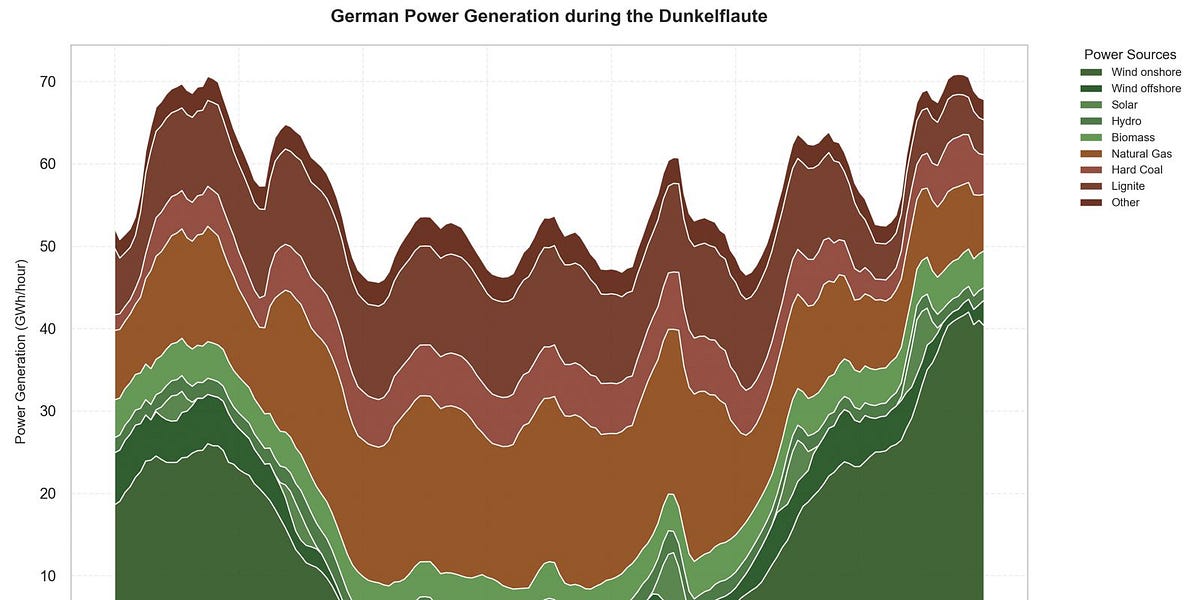
People confuse power (GW) with energy (GWh). A 1GW battery might sound as good as a 1GW nuclear plant. But batteries run for hours, nuclear runs forever. During a 4-day “dark doldrums,” that nuclear plant makes 96GWh – while your battery is long dead.
Lithium batteries are built for 2-4 hours of storage. Perfect for day/night solar cycling. Terrible for multi-day wind/solar outages. It’s like bringing a water bottle to fight a forest fire. We need different tools for different timescales.
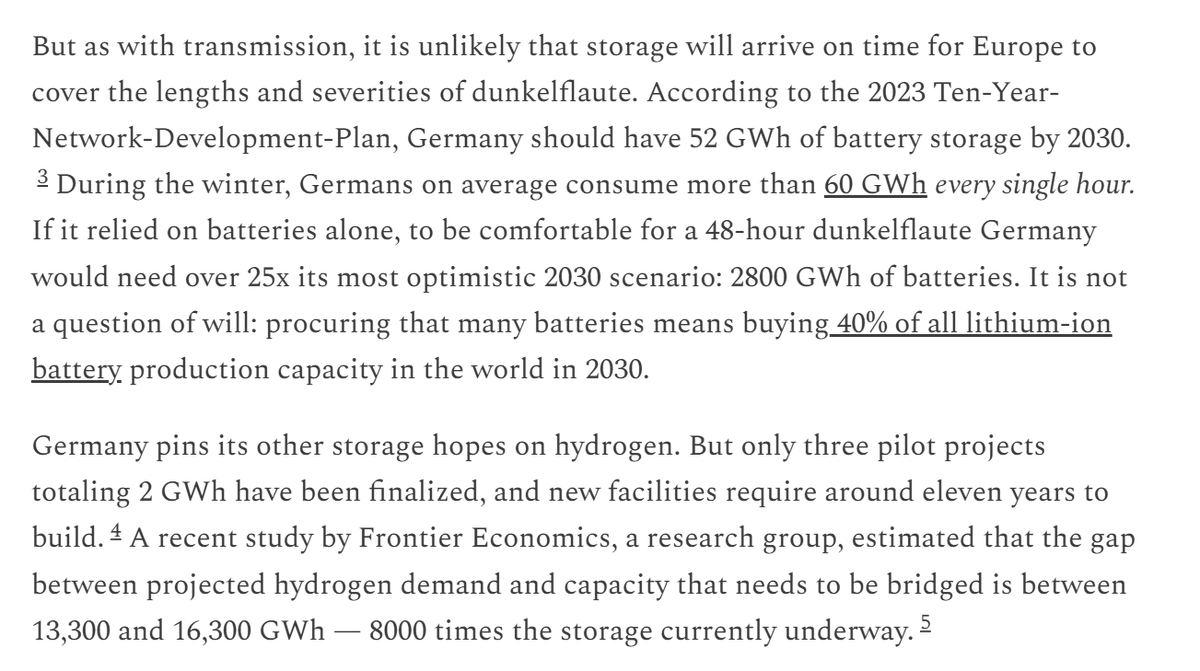
Germany needs 2,800 GWh of batteries for 48h backup – that’s 40% of ALL 2030 global battery production. Their actual 2030 plan? 52 GWh (1hr of winter power). Hydrogen? Even worse: have 2 GWh, need 16,300 GWh. The storage math simply doesn’t work.
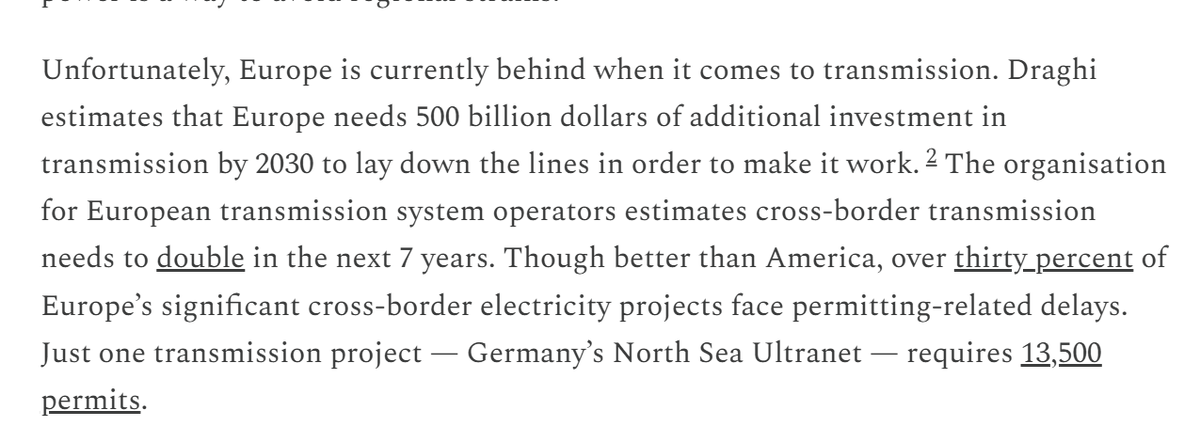
Europe’s Plan B? Grid connections! If Germany’s dark, maybe Spain has sun. But cost: $500B in new transmission by 2030. One German project alone needs 13,500 permits. Meanwhile, Norway’s already saying “no more” to new connections 🇪🇺
6′ (Although as @JohnHCochrane argued in an answer one has to wonder why Norway does not like exporting cheap to produce energy at high prices!)
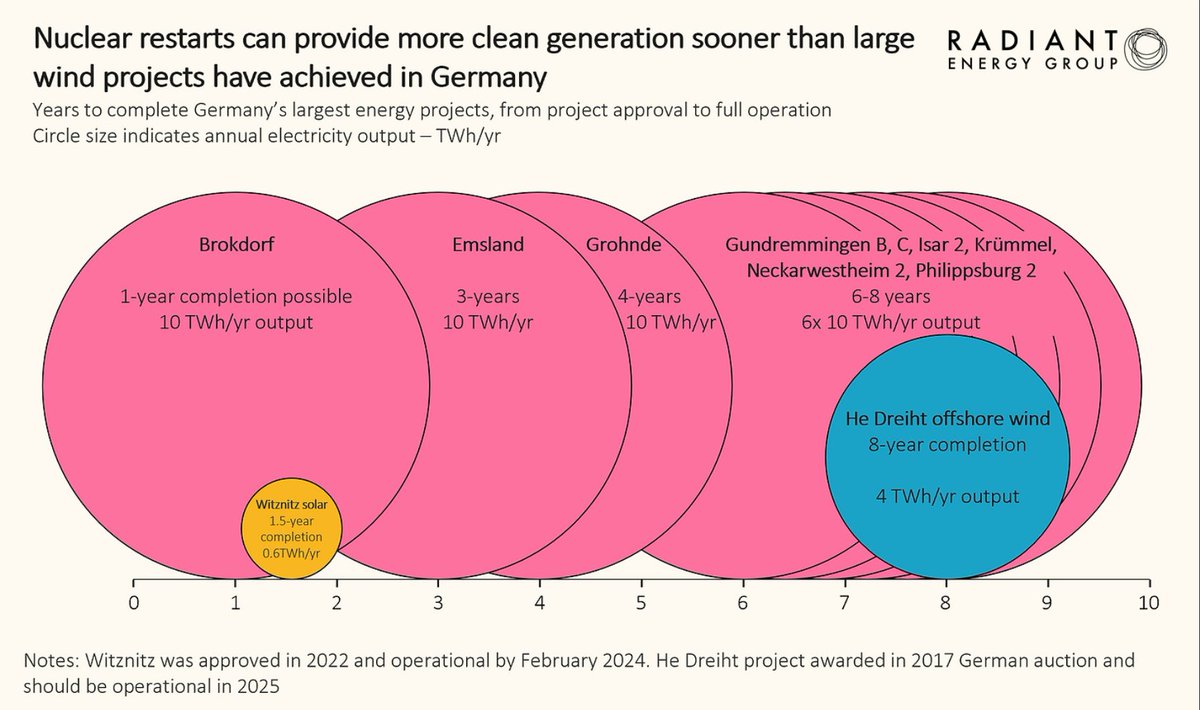
Germany could restart 2 nuclear plants (2.7 GW) in just 3 years for €2B. Scale up to 7 plants (9.4 GW) in 8 years. That’s reliable, clean power for millions – available rain or shine, day or night. Sometimes the best solution is the one we already built.
Instead, Europe’s keeping fossil fuels as backup. Germany’s pushing coal phase-out from 2030 to 2038. Maintaining a second grid of gas/coal plants for backup is massively expensive – and terrible for climate goals.
Yes, solar is revolutionary – “panes of glass that print wealth.” But here’s a simple truth: if you’re rationing power or breaking price records, your energy policy has failed.
The math is clear: without massive storage breakthrough or nuclear power, Europe faces an ugly choice – accept blackouts and price spikes, or keep burning fossil fuels as backup. Physics doesn’t care about politics.
Vir: Luis Garicano via X
 DAMIJAN blog