Ukrajina – Izgubljene iluzije Zahoda ali kako pomembne so priprave na vojno

Marko Golob

»Rusi se vojne bojijo, vendar so nanjo pripravljeni, Zahod se vojne ne boji, vendar nanjo ni pripravljen«. (The Saker)

Gornji stavek švicarskega generalštabnega častnika, obveščevalnega oficirja in lastnika zdaj že diskontinuiranega in nekoč popularnega bloga The Saker Andreja Rajevskega mi že dolgo odzvanja, zadnje čase toliko bolj.  Ob tem se spomnim pogovora s slovenskim ministrom po uradnem obisku v Rusiji in srečanju s predsednikom Putinom še v času, ko odnosi Rusije z Zahodom še niso bili tako napeti in se je z Rusijo, nekdaj našo pomembno trgovinsko partnerico, še dalo (uspešno) poslovati. Minister, ki je promoviral našo avtomobilsko industrijo in možnosti našega sodelovanja z rusko industrijo, je bil o zadevi (tudi zaradi najinih pogovorov) dobro seznanjen. Kot dober poznavalec ekonomije in Rusije pa je vseeno vprašal – navajam po spominu:

»Slovenci smo seveda pripravljeni na sodelovanje pri razvoju ruske avtomobilske industrije, ampak vseeno se sprašujemo, zakaj Rusija glede na kapacitete in tehnološki nivo svoje strojne industrije ne vlaga sama več v razvoj te industrijske veje.«

Odgovor Putina, to je bilo še pred 2014, je bil:

»Najprej moramo poskrbeti za obrambo, potem bo prišla na vrsto tudi industrija za izboljšanje življenskega standarda.«

Odgovor kaže, kako zelo se je Rusija že več kot pred desetletjem zavedala prihajajočega konflikta z Zahodom in kako temeljito sistematično in dolgoročno se je pripravljala nanj. Pa ne samo ona.

Nadaljujte z branjem

Alchemy – britanski načrt za neskončno vojno v Ukrajini

Leaked files show top UK military figures conspired to carry out the Kerch bridge bombing, covertly train “Gladio”-style stay-behind forces in Ukraine, and groom the British public for a drop in living standards caused by the proxy war against Russia.

Emails and internal documents reviewed by The Grayzone reveal details of a cabal of British military and intelligence veterans which plotted to escalate and prolong the Ukraine proxy war “at all costs.” Convened under the direction of the British Ministry of Defense in the immediate aftermath of Russia’s invasion of Ukraine in February 2022, the cell referred to itself as Project Alchemy. As British leadership sabotaged peace talks between Kiev and Moscow, the cell put forward an array of plans “to keep Ukraine fighting” by imposing “strategic dilemmas, costs and frictions upon Russia.”

The leaks obtained by The Grayzone expose a hidden hand behind Britain’s policy in Ukraine, showing in unusually granular detail how it aimed to engineer a long, grinding war through covert operations that stretched the bounds of legality.

Nadaljujte z branjem

Trump in Biden sta različni strani istega kovanca – obupanega poskusa Make America Great Again

This video is a must-watch. I rarely agree with @brhodes

 But he’s 100% correct here.

He says he’ll “always be haunted” by a comment that Xi Jinping made to Obama in 2016 when referring to Trump: “If an immature leader throws the world into chaos, the world will know who to blame”.

Why does it haunt him? Because in his words “we’ve kind of been dealing with that ever since”.

He mocks Biden’s foreign policy of trying to restore a “Liberal rules-based order with the U.S. at the center of it” (i.e. U.S. primacy) as “designed for the world that doesn’t exist anymore”. Remember Rhodes was Obama’s Deputy National Security Advisor, so it’s quite something to hear him say that…

Nadaljujte z branjem

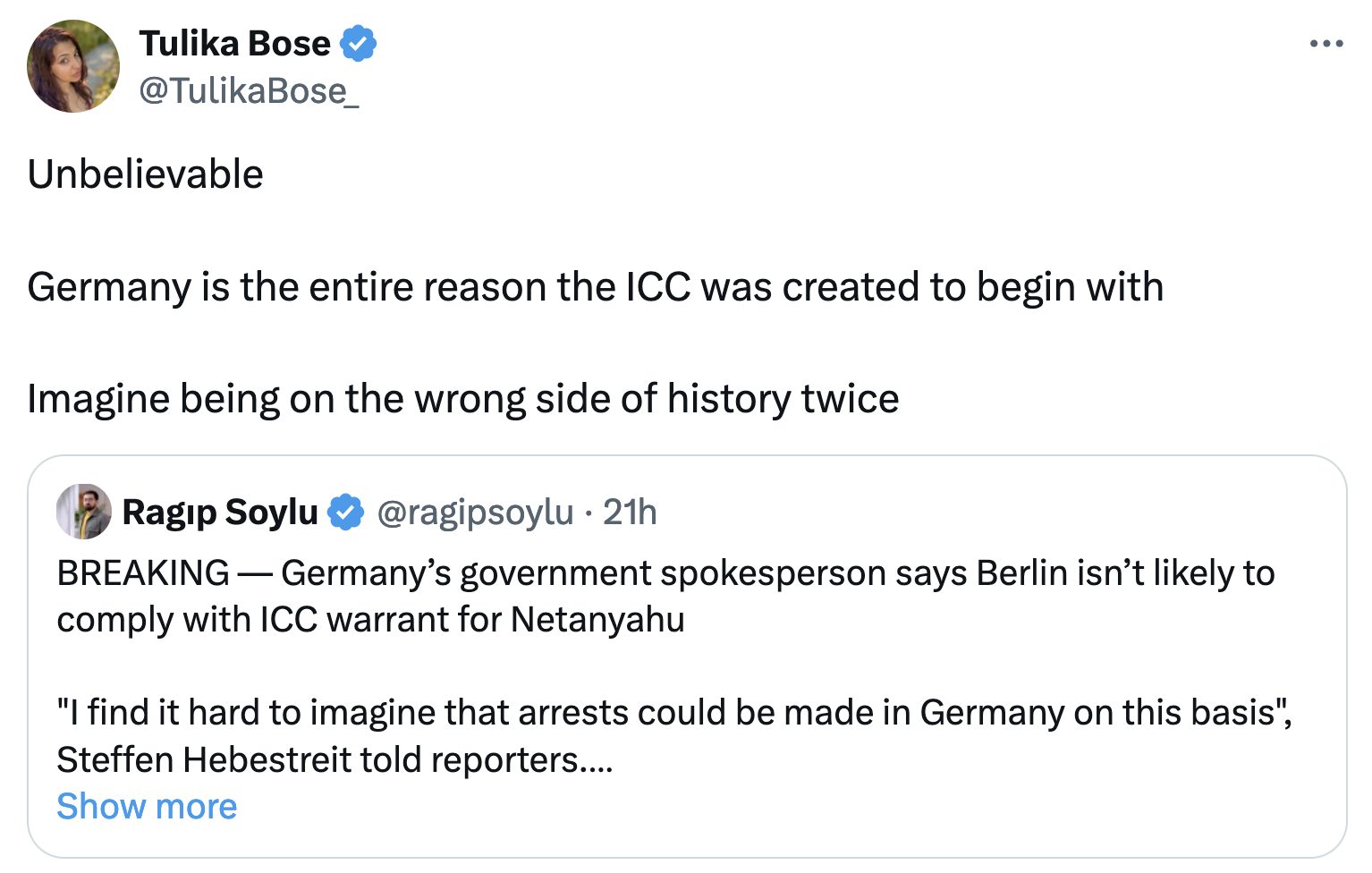
Zakaj je Nemčija vedno na napačni strani zgodovine?

Opomnik:

  • Nemčija je bila na napačni strani zgodovine v 1. svetovni vojni
  • Nemčija je bila na napačni strani zgodovine v 2. svetovni vojni
  • Nemčija je bila na napačni strani zgodovine v evrski krizi (s politiko varčevanja)
  • Nemčija je na napačni strani zgodovine ob izraelskem genocidu nad Palestinci

Kako je lahko neka država pri vseh ključnih dogodkih v zgodovini vedno izbere napačno stran?

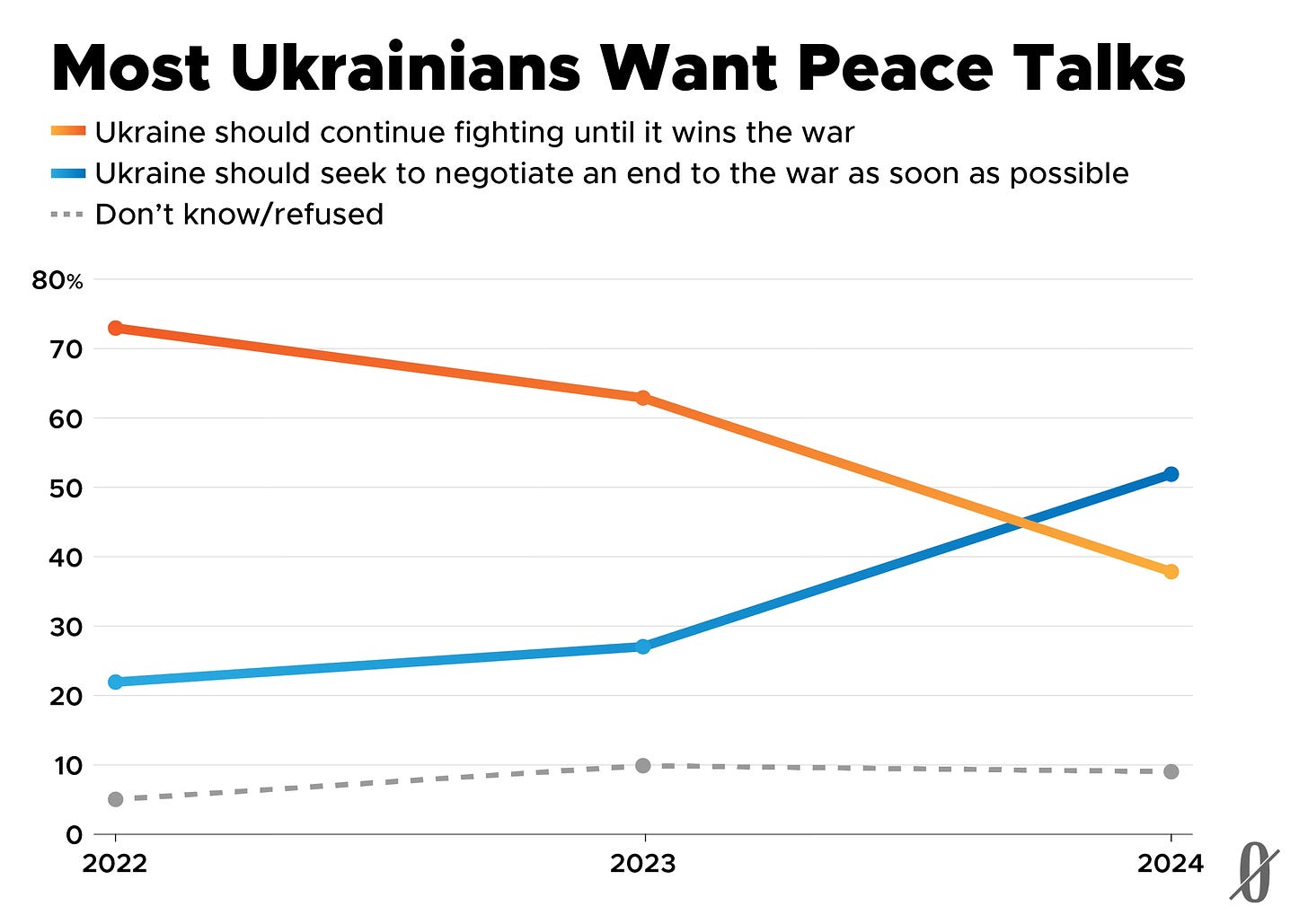
Ukrajinci hočejo konec vojne in pogajanja o miru, ameriški in evropski sponzorji vojne pa nikakor ne

Zadnja Gallupova raziskava javnega mnenja med Ukrajinci je pokazala, da si več kot 52 % Ukrajincev želi konca vojne in mirovna pogajanja, tudi za ceno izgube ozemelj, le 37 % bi jih nadaljevalo z vojno. Problem je, ker to mnenje ukrajinskega naroda nikogar ne zanima – ne zanima nelegalnega predsednika Zelenskega, ki po preteku mandata ne želi razpisati volitev, ne zanima Bidnove administracije, ki sponzorira vojno, ne zanima ZDA in Francije, ki sponzorirata vojno, ne zanima evropskih voditeljev, ki sponzorirajo vojno in ne zanima zahodnih medijev, ki tudi papagajsko ponavljajo propagando, s katero sponzorirajo vojno.

Še več, v paniki, da bi se morda vojna prehitro končala, so ameriška, britanska in francoska vlada naredile še korak naprej k eskalaciji vojne z odobritvijo, da lahko ukrajinske sile zahodne rakete daljšega dometa uporabijo tudi za napade na cilje globoko na ruskem ozemlju. S čimer so ogrozile varnost evropskih držav, od koder prihajajo te rakete.

Data via Gallup. Graph adapted by Clark McGillis.

Nadaljujte z branjem

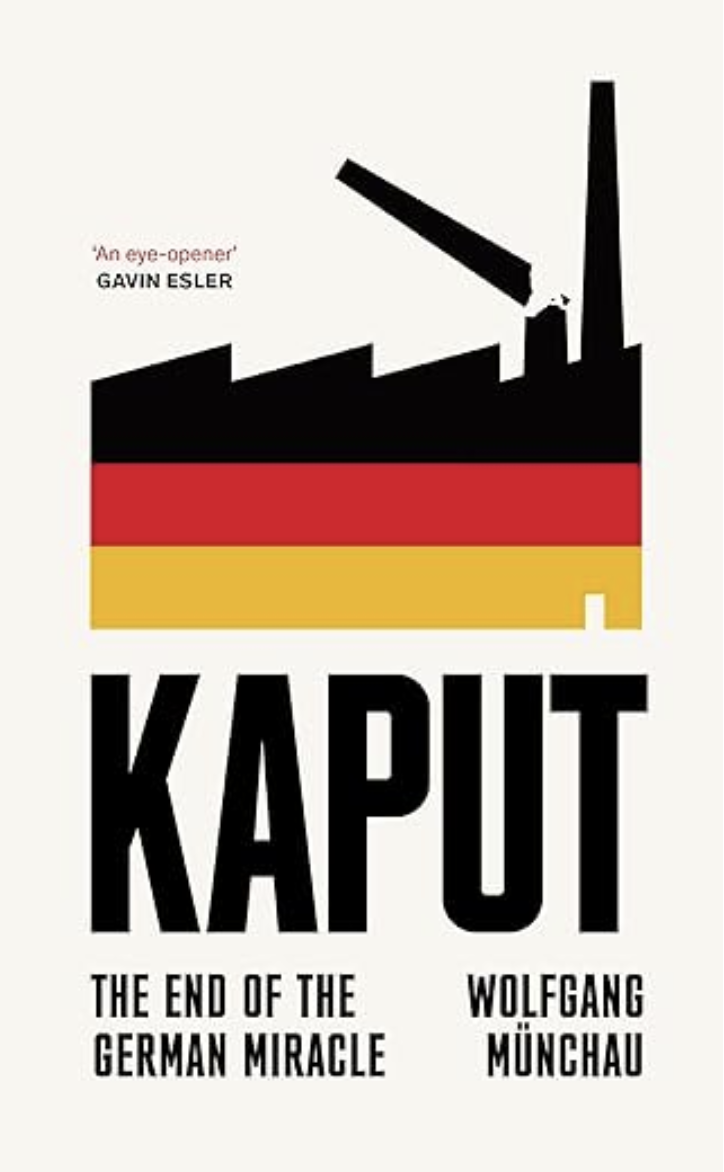
Kaput: The End of the German Miracle

Odlično branje. Z nemškim gospodarskim zatonom je zašla tudi nemška politična teža. Z njo pa tudi evropska.

Until recently, Germany appeared to be a paragon of economic and political success. Angela Merkel was widely seen as the true ‘leader of the free world’, and Germany’s export-driven economic model seemed to deliver prosperity. But recent events – from Germany’s dependence on Russian gas to its car industry’s delays in the race to electric – have undermined this view.

In Kaput, Wolfgang Münchau argues that the weaknesses of Germany’s economy have, in fact, been brewing for decades. The neo-mercantilist policies of the German state, driven by close connections between the country’s industrial and political elite, have left Germany technologically behind over-reliant on authoritarian Russia and China – and with little sign of being able to adapt to the digital realities of the 21st century.

Na Amazonu je v prodaji paperback, na kindle verzijo bo treba še počakati

Trumpov bodoči problem z muslimani

Fox News personality Pete Hegseth, Trump’s nominee for secretary of defense, may be regretting his decision to attend a 2017 conference held by the California Federation of Republican Women. His sexual encounter with one of those Republican women (which happened, as the Wall Street Journal notes, while he was “in the midst of getting a divorce from his second wife after fathering a child with a producer at the network”) led to a sexual assault allegation, and a subsequent hush-money payment, that have together complicated his path to the Pentagon.

But maybe Hegseth should consider this scandal a blessing. If it weren’t for the questions being raised about past sexual transgressions, more attention might be paid to questions that bear more directly on his qualifications to head the Defense Department. There’s the lack of managerial experience in a man who aspires to run the world’s largest military. There’s the fact that he has repeatedly spoken up in defense of US servicemen who had committed vicious war crimes. And then there’s the thing that has gotten the least attention of all but may be the most important of all: Hegseth’s warped views about Islam—views that, if he becomes secretary of defense, could exacerbate conflicts and even create new ones.

In his 2020 book American Crusade, Hegseth argues that Islam “has been at war with its enemies—meaning all ‘infidels’—since it was founded, and it will never stop.” In truth, the Islamic empires of the past—from the seventh century through the early twentieth century—typically included large populations of non-Muslims who practiced their religions in peace, in keeping with Islamic doctrine, so long as they paid a special tax called a jizya. This may not sound progressive by modern standards, but if you compare, say, the treatment of Spanish Jews under Islamic rule to their treatment under subsequent Christian rule, you’ll see that things could have been much worse.

Nadaljujte z branjem

Ruski Orešnik kot pravi game-changer?

In response to a U.S. decision to arrange for ballistic missile attacks from Ukraine into Russia, the great magician and President of the Russian Federation Vladimir Putin pull a rabbit from his hat.

Yesterday the six independent war heads of a new intermediate range ballistic missile hit the Yuzhmash missile plant in Dnipro Ukraine.

Until now the new missile and its mission profile had been unknown. It is the clear counter to decade long efforts of the U.S. to gain supremacy, especially in Europe, over Russia.

Missiles can be classified by the range they are able to achieve:

    1. Short-Range Ballistic Missiles (SRBM) are designed to target enemy forces within a range of approximately 1,000 kilometers. Typically employed in tactical scenarios, they allow for rapid response to regional threats.
    2. Medium-Range Ballistic Missiles (MRBM) extend the operational range to about 3,500 kilometers. These systems enhance a nation’s deterrent capabilities by allowing strikes on targets further away without resorting to intercontinental systems.
    3. Intercontinental Ballistic Missiles (ICBM) represent the longest range category, with capabilities exceeding 5,500 kilometers. These missiles serve as a strategic deterrent, capable of delivering payloads across continents and significantly impacting global security dynamics.

The U.S., Russia and China have developed all three types of weapons. In the late 1980s, on the initiative of the Soviet leader Mikhail Grobaschev, the U.S. and the Soviet Union signed the Intermediate-Range Nuclear Forces Treaty (INF Treaty):

The INF Treaty banned all of the two nations’ nuclear and conventional ground-launched ballistic missiles, cruise missiles, and missile launchers with ranges of 500–1,000 kilometers (310–620 mi) (short medium-range) and 1,000–5,500 km (620–3,420 mi) (intermediate-range). The treaty did not apply to air- or sea-launched missiles. By May 1991, the nations had eliminated 2,692 missiles, followed by 10 years of on-site verification inspections.

While the deployment of missiles of a certain range were prohibited missile development continued. Around 2008 the Russian Federation used the base design of the RS-24 (Yars) intercontinental missile to develop a more flexible version with a lighter payload. The result was the easier to handle RS-26 missile. While this could and did achieve the range needed to be classified as an intercontinental missile its payload was too small to be really effective.

In early 2018 the Russian Federation decided to halt all further development of the RS-26 and invested its money into the more promising hypersonic glide vehicle Avanguard.

A few month after Russia had taken the decision to mothball the RS-24 development the U.S. withdrew from the INF-treaty. While the U.S. claimed that certain cruise missile developments in Russia were in breach of the treaty the real reason for the withdrawal was elsewhere:

[T]he US need to counter a Chinese arms buildup in the Pacific, including within South China Sea, was another reason for their move to withdraw, because China was not a signatory to the treaty. US officials extending back to the presidency of Barack Obama have noted this.

Nadaljujte z branjem

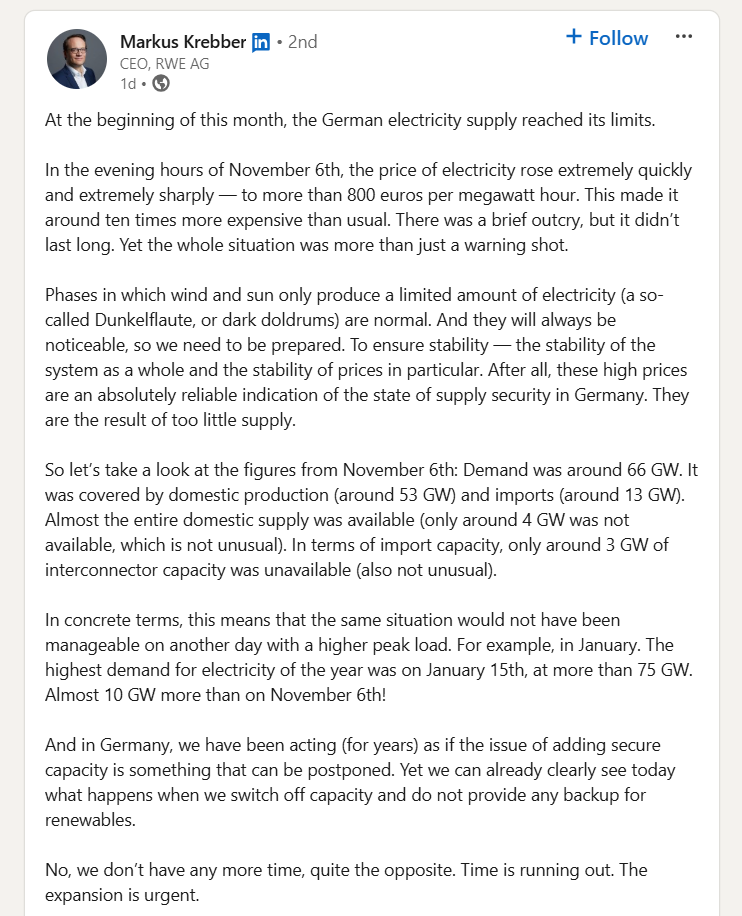
Nemški “obnovljivi” energetski prehod je bankrotiral, svari predsednik RWE

Zdaj je počilo tudi med ponudniki energije v Nemčiji. Markus Krebber, predsednik uprave nemškega največjega distributerja energije, je v redko videnem javnem nastopu, posvaril, da je nemški elektroenergetski sistem dosegel svoje meje. Pomanjkanje kapacitet zanesljivih virov elektrike ogroža stabilnost elektroenergetskega sistema, vodi v skrajna cenovna nihanja (za 10-krat !) in ogroža stabilnost celotnega evropskega elektroenergetskega sistema. Z elektrarnami na sonce in veter preprosto fizično ni mogoče vzdrževati stabilnosti elektroenergetskega sistema. Če ne bi bilo Francije in zanesljive oskrbe z elektriko iz farncoskih jedrskih elektrarn, bi nemški elektroenergetski sistem v začetku novembra razpadel.

Vladi Angele Merkel in Olafa Scholza sta z nepremišljeno energetsko politiko Nemčiji naredile gromozansko škodo. Nemci za danci plačujejo daleč najveišje cene za elektriko v Evropi, nemško gospodarstvo je zaradi visokih cene lektrike nekonkurenčno.

Putin Is Finally Climbing The Escalation Ladder

Andrew Korybko

He wants to deter the even greater provocations that the West might now be plotting, such as destabilizing and then invading Belarus, with the intent of coercing him into freezing the existing LOC and then possibly accepting the deployment of Western/NATO peacekeepers there.

Putin surprised the world on Thursday when he addressed the nation to inform them that Russia had tested a new hypersonic medium-range missile earlier that morning in an attack against a famous Soviet-era industrial complex in the Ukrainian city of Dnepropetrovsk. He explained that this was a response to the US and UK recently allowing Ukraine to use their long-range missiles inside of Russia. Their decision resulted in the NATO-Russian proxy war in Ukraine “assuming elements of a global nature” in his words.

As was explained here with regards to the “moment of truth” that this latest phase of the conflict led to, he was faced with the choice of either escalating or continuing his policy of strategic patience, the first of which could foil attempts by Trump to reach a peace deal while the second could invite more aggression. Putin chose the former and did so in a creative way that few foresaw. The Oreshnik missile system whose existence he disclosed on Thursday has Multiple Independently-targetable Reentry Vehicles (MIRVs).

Nadaljujte z branjem