Zaradi katastrofe v Černobilu je neposredno umrlo 40 ljudi. Vendar je strah po černobilski katastrofi preprečil izgradnjo 400 dodatnih jedrskih elektrarn ki bi vsaka prihranila približno 320 milijonov let dodatnega življenja z zmanjšanjem onesnaževanja z nafto in premogom. 40 izgubljenih življenj v Černobilu je vodilo k milijonkrat več smrti zaradi strahu, ne pa zaradi nesreče. Strah so izkoristile interesne skupine (lobiji) za svoje cilje – ameriški in britanski politiki (prek političnih donacij) za forsiranje fosilnih industrij (nafta in plin), evropski zeleni politiki pa za izganjanje jedrske energije in forsiranje nestanovitnih in energetsko siromašnih OVE virov. Oboje je vodilo k povečanju izpustov toplogrednih plinov in skrajšanja stotin milijonov let življenja zaradi onesnaženja.
The Political Economic Determinants of Nuclear Power: Evidence from Chernobyl
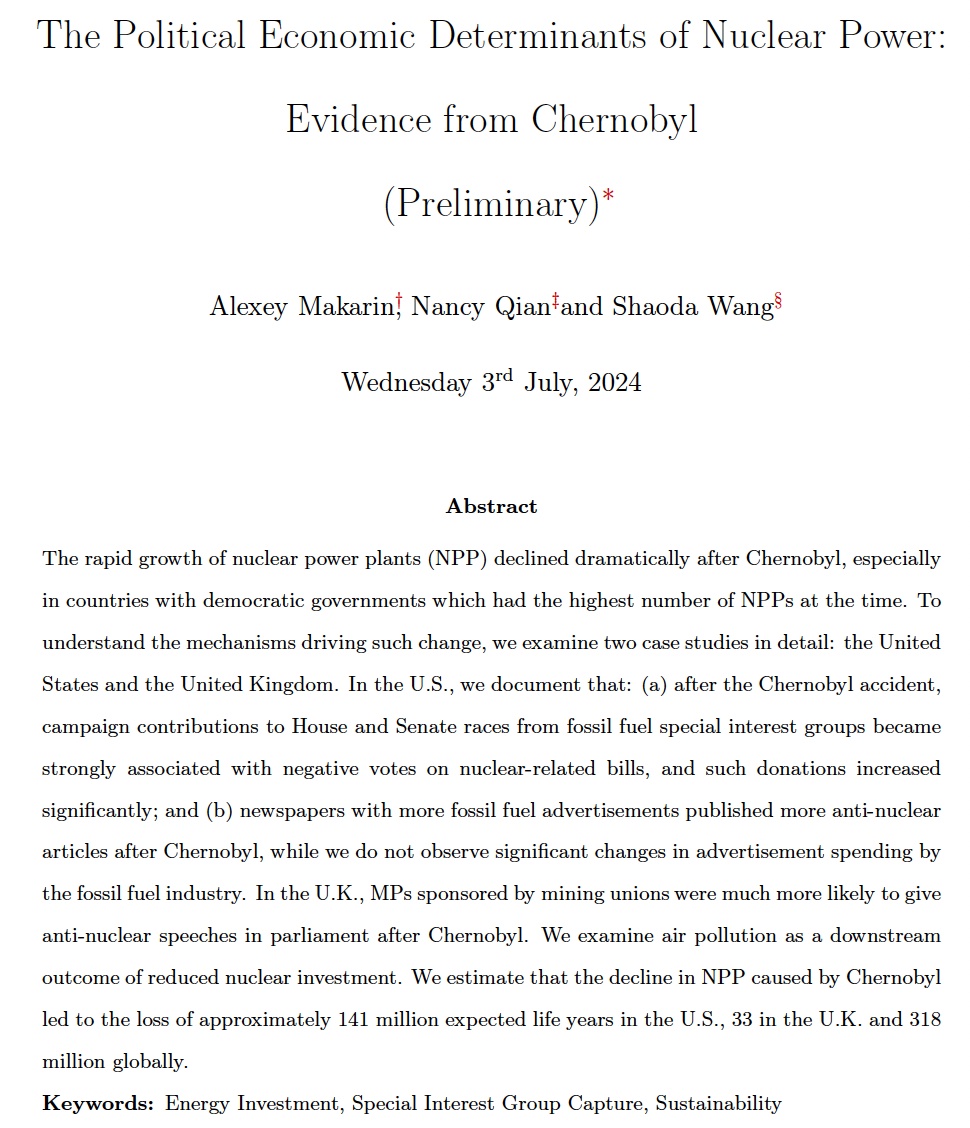
The rapid growth of nuclear power plants (NPP) declined dramatically after Chernobyl, especially in countries with democratic governments which had the highest number of NPPs at the time. To understand the mechanisms driving such change, we examine two case studies in detail: the United States and the United Kingdom. In the U.S., we document that: (a) after the Chernobyl accident, campaign contributions to House and Senate races from fossil fuel special interest groups became strongly associated with negative votes on nuclear-related bills, and such donations increased significantly; and (b) newspapers with more fossil fuel advertisements published more anti-nuclear articles after Chernobyl, while we do not observe significant changes in advertisement spending by the fossil fuel industry. We examine air pollution as a downstream outcome of reduced nuclear investment. We estimate that the decline in NPP caused by Chernobyl led to the loss of approximately 141 million expected life years in the US, and 318 million globally.
 DAMIJAN blog
You must be logged in to post a comment.