Last December, France was once again called to order for having submitted an energy transition plan (Pniec) deemed insufficient. The project set a target of 33% renewable energy by 2030, well below the 44% required by a 2018 European directive.
Despite the criticism, France persists with its energy strategy. The updated version of the Pniec, recently published by the European Commission, shows that France is maintaining the same targets for the development of renewable energies. The French government prefers to insist on a “decarbonized” objective, including nuclear power, which is low in greenhouse gas emissions.
Under the plan, France aims to achieve a 58% share of decarbonized energy in its final consumption by 2030. Paris maintains that this will contribute fully to European climate objectives. The government stresses that the 23% renewable energy target set for 2020 will finally be reached in 2024.
The French government has written to the Commission to explain its refusal to retroactively purchase renewable energy production volumes from other countries, as provided for in the directive in the event of non-compliance with targets. This position could expose France to potential sanctions from the European Commission.
However, with renewed interest in nuclear power in Europe, France is hoping to rally other states to its cause, replacing renewable targets with decarbonization targets. The national plan targets a gross reduction in greenhouse gas emissions of at least 50% by 2030 compared with 1990 levels.
Vir: EnergyNews
Francoska vlada ima seveda absolutno prav. S cilji Evropske komisije glede deleža obnovljivih virov energije ni mogoče doseči razogljičenja proizvodnje elektrike, medtem ko je Francija z miksom nizkogljičnih virov (jedrska, hidro in nekaj vetra in sonca) razogljičenje praktično že dosegla.
Spodaj je še enkrat razlika v izpustih CO2 med (kvazi)”zeleno” elektriko v Nemčiji in elektriko iz jedrske energije v Franciji. Proizvodnja elektrike v Nemčiji je 9-krat bolj umazana (ogljična) kot v Franciji. In Nemčija z vztrajanjem pri uvajanju obnovljivih virov namesto nizkoogljičnih virov ne bo nikoli razogljičila svoje proizvodnje električne energije.
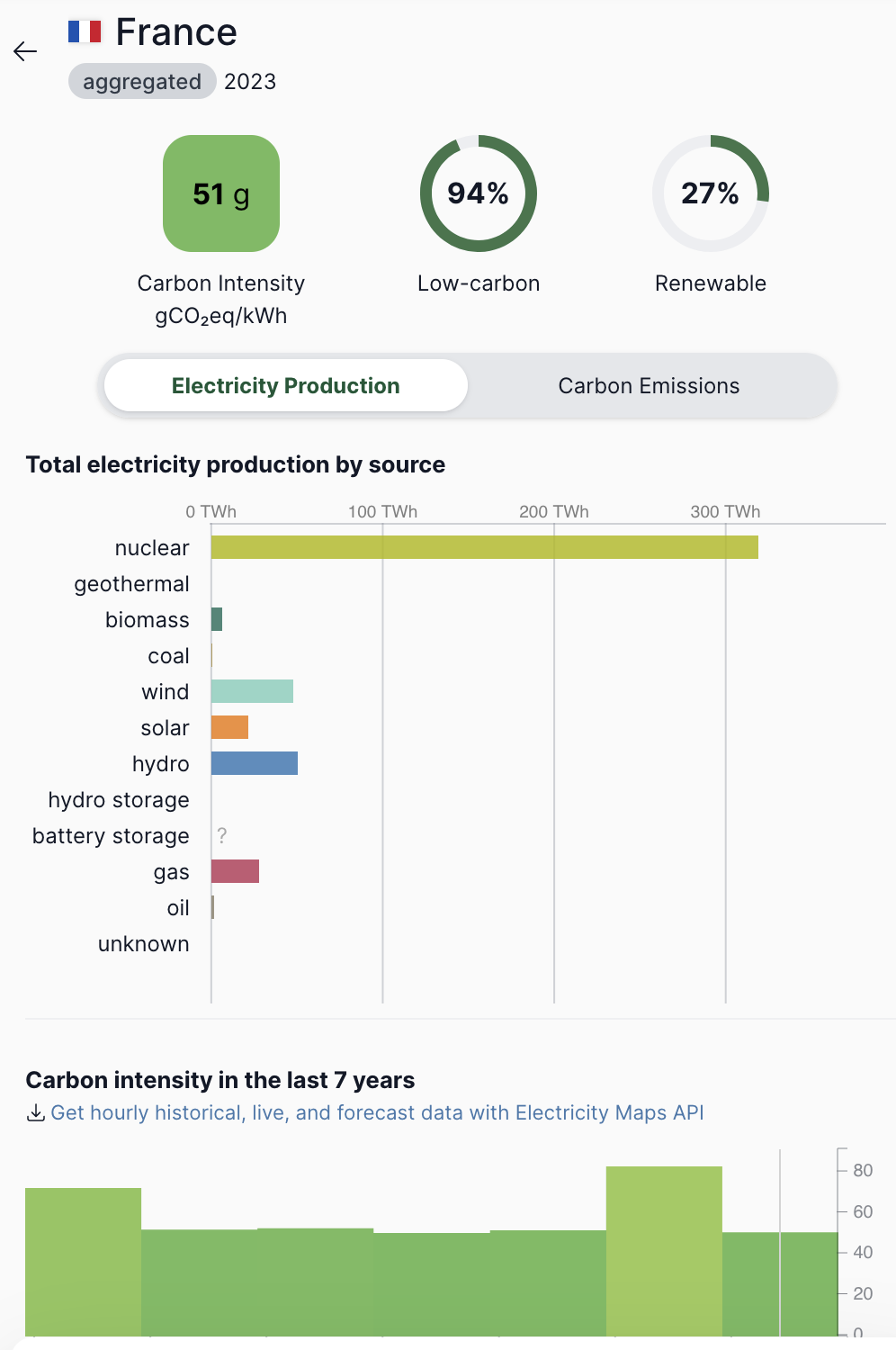

Vir: Electricity Map
Tako pa razlika med Francijo in Nemčijo glede izpustov CO2 izgleda sredi sončnega poletnega dne. V Nemčiji v najbolj ugodnem času in kljub 71 % elektrike iz sonca izpusti CO2 znašajo 8.5-krat več kot v Franciji.
 DAMIJAN blog
You must be logged in to post a comment.